Home / Machines / Hot air drying
Rankine · hot air & vacuum drying · 85 – 360 L

Rankine Parts Dryers

A Rankine is a heated forced-air tank that takes the basket straight out of the rinse. Four sizes, 85 to 360 litres, built to stand beside the cleaning tank at the same bench height.

Stainless chamber, sheathed elements, circulating blower, timer and temperature limiter.

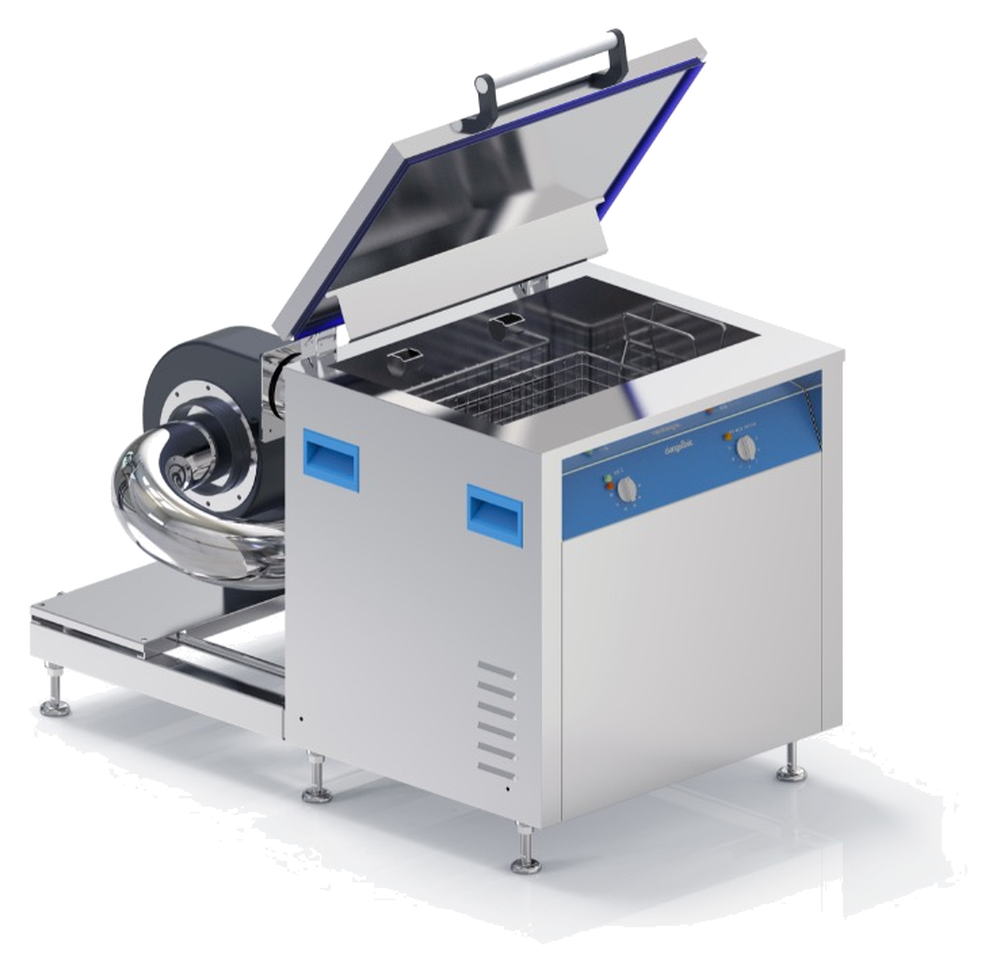
Misonics hot air drying tank with the lid raised, wire basket in the chamber and the hot air blower on the left
Why the stage exists

A part that comes out wet is not finished

Rinse water carries dissolved solids. Left to air dry, it evaporates and leaves them on the surface as spotting and staining — on the part you just paid to clean. Bare steel is worse: it flash rusts while it sits on the bench, and on a humid day that takes minutes, not hours.

A wet part also cannot be painted, plated, bonded, measured, packed or put back in a box. Drying is the stage that turns a clean part into a finished one, and it is the stage most workshops leave to a rack and a fan.

Where the water actually sits. Flat faces sheet off and dry fast. Blind holes, galleries, threads, tube bundles and anything that traps a meniscus hold water long after the outside looks dry. Hot air moving through the basket is what clears them; still air in a warm room does not.
How it is built

A heated chamber with the air moving

HeatSheathed 400 W elements around the chamber — 5.6 kW on the small tanks, 17.6 kW on the largest. A separate temperature limiter sits behind the thermostat.
AirA blower circulates hot air over and through the basket rather than letting it stand. That is what dries recesses and threads instead of only the outside faces.
ControlHeater switch, timer switch, and power, heating and timing indicators on the front panel. Set a time, load the basket, walk away.

The chamber is SUS304 stainless, 1.5 to 2.0 mm with a 2.5 mm floor, inside a satin-finished SUS304 enclosure. A hinged stainless cover closes the top. The basket is round stainless bar with a 25 × 25 mm mesh floor, so air passes through the load. The Rankine 104 and larger carry a 1/2″ drain valve.
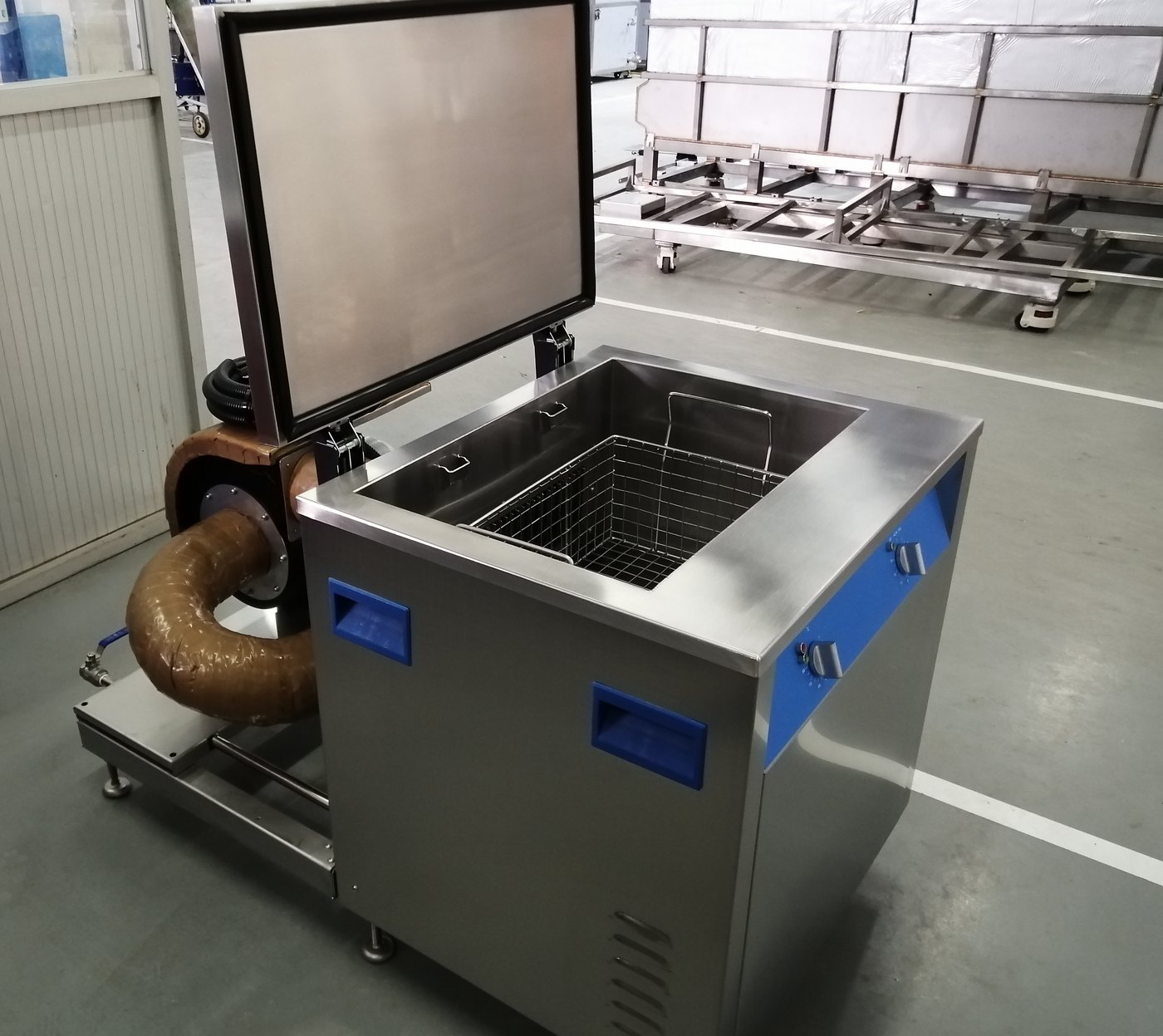
A Misonics hot air drying tank on the factory floor, cover raised, insulated hot air ducting and blower mounted on the side
The same tank in build. The lagged duct on the left carries hot air from the blower into the chamber.
Four sizes

Four models — pick the one your basket fits

 Rankine 85Rankine 104Rankine 287Rankine 360
Chamber volume85 L104 L287 L360 L
Chamber600 × 400 × 350620 × 420 × 400950 × 550 × 5501200 × 600 × 500
Basket510 × 330 × 180500 × 320 × 200870 × 450 × 3501100 × 500 × 300
Max load20 kg20 kg30 kg40 kg
Heating5.6 kW
14 × 400 W
5.6 kW
14 × 400 W
12 kW
30 × 400 W
17.6 kW
44 × 400 W
Max draw6.6 kW14 kW19.6 kW
Overall700 × 1240 × 750720 × 1230 × 8501050 × 1400 × 10001300 × 1450 × 950
Supply415 V · 50 Hz · 3 phase

Dimensions in millimetres, width × depth × height, from the general arrangement drawings. Overall figures exclude the stainless cover.

Where it sits

The third tank in the line

You already have a wash and a rinse

This is the tank that finishes the sequence. It stands beside an MSX floor-standing tank or an EvoSonic at working height, so a basket comes out of the rinse and goes straight in.

You are specifying the whole line

UltraKleen Pro already carries wash, rinse and hot air dry as three stations with roller travel between them. UltraWash dries inside a sealed chamber. If you are starting from nothing, look at those first.

Where hot air is the wrong answer. Deep blind holes, long galleries and tightly nested assemblies can hold water that hot air will not shift in a sensible cycle time. Vacuum drying is the answer there. It is part of the Rankine Parts Dryer range but a sourced line rather than a stocked one — tell us the part and we will say which you need.
Questions

What people ask before they buy one

Why not let the parts air dry?
Rinse water carries dissolved solids. Left to evaporate it puts them back on the surface as spotting and staining, and bare steel flash rusts on the bench — on a humid day that takes minutes. A wet part also cannot be painted, plated, bonded, measured or packed.
Is this just an oven?
No. An oven heats still air. A drying tank moves hot air through the basket, so it clears recesses, threads and the middle of a packed load. Still air in a warm box dries the outside of the load and leaves the inside wet.
How long is a cycle?
It depends on the mass of the load, the geometry, and how much water came out of the rinse. Most batches run between 15 and 40 minutes. The time is set on the panel timer and the machine stops itself.
What temperature does it run at?
Set on the thermostat, with a separate temperature limiter behind it. Most work dries between 60 and 90 °C. The ceiling is set by the part, not by the tank — plastics, seals and heat-treated components decide it.
Will it dry blind holes and threads?
Moving hot air clears most of them, which is the whole point of the blower. Deep blind holes, long galleries and tightly nested assemblies can hold water that hot air will not shift in a sensible cycle time. Vacuum drying is the answer there. It is part of the Rankine Parts Dryer range but a sourced line — tell us the part.
Will it stand next to the tank I already have?
Yes. The four sizes are built to sit beside a cleaning tank at working height, so a basket comes out of the rinse and goes straight in. No line, no conveyor, no rebuild.
What power supply does it need?
415 V, 50 Hz, three phase. Maximum draw runs from 6.6 kW on the Rankine 104 to 19.6 kW on the Rankine 360. Heating is 5.6 kW on the two small tanks, 12 kW on the Rankine 287 and 17.6 kW on the Rankine 360.
I already have an UltraKleen Pro or an UltraWash — do I need one?
No. UltraKleen Pro carries a hot air dry station as the third of its three stations, and UltraWash dries inside its sealed chamber. These tanks are for a workshop that has a wash and a rinse and no dryer.
What does it cost?
Quoted to site, ex GST. Tell us the part, the basket size and what happens to the part next, and we will quote the size that fits.
Called a few different things. Parts drying oven, hot air dryer, drying cabinet, batch dryer, drying tank — all the same stage. What matters is that the air moves and the temperature is controlled and limited. Bath temperature — chemistry vs substrate →

Tell us what you are drying

Give us the part, the basket size and what happens to it next — paint, assembly, packing or measurement. That decides the tank size, the cycle time and whether hot air is enough. Prices are quoted to site.

Ask for a price See the cleaning tanks