A diesel particulate filter is a ceramic honeycomb with thousands of blind channels — soot burns off in regeneration, but the ash never leaves. This study documents the two-bath ultrasonic process developed from a filter specialist’s enquiry: carbon stage, ash stage, flow-tested result.
The contamination
Soot and unburnt carbon
The combustion load — heavy in filters off failed-regen vehicles, oil-soaked where a turbo or injector let go. Alkaline carbon chemistry territory.
Lubricant ash
The one regeneration cannot touch: mineral ash from burned oil packs the channel ends and blinds the substrate permanently. This is what the second bath exists for.
The blind-channel geometry
Alternately plugged channels mean every flow path is a blind hole. Only a process that works inside blind geometry — cavitation — cleans it without cutting the can open.
The process
| Parameter | Value |
|---|---|
| Stage 1 chemistry | Alkaline carbon formulation |
| Stage 2 chemistry | RegeniK — the ash-stage product |
| Temperature / cycle | Established per application |
| Verification | Flow test against clean-filter baseline; result recorded per filter serial |
| Substrate care | Power and exposure limited for ceramic substrate; no caustic attack on washcoat |
The results
Hardware and chemistry
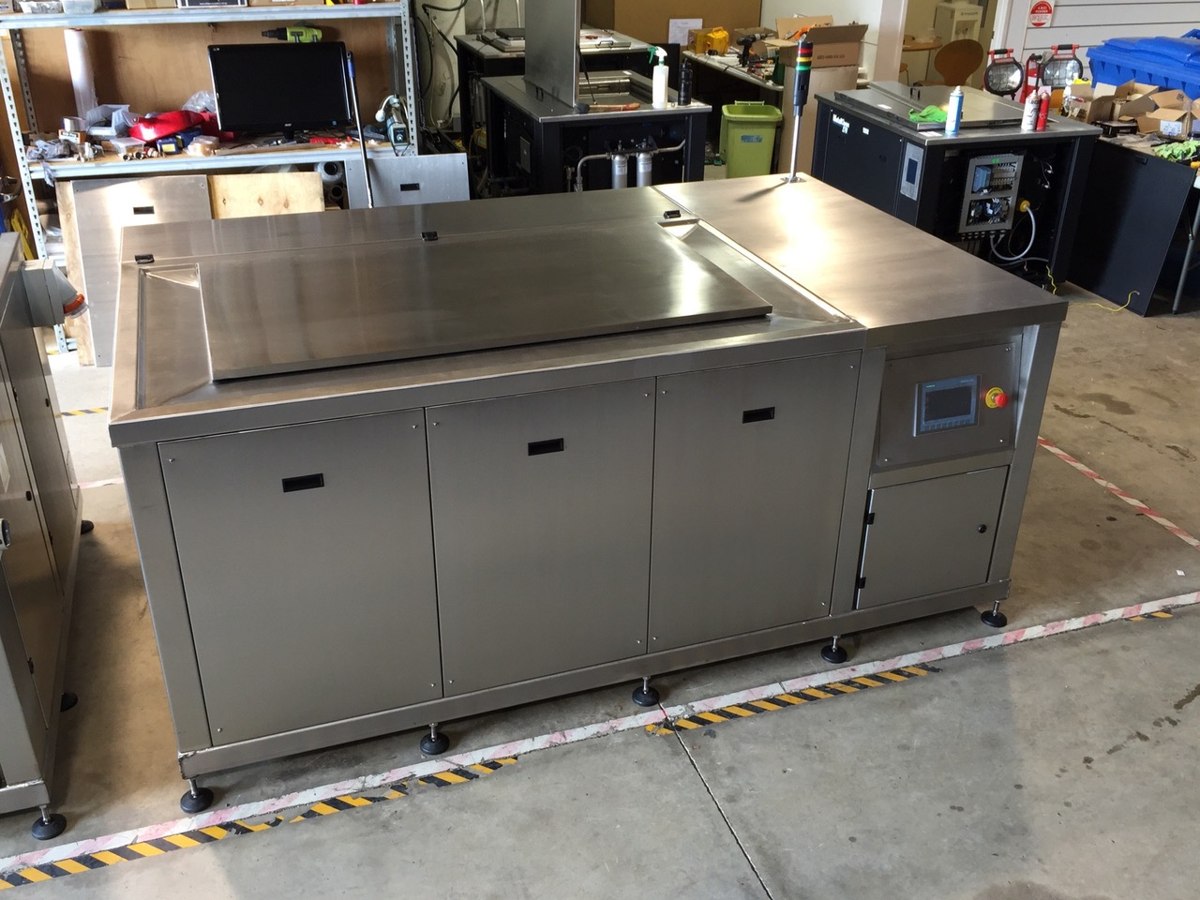
Two-bath DPF cell
Paired industrial tanks — carbon stage and ash stage — with flush and drying, sized to the largest truck filter in the program.
Ask about DPF cell sizing →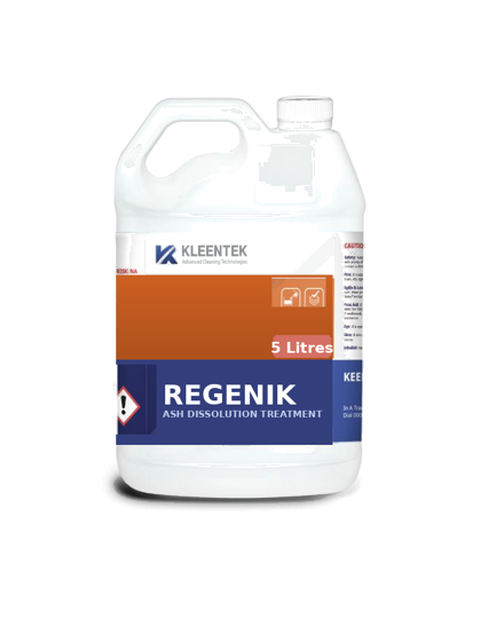
RegeniK
The ash-stage product: formulated for the mineral residue regeneration leaves behind, safe on ceramic substrates.
View the product, SDS and TDS →