Approvals &
Conformances
Conformances













Sixteen working chemistries supplied across Australia — degreasers, descalers, paint strippers, rust protection and the AquaVantage aerospace range. Every one carries its material cautions up front, so you read them here rather than discover them in the tank.
Read how chemistry and machine are specified together — or tell us the part, the soil and the machine, and we will specify the bath.
These are approvals and conformances held by Brulin, the manufacturer of the AquaVantage range, for their chemistry. They are shown because they tell you what the chemistry has been qualified against. They are not Misonics approvals, and they are not endorsements of Misonics by the companies named.
These are approvals held by Brulin — the aerospace, defence and automotive primes above have qualified Brulin chemistry against their own cleaning specifications. Misonics supplies the Brulin range in Australia. It is the reason we put Brulin in a tank where the paperwork has to stand up. See the Brulin range →
Or start from the part with the application finder, compare everything on the full matrix, or open any data sheet.
Oils, greases and general soils — from workshop washdown to aerospace-approved precision degreasing.
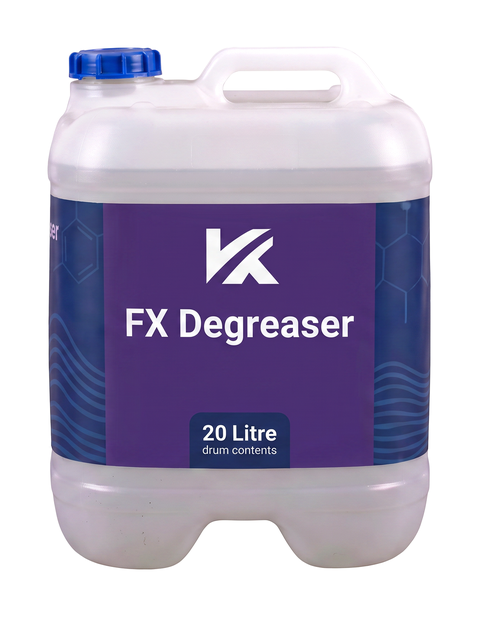 FX DegreaserMulti-purpose cleaner and degreaser for light to medium cleaning — the general workshop woView & buy →Dosage →
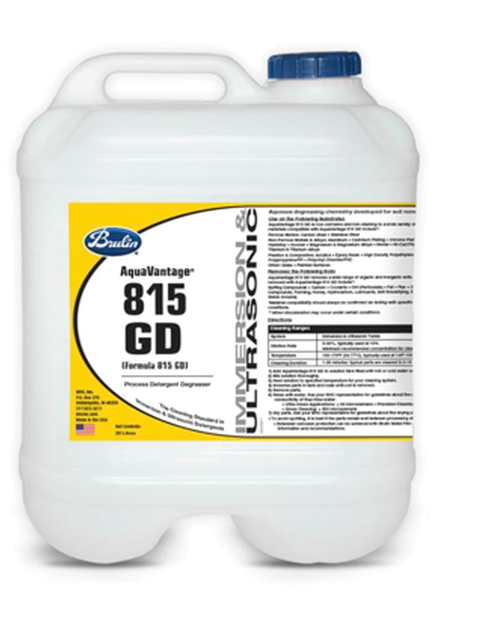 AquaVantage 815 GDLight and manufacturing soils — oils, cutting pastes and coolant off machined parts.View & buy →Dosage →
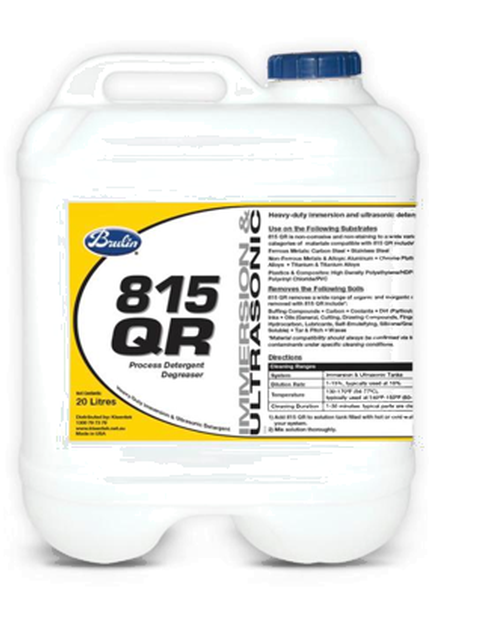 AquaVantage 815 QR-NFThe heavy-duty workshop degreaser — greases, carbon and baked-on soils in maintenance and overhaul work.View & buy →Dosage →
The heavy end: coked carbon, stoved paint and cured coatings — including the two-stage carbon-then-ash process chain, and the aluminium-safe system for heads and pistons.
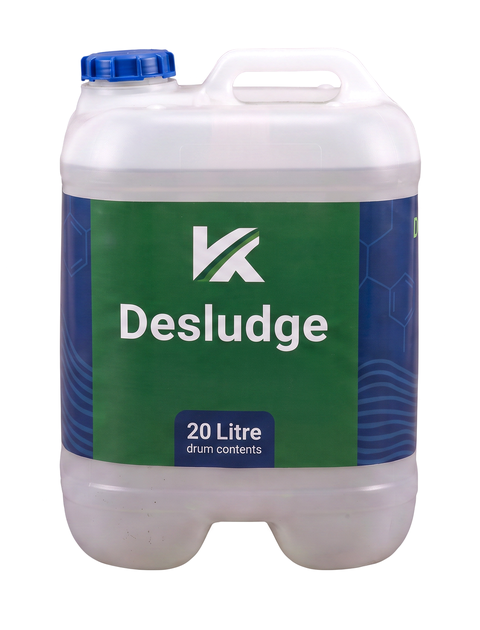 DesludgeUltrasonic degreasing and decarbonising — fuel residues, engine sludge and carbon from ferView & buy →Dosage →
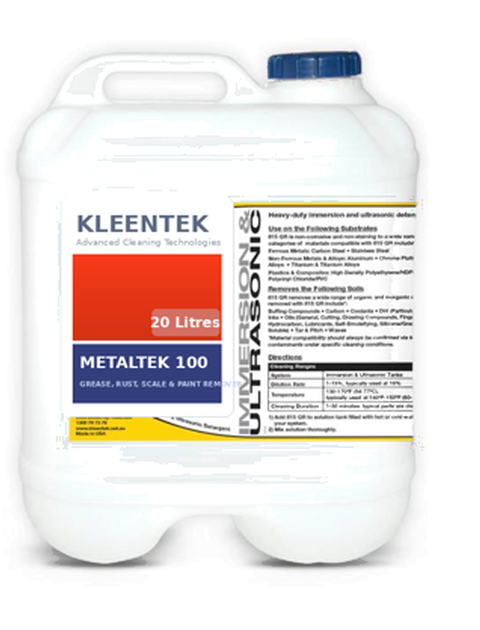 MetalTek 100Simultaneous removal of grease, rust, scale, carbon and paint from ferrous metals — one baDetails →Dosage →
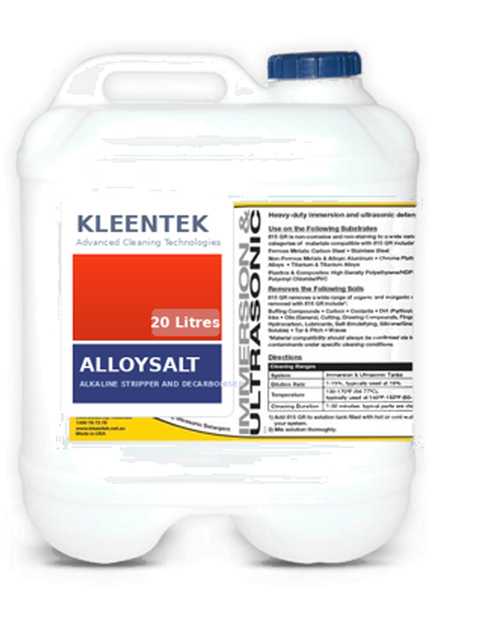
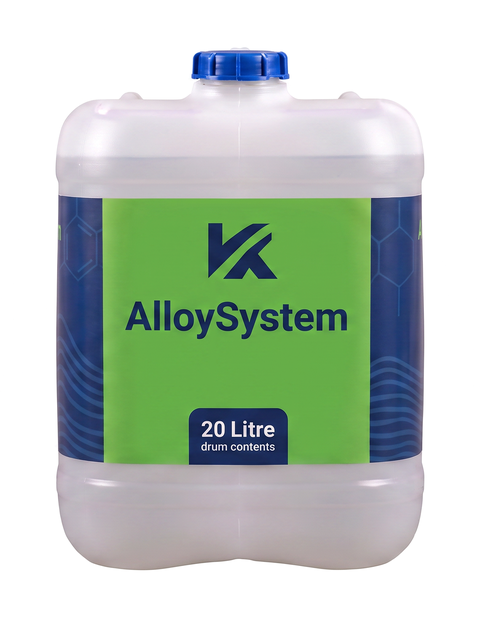 Alloy SystemTwo-part paint stripper & decarboniser — AlloySolve + AlloySalt. Safe on aluminium and zinc; a drop-in for methylene chloride strippers in many jobs.View & buy →Dosage →
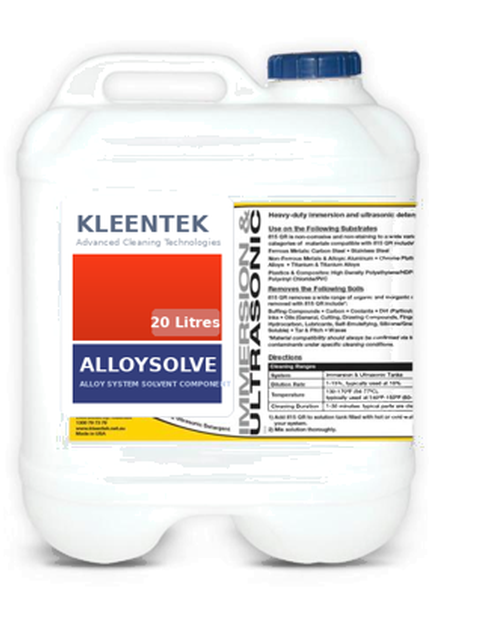 AlloysolveThe solvent part of the Alloy System, sold separately for top-ups — benzyl-alcohol action that swells paint and carbon films.View & buy →Dosage →
Acid-side chemistry for oxides, scale, rust and mineral deposits.
 DescaleRemoves oxides, rust and heat scale in ultrasonic and immersion applications.View & buy →Dosage →
De-oiling and flushing coolers, cores, galleries and circuits before inspection or descale.
After the clean: corrosion protection, passivation and rinse quality.
 Anti-RustPost-cleaning rust prevention — short-term in-process protection for ferrous parts.View & buy →Dosage →
Chemistry is blended for the machine that delivers it — foam behaviour, dwell time and rinse profile all follow the process. Select your washer type to see the chemistry designed for it.
Every product below belongs to one of these families. Match the family to the soil first, then check the substrate can take it.
Emulsifiers hold oil in suspension — the bath accumulates soil. Demulsifiers release oil to the surface where the weir removes it — the bath lasts far longer, which is why our machines are built around oil separation.
Cavitation generates heat. Toluene, MEK, IPA and similar in an open ultrasonic tank are an ignition risk — never. Genuine solvent duties belong in purpose-built sealed plant.
Brulin 815 QR-NF at 70 °C, 25 kHz, staged cycles — heavy diesel carbon out of ring grooves without touching a dimension.
Read the study →Every chemistry here is specified alongside a machine — weir oil separation and filtration protect the bath the chemistry works in.
Explore the range →Why oils need alkaline chemistry, scale needs acid, and most parts need both.
Read the article →From aerospace MRO to mining rebuild shops — each product card links to the industries it serves.
All industries →Most people arrive with a machine, a soil and a standard they have to satisfy. These five come up more than anything else. Open the one that sounds like your job — each names the product that answers it.
Automated spray and cabinet washers — RoboWash, Apollo, TurboWash, HotWash, Warthog, AMDS spray cabinets and similar — put chemistry onto the part under pressure and move straight to rinse. A high-alkaline bath has less dwell time to work and more chance to etch aluminium, zinc or magnesium on the way past. Near-neutral chemistry trades pH for surfactancy and lets the machine supply the energy. The same argument applies to aircraft exterior washdown, where the substrate mix is the whole problem.
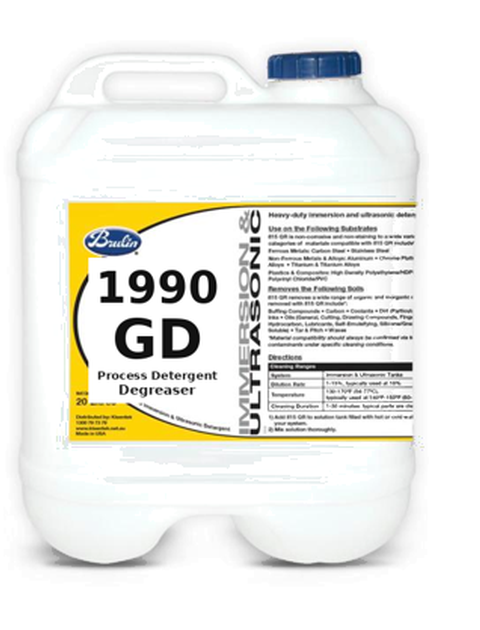
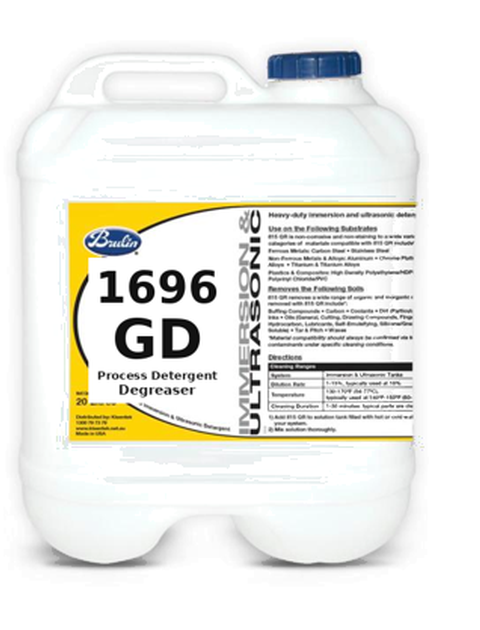
AquaVantage 1696 GD — pH 7.9 · Boeing BAC 5763 · Safran PR-1500 · AQMD Clean Air Solvent. foam behaviour in your specific machine before committing a bath.
Oxygen-service cleaning is the least forgiving specification in industry, and the market is far bigger than aerospace: hospital and medical oxygen delivery, oxygen cylinders and bottles, fire and rescue breathing apparatus, scuba and diving hardware, aviation oxygen systems, and critical-parts manufacturing. Work is typically governed by CGA G-4.1 (Cleaning Equipment for Oxygen Service) and ASTM G93, which sets cleanliness levels A–D against oxygen pressure and ignition risk — so the cleaning agent itself has to be qualified, not just the procedure.
AquaVantage 815 GD — used under NASA oxygen-service cleaning procedures at 7–12% dilution, 40+ OEM approvals, safe on virtually all metals including magnesium. Also 1696 GD, which carries ASTM G86 — mechanical-impact ignition sensitivity in liquid or gaseous oxygen.
Heavy soils on parts that are still governed by a specification — carbon, baked oils, grease and shop soil on components going back into a certified assembly. You need the aggression without losing the approval trail.
AquaVantage 815 QR-NF — pH 12.4, heavy degreasing with the Brulin conformance set behind it.
General workshop degreasing where no certification is required — trade workshops, jewellery, bicycle maintenance, small engine and general maintenance work. The economical all-rounder, bought by the drum.
FX Degreaser — the workshop workhorse. Material caution: high-alkaline — not for aluminium, zinc or magnesium components. If your load is mixed metals, start at reason 1 instead.
PCB cleaning in production, electronics manufacture, board-level repair and telecoms hardware — removing rosin, no-clean and water-soluble flux to recognised cleanliness standards without attacking components, legends or conformal coating. Water-based, non-flammable, works at ambient.
Not in the stocked sixteen — PCB and electronics chemistry is a sourced line. Ask us what suits the board, and see the electronics application guide.
Every chemistry is stocked in 10 L. Run one on a real load in your own tank before you order a 200 L or an IBC — it is the cheapest way to be certain, and it costs a fraction of the drum. The case studies carry the soil, the substrate, the dose, the temperature and the cycle time, so you can see what a chemistry did on parts like yours before you buy one. And if you want it checked before you order, talk to technical sales — describe the part, the soil and the machine and we will tell you which one to run and what to dose it at. If nothing in the range suits we will say so, rather than sell you a drum to find out.
Grease, rust, scale, carbon and paint lifted in one bath — the heavy-duty all-rounder for engine rebuild and general workshop work.
Read →The aerospace-qualified benchmark — 40+ OEM approvals, oxygen service, titration-managed bath life.
Read →Two-part carbon and paint stripping that is safe on aluminium and zinc — the methylene-chloride replacement.
Read →Chemical selector — four questions, applications, the full matrix and every data sheet → · Dosage calculator →