The stripper that spares the alloy
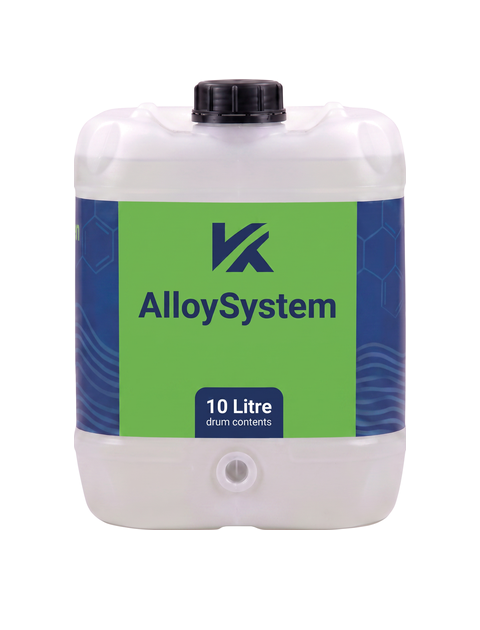
Methylene chloride built the paint-stripping trade, and its withdrawal left a hole: nothing seemed to lift stoved finishes and baked carbon without attacking the metal underneath. Caustic strippers do the job on steel and eat aluminium and zinc in the process. The Alloy System is Kleentek’s engineered answer — a two-part heated bath that strips the way the old chlorinated chemistry did, with no chlorinated solvent in the building.
The two parts are the point. AlloySolve, the solvent part, penetrates and swells cured paint and organic soils; AlloySalt, the alkaline part, lifts what has loosened, saponifies the oils beneath and holds the debris in suspension. Emulsifiers stop the paint redepositing, so the residue ends up in the filter rather than back on the work — and the bath keeps going.
Safe on steel, cast iron, aluminium and zinc; flatly not safe on magnesium. In many applications it is a drop-in replacement for a methylene chloride stripper, needing only heat — 40–70 °C, and it will not work cold. Sold as the complete system from 10 L; both parts are also sold separately for top-ups.
Penetrates and swells
Benzyl-alcohol solvent action gets under cured paint and carbonised films and swells them off the substrate — the job methylene chloride used to do, without its compliance burden.
Lifts, emulsifies, suspends
Silicate alkaline detergent lifts the loosened film, emulsifies the oils beneath, and holds residue in suspension so it ends up in the filter — not back on the work.
| Make-up | AlloySolve + AlloySalt in matched volumes, as supplied — then 10% v/v of the mixed system in water |
| Temperature | 40–70 °C — heating is required; the system does not work cold |
| Agitation | Static tanks perform better with agitation — air agitation is often adequate; ultrasonics gives the best result |
| Rinse | Rinse components thoroughly with water before drying |
| Bath care | Filter paint residues from the bath to extend solution life |
| Fire safety | The mixed system is non-combustible per its SDS. AlloySolve on its own has a flash point of 101 °C — well above the working range; AlloySalt has none. |
| Equipment | Ultrasonic tanks, agitated immersion, spray wash, static tanks with agitation |
One system, one make-up. Values from the Kleentek TDS (KT-TDS-ALSSYS Rev 1); the trial documents your working concentration, temperature and cycle before you commit.
Where it earns its keep
Heavy machinery refurbishment, aerospace component stripping, alloy and wheel refinishing, general manufacturing — and the classic aluminium engine work: pistons, heads and casings carrying carbon and paint.
Dose: 10% v/v of the mixed system in water, at 40–70 °C. The trial sets your exact process values; the TDS governs.
The working process
Delivered within Australia. Outside Australia, request a delivered price.
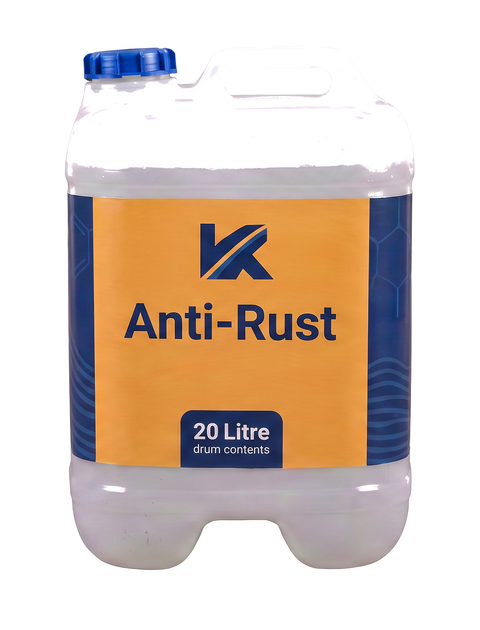 Anti-RustStops flash rust on cleaned steelView & buy →
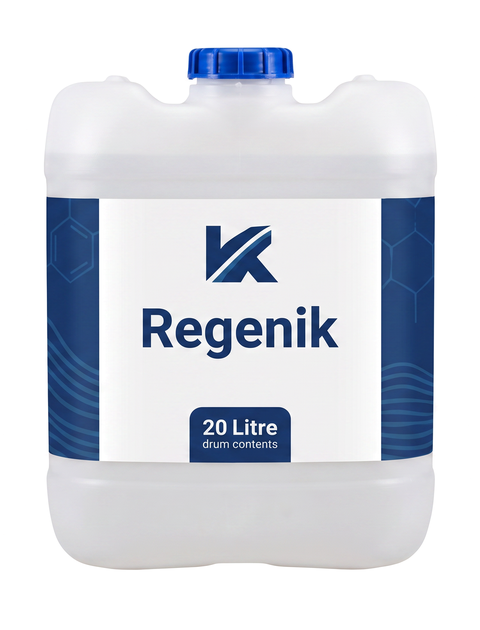 RegeniKThe ash stage after carbonView & buy →
| Mild & carbon steel | Steel on the TDS list |
| Stainless steel | Safe in prescribed use |
| Cast iron | Cast iron on the TDS list |
| Aluminium & titanium | Aluminium on the TDS list — the point of the system (titanium not listed; test) |
| Magnesium & soft alloys | Do not use — not safe on magnesium |
| Zinc & galvanised | Zinc on the TDS list — safe |
| Copper & brass | Not on the TDS list — test first |
| Plated finishes (Cd·Cr·Ni) | Not on the TDS list — confirm plating type first |
| Plastics & rubbers | HDPE · PP · EPDM · Viton safe; acrylic, polycarbonate and ABS craze; nitrile seals swell — use EPDM or Viton |
| Painted / coated surfaces | Strips paint — that is the job |
| Transport | Not classified as Dangerous Goods for road and rail. AlloySalt is a Schedule 5 (Caution) poison |