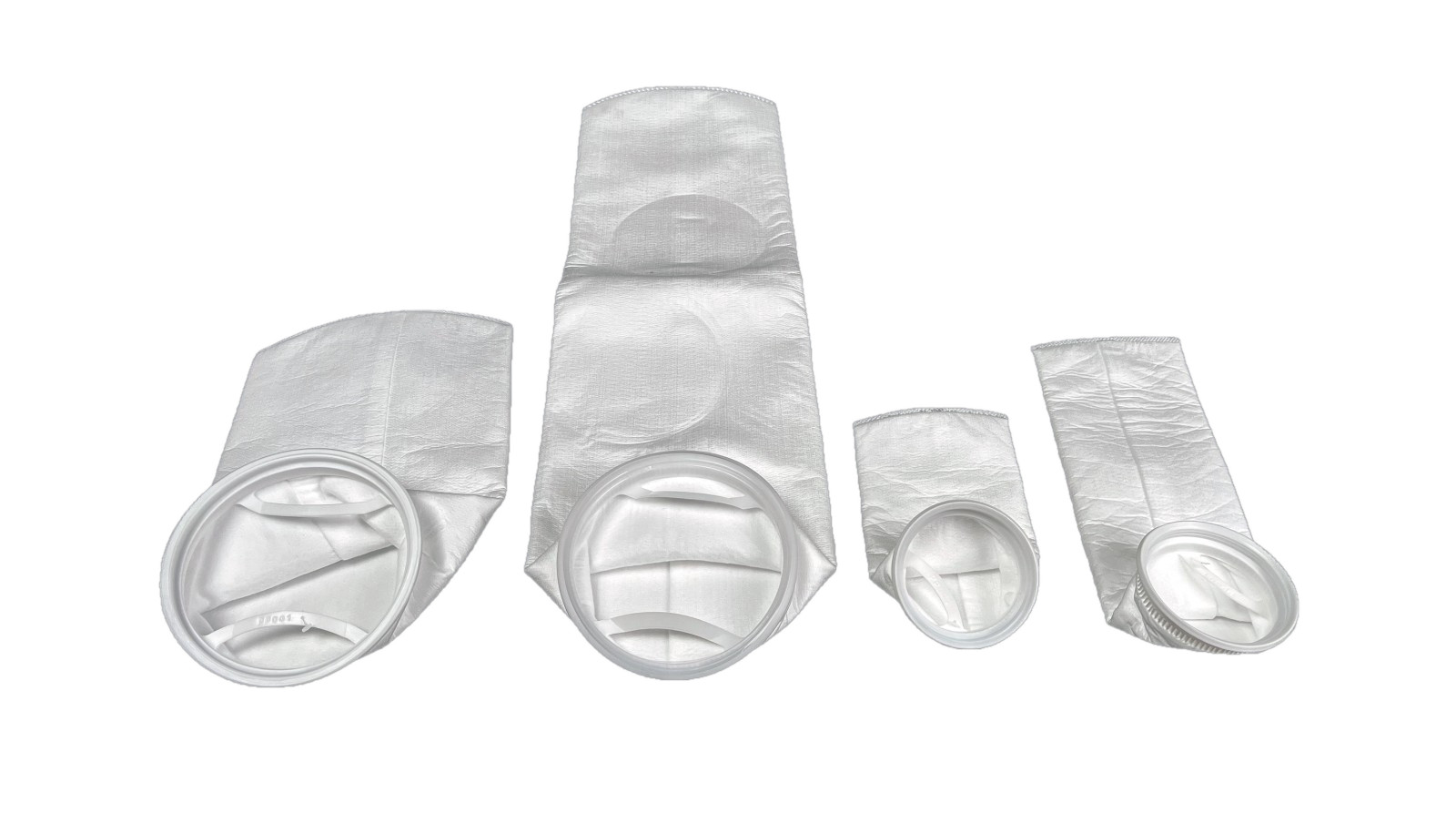
Liquid filter bags. Four sizes, one micron to eight hundred.
Fully welded polypropylene felt and nylon monofilament mesh bags for ultrasonic tanks, bag housings and process filtration loops. Pick the size, pick the rating, pick the collar — every combination below is stocked or made to order.
Industry-standard sizes
Pick the size your housing takes
Four trade sizes in stock and anything else to order. The housing decides which one fits — open a size to choose the media, the micron rating and the collar.
Most buyers compare filter bags on one number and assume it means the same thing on both media. It does not, and the gap is wide enough to change which bag is right for the job.
Needlefelt — nominal
50–90%
of particles larger than the rating, removed in a single pass — but nominal is not a standard, so the figure moves between media and between suppliers. A depth medium — particles are trapped through the thickness of the felt, not at a surface.
Monofilament — absolute
99%+
of particles at the rated size, held in a single pass, because the aperture is a measured hole rather than a claim. A woven aperture — the weave is the rating. Absolute does not mean perfect, and any supplier telling you nothing gets through is overselling.
So a 25 micron felt and a 25 micron mesh are not the same product. A buyer choosing on the number alone is comparing the wrong thing.
What a filter bag cannot do
Carbon black is 0.01 to 0.1 micron. Smoke is 0.01 to 1 micron. For scale, a human hair is 60 to 80 micron. Carbon is three orders of magnitude finer than the finest bag anyone sells.
No filter bag catches carbon in a single pass. What a 1 µm needlefelt removes is agglomerated carbon — the particles clump in a working bath — and it removes it progressively over many passes of recirculation, not in one. That is why bath clarity improves across a shift rather than immediately, and why a fine felt on a carbon duty blinds off faster than the same bag on swarf.
If you need a bag chosen for a specific soil, tell us the soil, the bath and the flow rate rather than a micron number. Talk to technical sales →
Collar options
Three collars fit every housing
P — Polypropylene snap ring (flip-up lift handle)
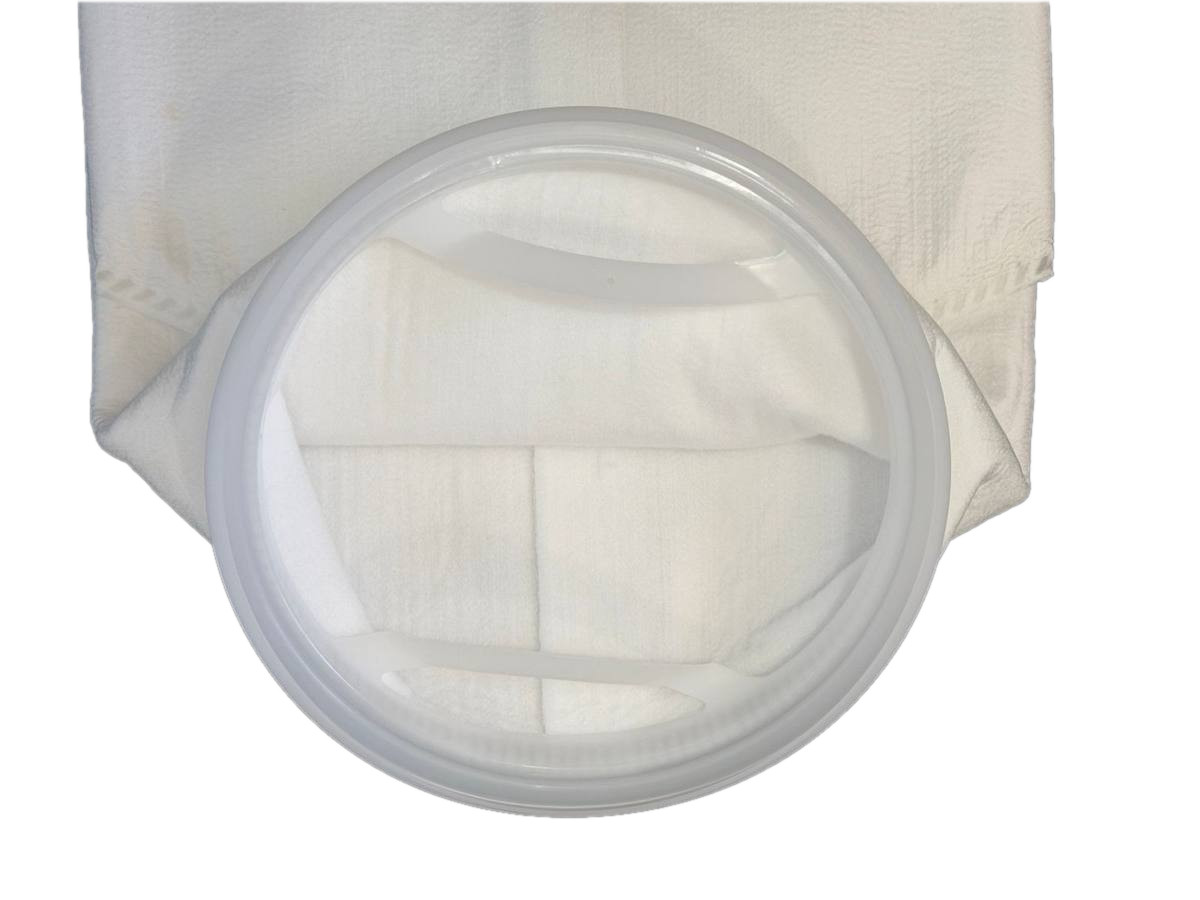
Moulded PP flange ring with an integral fold-up handle — snaps into the housing restrainer for a crevice-free seal and lifts straight out at change-over. The standard choice for most housings and full plastic-media compatibility.
S — Stainless steel ring
304 stainless steel sewn-in ring for housings designed for metal-ring bags and higher-temperature duties.
G — Galvanised steel ring
Zinc-coated steel ring — the economical metal option where the duty is neither acidic nor corrosive. Not for descaling loops or acid-side chemistry, where the coating will not last.
Add the collar letter to the part code when ordering — e.g. MFB-S2-PP-5-P (size 2 · PP felt · 5 µm · poly snap ring).
Never bought one before
What size, felt or mesh, which polymer, what micron
Four things have to be settled before you can order. They settle in that order, because each one narrows the next. If it is still not clear after this, ring us with the bath, the soil and the flow rate.
The housing decides the size.
Bag sizes are a trade standard. A vessel takes one size and only one. If there is a
bag in there now, read the collar or the old box. If not, the housing has a code on the plate or in
the manual.
If you are specifying the vessel as well, work from flow. The manufacturer's working limits for a Size 2 bag are 30 m³/h for normal liquids, dropping to 20 m³/h at 5 µm and finer. Higher numbers you see quoted are maximums, not rates to size against — our own housings are rated at 24 m³/h a bag for clean water at 10 µm, which is where a real duty sits. Run a bag near its ceiling and it blinds sooner, so
size up rather than down: a size 2 costs a third more than a size 1 and lasts roughly twice
as long, because it has twice the area doing the same work.
No code on the plate? Measure the old bag
AAcross the mouth
Inside the collar, not across the outside of the ring. This is the diameter — 7″ or 4″ on everything we stock.
BCollar to bottom seam
From under the collar to the seam at the bottom, with the bag hanging straight. This is the length, and it is what separates a size 1 from a size 2.
ⓘOr skip both
Nearly every vessel has its code on the plate or in the manual — 717, 732, 408, 415. That is the answer on its own, and it is quicker than a tape.
A × B lands on one of the five rows above. If it lands between two, measure again with the bag hanging rather than laid flat — a felt bag laid on a bench reads short.
Felt or mesh is a question about the particle, not the liquid.
The two constructions do genuinely different things. One traps through a thickness,
the other stops at a surface. Getting this wrong is the most common reason a bag blinds in an hour
or lets everything through.
Non-woven · depth
Needlefelt
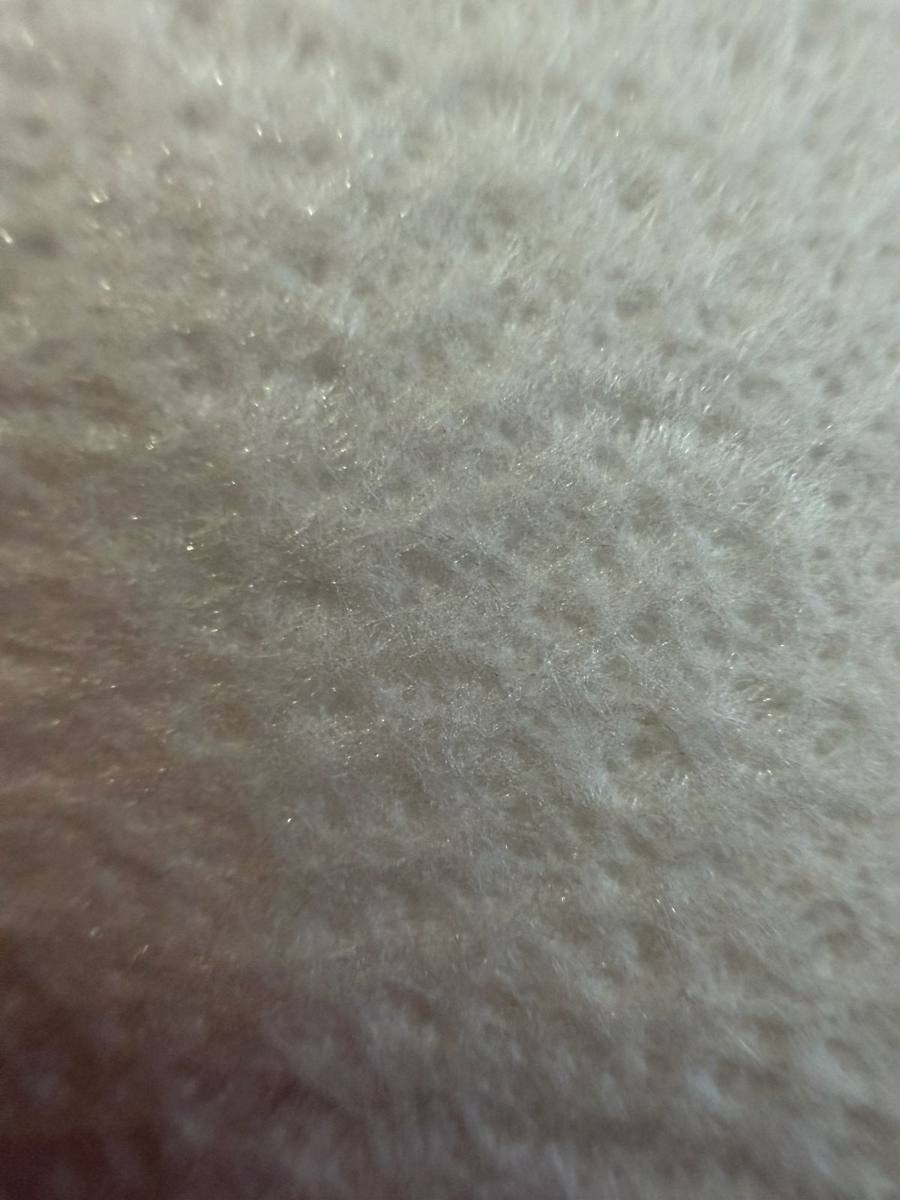
Fibres matted and needle-punched into a mat about 2 mm thick. Particles are caught
all the way through that thickness, not on the face, so the bag holds a lot of dirt before it
chokes.
1 to 200 µm — the only choice below 50
Nominal rating — a proportion, not a guarantee
Single use. It is cheaper than the labour to clean it
Best on fine, soft or sticky solids and on cloudy liquid
Woven · surface
Monofilament mesh
Single smooth strands woven to a measured aperture. Nothing is trapped in a depth —
the weave is the rating, so what it holds is what will not fit through the hole.
50 µm and coarser — below that the weave closes up
Absolute rating — a defined hole size
Washable and reusable, many times
Best on hard, discrete particles, and when you want the solids back
The quick test: can you see the bits? Visible swarf, flake, grit,
scale or resin beads — use mesh. Liquid that is just cloudy or hazy, with nothing you can
point at — use felt. Sticky, greasy or gelatinous — felt, and coarser than you think.
The other reason to choose mesh
If the solids are worth something — resin, catalyst, precious metal,
recoverable powder — mesh gives them back. Wash the bag out and keep what was in it. In a
felt bag the solids sit buried through 2 mm of fibre and go in the bin with it.
A 25 µm felt is not a 25 µm mesh
A felt rated 25 µm removes a proportion of what is bigger than
25 µm. A mesh rated 25 µm has a 25 µm hole. On the same duty they behave
nothing alike, and the number on the label is not a comparison. See the micron tab.
Polypropylene unless the bath is hot, or the bath is solvent.
Three polymers cover everything we sell. The differences that matter are
temperature and chemistry. Each has a failure mode worth knowing in advance.
Tell the page what you run and it will say which of the three survives it, and why. Chemistry rules media out more often than micron does.
What is in the bath?the answer changes with the chemistry
or pick the drum:
Polypropylene felt
Polyester felt
Nylon mesh only
Max temperature
90 °C
150 °C
150 °C
pH range
1–14
2–13
3–11
Acids
Excellent, including strong mineral acid
Weak acids fine; strong mineral acid attacks it
Poor — mineral acids attack it
Alkalis
Excellent, to pH 14
Never — alkali hydrolyses polyester and the bag tears
Limited above pH 11
Solvents
Poor — aromatic and chlorinated attack it
Excellent
Good
Micron range
1–200 µm
1–200 µm
50–800 µm
Aqueous and under 90 °C: polypropylene. That is most jobs and nearly all of
ours. It is the only one of the three rated across the full pH range.
Over 90 °C: polyester — but only if the bath is not alkaline. Hot and
alkaline together rules out both felts, and that is a phone call rather than a web order.
Solvent: polyester. Polypropylene is the wrong polymer for aromatic and chlorinated
solvents and will soften in them.
Strong acid or strong caustic: polypropylene, always. And not nylon mesh — see
below.
Running Misonics chemistry? Here is the answer for each bath
✓ what we would send✓ also works! check your bath first× will not survive it
Tap a product to open it — each page names the bag for its own bath. Alloy System and ALLOYSalt have no published pH yet, so ask us before you pick a bag for those.
The one that catches people out. Nylon monofilament is rated pH
3–11. Eight of our sixteen chemicals sit above pH 11 and two sit below pH 3, so
on most Misonics baths the mesh bag is the wrong bag — not because it is coarse, but
because the acid or the caustic eats it. On those duties it is polypropylene felt.
Work back from what you are protecting.
Most people pick a rating by guessing how small the particles are. That usually
lands too fine. Ask instead what goes wrong downstream when a particle gets past. That sets the
number.
What you are protecting
Start at
Why
A spray nozzle
One third of the orifice
Below a third, particles bridge and block the jet
A pump or a mechanical seal
100 µm
Seals are hurt by grit, not by haze
A cartridge filter downstream
5 to 10× the cartridge rating
The bag should do the bulk work so the cartridge only polishes
A surface finish or a coating
The size of the defect you keep seeing
Measure the inclusion, then filter one step below it
Just bath clarity
25 µm felt
The workhorse. Clears a working bath without choking
An ultrasonic bath in service
25 µm felt, one step finer if it stays cloudy
The bag is defending the transducers and the parts, not polishing water
Finer is not better. A rating tighter than the job needs blinds off
sooner, drives the differential pressure up, costs more per litre filtered and buys nothing
downstream. Use the coarsest bag that still does the job.
If you do not know
Start at 25 µm in polypropylene felt. It is the middle of the range, so whichever
way it is wrong, the next step is obvious.
Blinding inside a shift? Go coarser, or put a coarse bag in front of it.
Bath still cloudy after a full recirculation? Go one step finer — 25 to 10, not
25 to 1.
Getting both? That is the two-stage answer below, not a single rating problem.
Two stages beat one fine bag
A 100 µm bag ahead of a 10 µm bag will outlast a single 10 µm bag
several times over. The coarse one takes the load that would otherwise blind the fine one. Two
housings cost more to set up and less to run. If you are changing a fine bag more than once a
shift, you do not need a finer bag. You need a coarser one in front of it.
And the number on the label
Nominal ratings are not standardised. A 10 µm nominal felt from one maker and
a 10 µm nominal felt from another are not required to perform the same, and neither is
required to hold everything at 10 µm. An absolute rating is a measured aperture, so it means
the same thing everywhere. When you are comparing two quotes, that is the difference you are
looking at — not the number.
Change-out is a one-person job with gloves on — no tools, no draining the loop, no spanner work over a hot bath.
In service
The bag defends the bath
In a filtration loop the bag catches what the ultrasonics strip — continuously. Solids leave through the felt instead of settling in the tank, the chemistry keeps working, and change-out takes a minute: lift the handle, drop the new bag, snap it home.
Running one of our machines? Tell us the model and duty and we’ll spec the bag — size, micron and media — to the loop it feeds.
Bag filtration is the same job everywhere — take the solids out before they reach the pump, the nozzle or the part. What changes is the duty. Pick the one that looks like yours.
A bag takes the soil out once the chemistry has lifted it off the part. Sixteen products, and the bath you end up with decides which bag survives it — a pH 14 degreaser and a pH 1 descaler do not take the same media.
Polypropylene needlefelt and nylon monofilament mesh are the two we hold and price on this site. Polyester felt, polyester and polypropylene mesh, PTFE membrane, high-efficiency, activated carbon, oil-absorbent and landfill leachate are all made to order — as is any size outside the chart above. The builder walks the whole specification and sends it for a price.
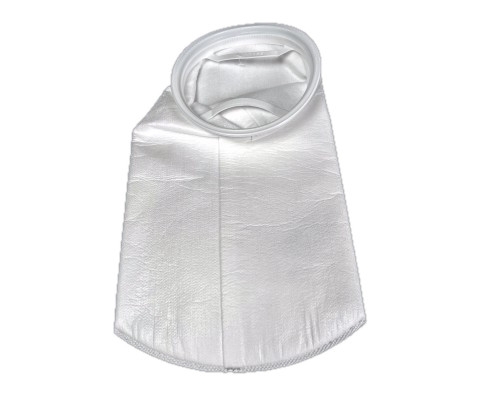 Size 1Housing 717
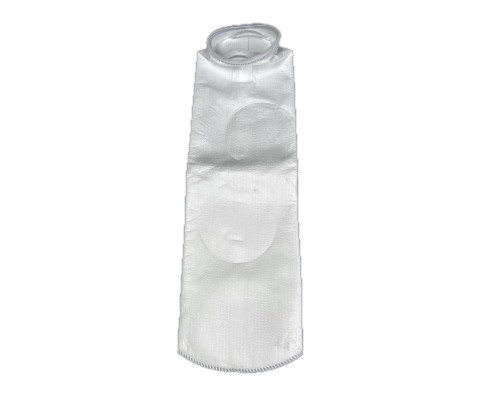 Size 2Housing 732
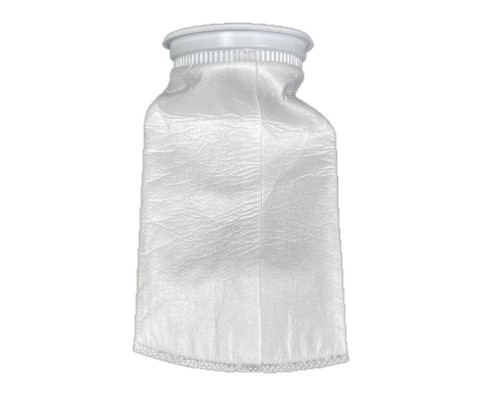 Size 3Housing 408
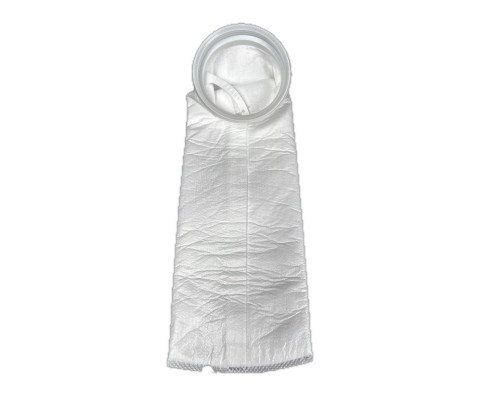 Size 4Housing 415