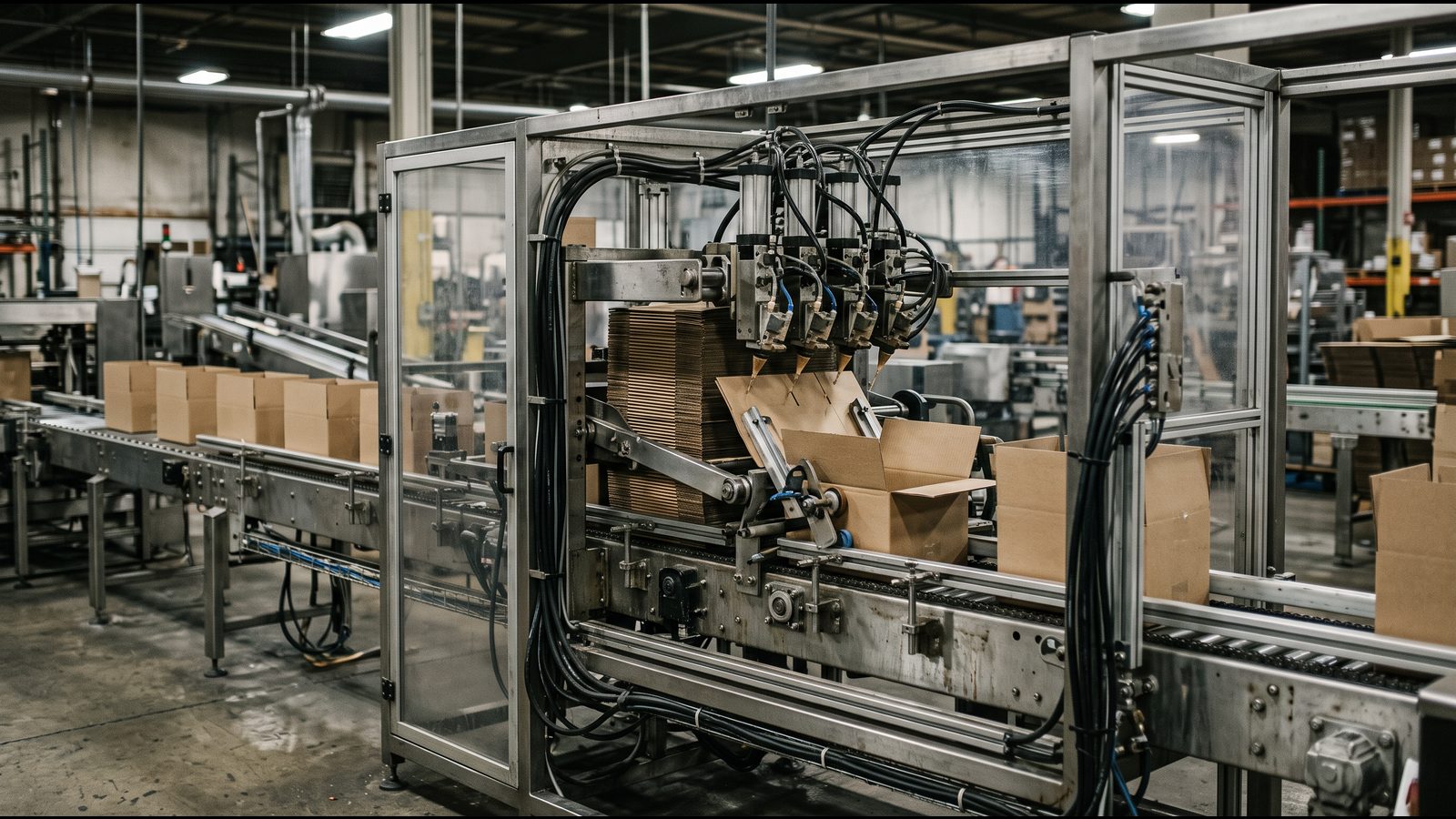
Case erector applying hot melt adhesive to carton flaps on a packaging line
Industries / Manufacturing & Process / Packaging
Industries · Manufacturing & Process

Ultrasonic Cleaning for Packaging Lines

Adhesive is the soil that stops a packaging line. Hot melt chars onto applicator heads and hardens in the nozzle bore, cold glue dries through the pot and the roller train, and carton dust binds into both until flaps stop sealing and the line runs down or stops.

Misonics cleans the hardware that carries the glue — applicator heads and nozzles, gluing and folding modules, glue pots, filling parts and change parts — without scraping, solvent soaking or stripping assemblies down to components.
The Contamination Problem

What we remove on packaging lines

Hot melt adhesive

EVA and polyolefin hot melt, charred in the head and hardened through the nozzle bore.

Cold glue, starch and dextrin

PVA and starch adhesives dried through the pot, the pump and the roller train.

Carton dust and paper fibre

Board dust bound into the glue film and packed around cams, springs and guides.

Product residue

Sugar, sauce, dairy and powder carried back onto fillers, formers and change parts.

Coding and marking ink

Dried ink on coder hardware, print heads and the guarding around them.

Oil, grease and grinding paste

Lubricant mixed with dust into a paste in bearings, linkages and pin bores.

The endpoint is a defined, repeatable process condition — cycle time, chemistry, concentration, frequency and temperature are recorded parameters, not operator judgement.
Trial Evidence

Line hardware, before and after

Modules and applicator hardware from a working packaging line, photographed as received and after a documented cycle. Drag the handle across to compare.

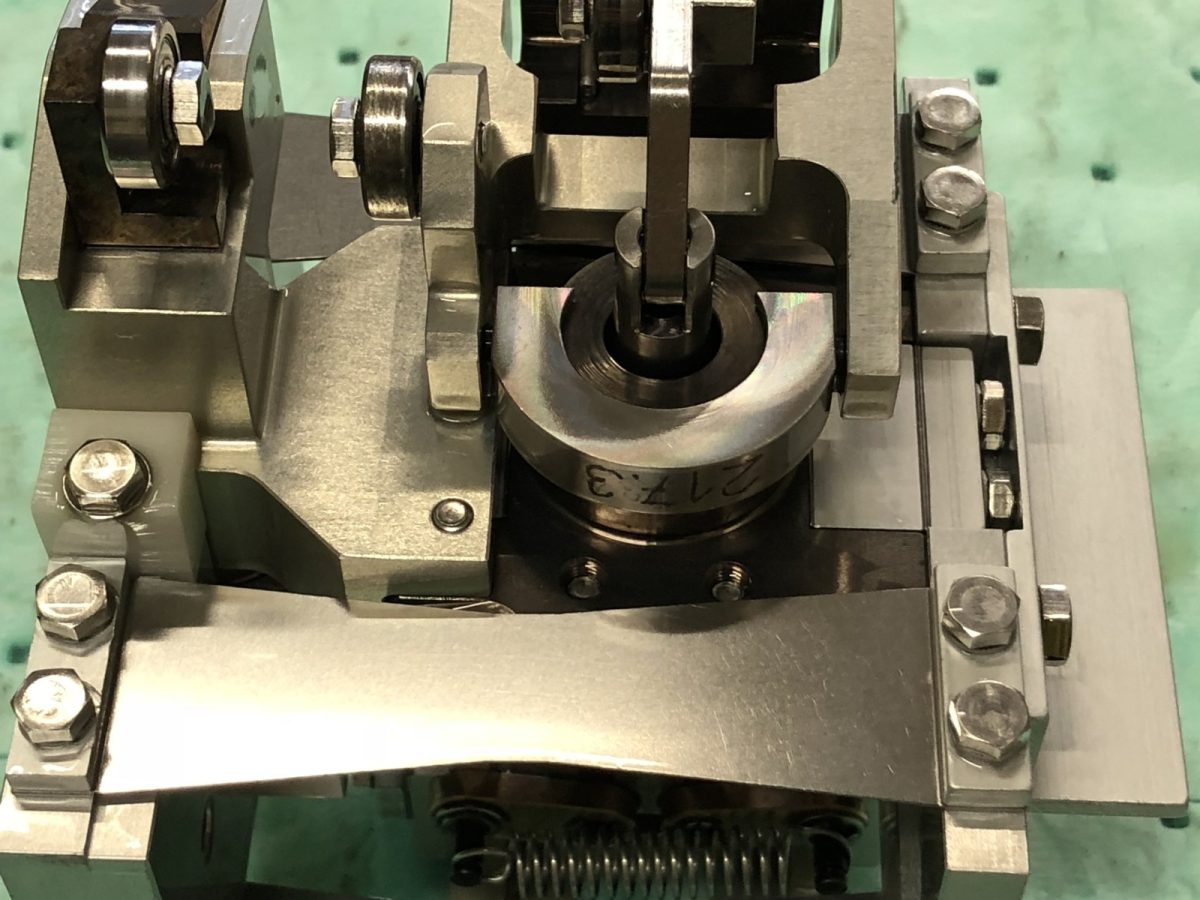
Packaging gluing module. Glue build-up, carton dust and oil packed into a module full of springs, cams and fasteners — the geometry that makes hand cleaning hopeless is exactly what cavitation is for.

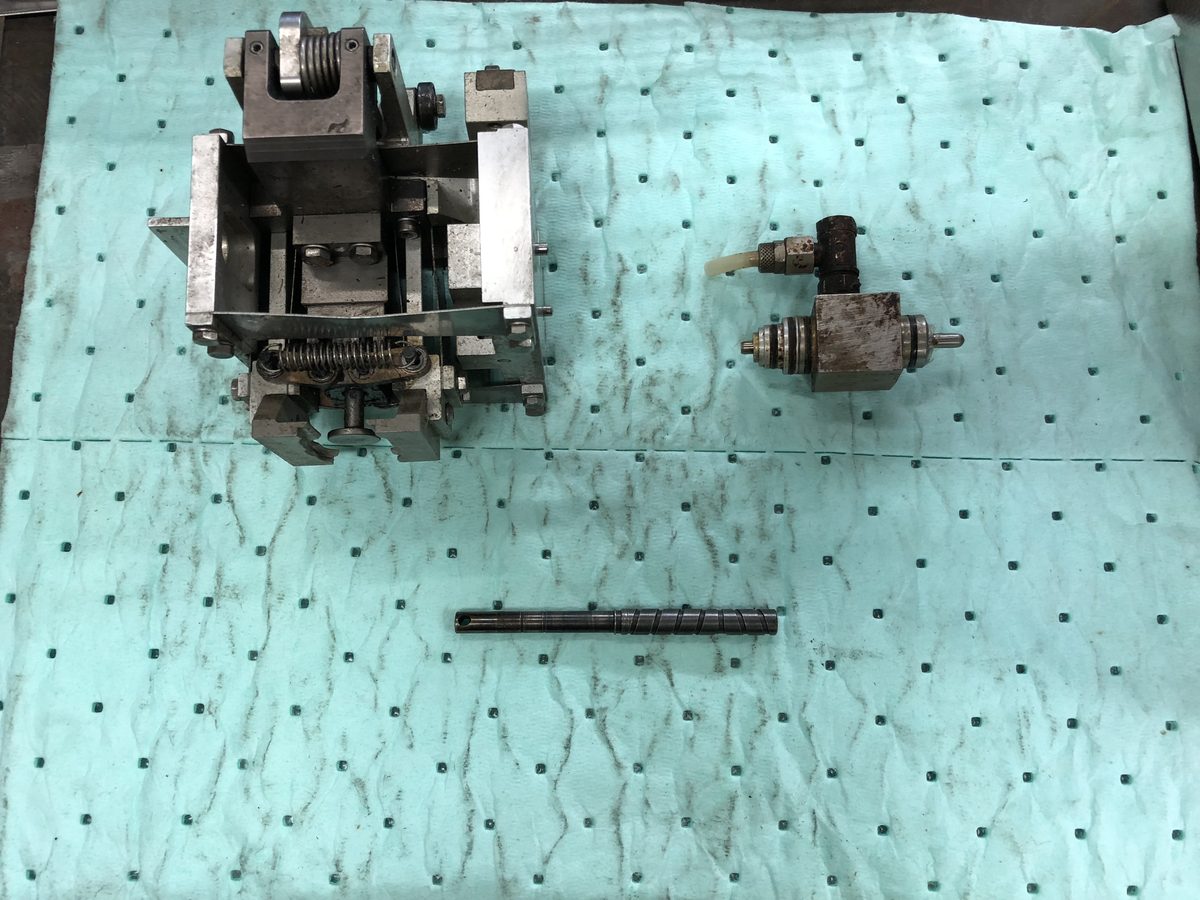
Gluing module, adhesive applicator head and drive shaft laid out before ultrasonic cleaning

The set that came in. Gluing module, adhesive applicator head and drive shaft — cleaned together in one basket, in one cycle, with no dismantling beyond removing the elastomer seals.

Same trials, photographed separately

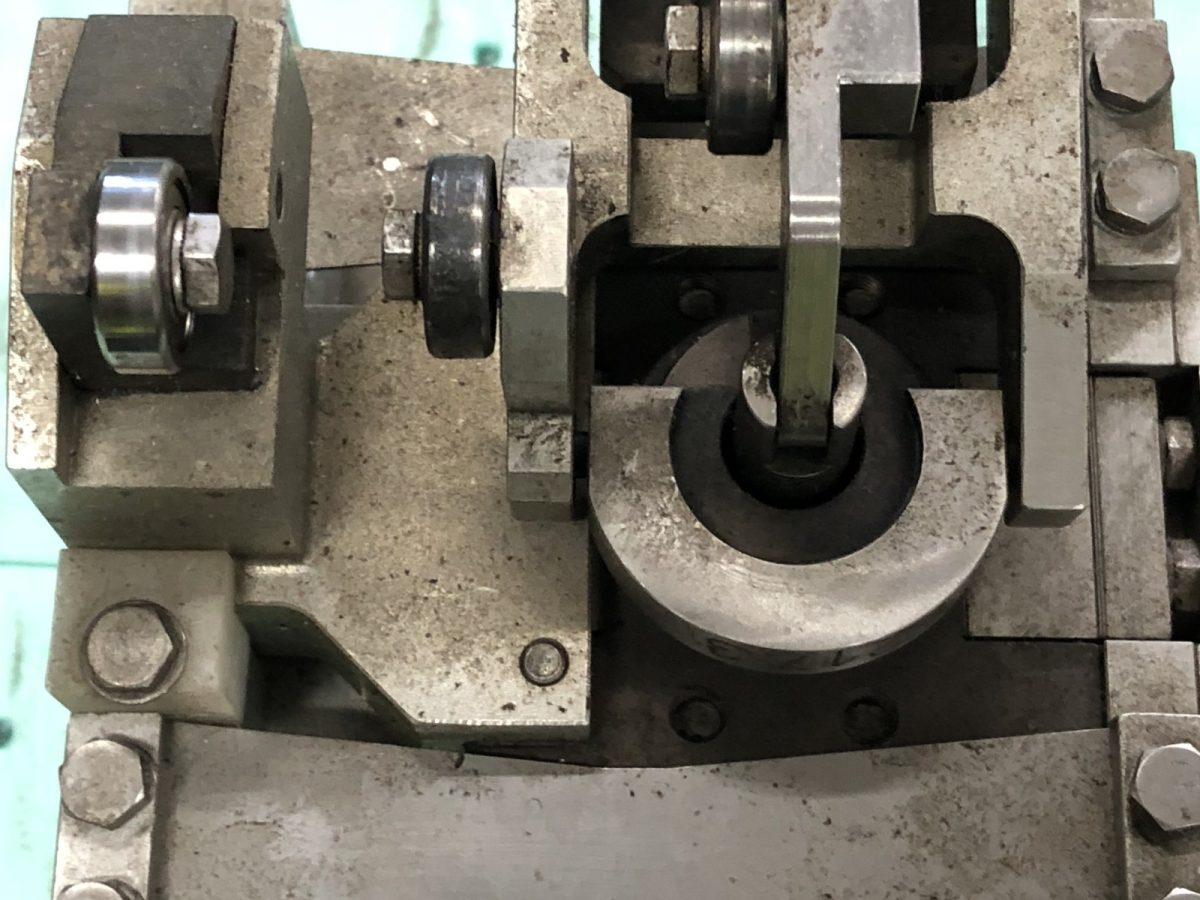
Cam and plate detail — before and after ultrasonic cleaning — as received
As received
Cam and plate detail — before and after ultrasonic cleaning — after the cycle
After cycle

Cam and plate detail. The working faces that set glue placement, clean without dismantling the module.

Components We Clean

Real parts, real materials

Adhesive application hardware

Applicator heads, modules, nozzles, filter screens and manifolds — the bore and the seat cleaned through, not reamed out.

NozzlesApplicator headsManifoldsFilter screens

Gluing, folding and carton modules

Cams, springs, plates and pin bores in assembled modules off carton erectors, cartoners, case packers and gluers.

CamsSpringsPin boresPlates

Filling, dosing and capping parts

Filling nozzles, pistons, valve bodies and capping chucks carrying product residue back into the next run.

Filling nozzlesPistonsValve bodies

Change parts and formats

Star wheels, buckets, formers, guides and timing screws — cleaned between format changes rather than wiped on the line.

Star wheelsFormersGuidesTiming screws
Why Ultrasonics — And Why These Machines

Cavitation reaches the nozzle bore and the pin bore

Bubble collapse at the liquid–metal boundary lifts softened adhesive out of drillings, seats and cavities without anything touching the surface. Nothing abrades, nothing is reamed, no metal is removed — so the orifice that meters the glue is the same size afterwards.

GeneratorResonance held all shift

The VarioSonic G4 tracks the transducer array as temperature and load shift — conversion efficiency up to 95%.

Sound fieldSweep modulation

Eliminates standing-wave hot and cold zones across a loaded basket.

Process controlLogged, recipe-driven cycles

Stored recipes and logged cycles — audit evidence produced as a by-product of running.

Bath conditionFiltration & oil separation

Multi-stage filtration and weir oil capture hold results steady as adhesive loads the bath.

SupportOver-the-air diagnostics

Most faults identified — many resolved — without a site visit.

ConstructionBuilt to work hard

Heavy 316 stainless tanks, tested before despatch, every wearing part replaceable.

Equipment Fit

The machine follows the process

A benchtop in the maintenance workshop handles nozzles and heads. A floor machine beside the line handles modules and change parts between runs.

PowerSonic

Benchtop for nozzles, heads and small assemblies in the workshop.

Explore the range →

MSX

Floor-standing cleaning beside the line, sized to a module or a set of change parts.

Explore the range →

UltraWash

Sealed multi-stage where rinsing and drying matter before the parts go back on.

Explore the range →
Chemistry

Heat and alkalinity, then cavitation

Hot melt softens in a heated alkaline bath and cavitation carries it out of the nozzle bore and off the head. Cold glue, starch and dextrin redisperse. The formulation is chosen against the adhesive and the substrate — aluminium heads, anodised parts, plated hardware and elastomer seals each set a limit on pH and temperature, and seals come out before the cycle. See the chemistry range →

Applications Matrix

Component coverage at a glance

Component categorySpecific parts / assembliesCompatible materials
Adhesive applicationApplicator heads, nozzles, modules, manifolds, filter screensAluminium, stainless, plated steel
Carton handlingGluing and folding modules, cams, plates, pin boresSteels, stainless, bronze
Filling & dosingFilling nozzles, pistons, valve bodies, capping chucksStainless, PTFE-lined
Change partsStar wheels, buckets, formers, guides, timing screwsStainless, UHMWPE, acetal
LabellingGlue pots, rollers, pads, gripper cylindersSteels, stainless, aluminium
Coding & markingPrint heads, nozzle plates, guardingStainless, aluminium

Prove it on your parts

Where an application needs validation, we clean sample components in our laboratory, document the result, and specify the machine around the verified process. If ultrasonics is the wrong answer, the trial shows that too, and we will tell you.

Talk to an engineer
FAQ

What packaging engineers ask us

Will it damage an adhesive applicator head?
Elastomer seals, O-rings and any cartridge heater come out before the cycle. The metal body, the nozzle and PTFE-lined bores are unaffected — cavitation removes the adhesive, not the metal, so the metering orifice is the same size afterwards.
Do we have to strip the gluing module?
No. Cam faces, plates and pin bores clean with the module assembled. Springs, fasteners and blind features are where hand cleaning fails and where cavitation works.
Can it replace solvent soaking or burning nozzles out?
For most hot melt and cold glue, yes. Solvent soaking leaves residue in the bore walls and carries an exposure and disposal burden; burn-off risks the metallurgy and the orifice. A heated alkaline bath with ultrasonics does neither.
How long does a set of nozzles take?
Minutes rather than a shift, with the parts in a basket instead of on a bench. The trial establishes the real cycle for your adhesive and your hardware.
Can we clean change parts between format changes?
Yes, and that is usually where the time is recovered — a basket of star wheels, formers and guides cycles while the line is already down for the changeover.
What about food contact parts?
Chemistry is selected for food-contact duty and the process ends on a rinse and dry stage. The endpoint is agreed in advance and each cycle is logged against it.
Related Industries · Manufacturing & Process

Also in this sector