Take the element out and clean it by immersion in a heated ultrasonic tank, with chemistry matched to the deposit. Flush it, dry it, then test its flow or pressure drop against a clean baseline. Cavitation works wherever the liquid wets, so it reaches the root of every pleat and the inside of the pores, where a backwash, a brush or a lance cannot. The test number decides whether the element goes back into service, not how it looks.
Why a backwash stops working
A backwash works on cake: loose solids sitting on the upstream face, released by a pressure reversal. It does nothing about coating. Once a deposit carbonises or polymerises, it bonds to the wire and sits inside the fold. Reversing the flow pushes on it and it does not move.
The signs are the same on every plant. Differential pressure climbs cycle after cycle. The backwash interval shortens. In the end somebody orders a new set.
Mechanical cleaning has its own problem. Nobody brushes a pleat pack or runs a lance down it without closing some pleats and stretching others. A blocked pleat is a lost rating. A stretched one is a bypass. Immersion touches nothing.
The steps
- Record the element. Serial, condition and a flow or pressure-drop reading before cleaning.
- Take off the bulk first. Where heavy polymer or sludge masses the surface, remove it thermally or by hand. The tank is the precision stage, not the dumping ground.
- Release the oil. On lube and fuel-side elements the solids are bound in an oil film. An ultrasonic degrease stage releases them.
- Clean in matched chemistry. Alkaline chemistry for carbon, polymer and oil. An inhibited acid stage for carbonate and silica scale. Heated, with ultrasonics running.
- Flush. A directional flush drives the freed solids out of the depth of the media.
- Rinse and dry.
- Test and log. Flow or pressure drop against the clean baseline, logged per serial. Sintered and laser-drilled discs also get a bubble-point test for pore integrity.
Element, deposit and process
| Element | Typical deposit | Process | How it is proved |
|---|---|---|---|
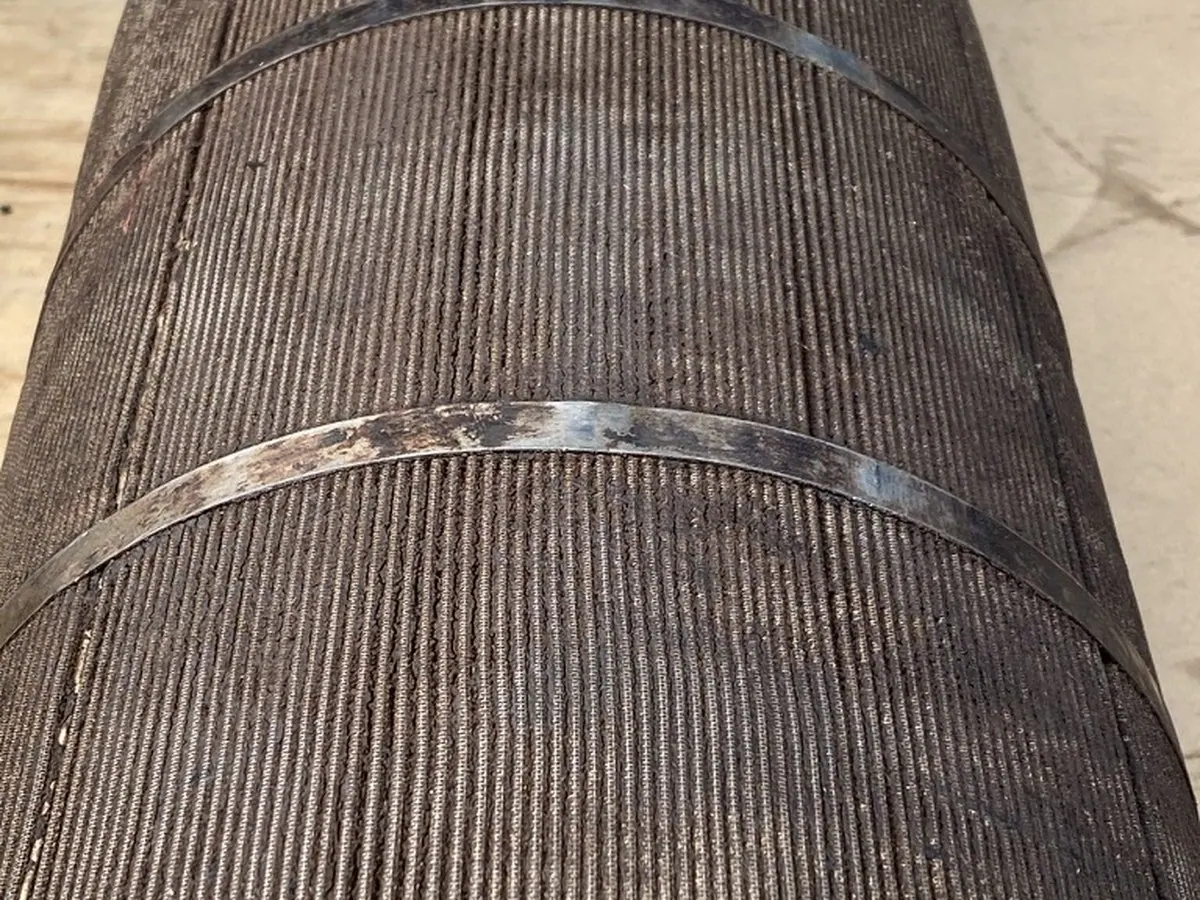
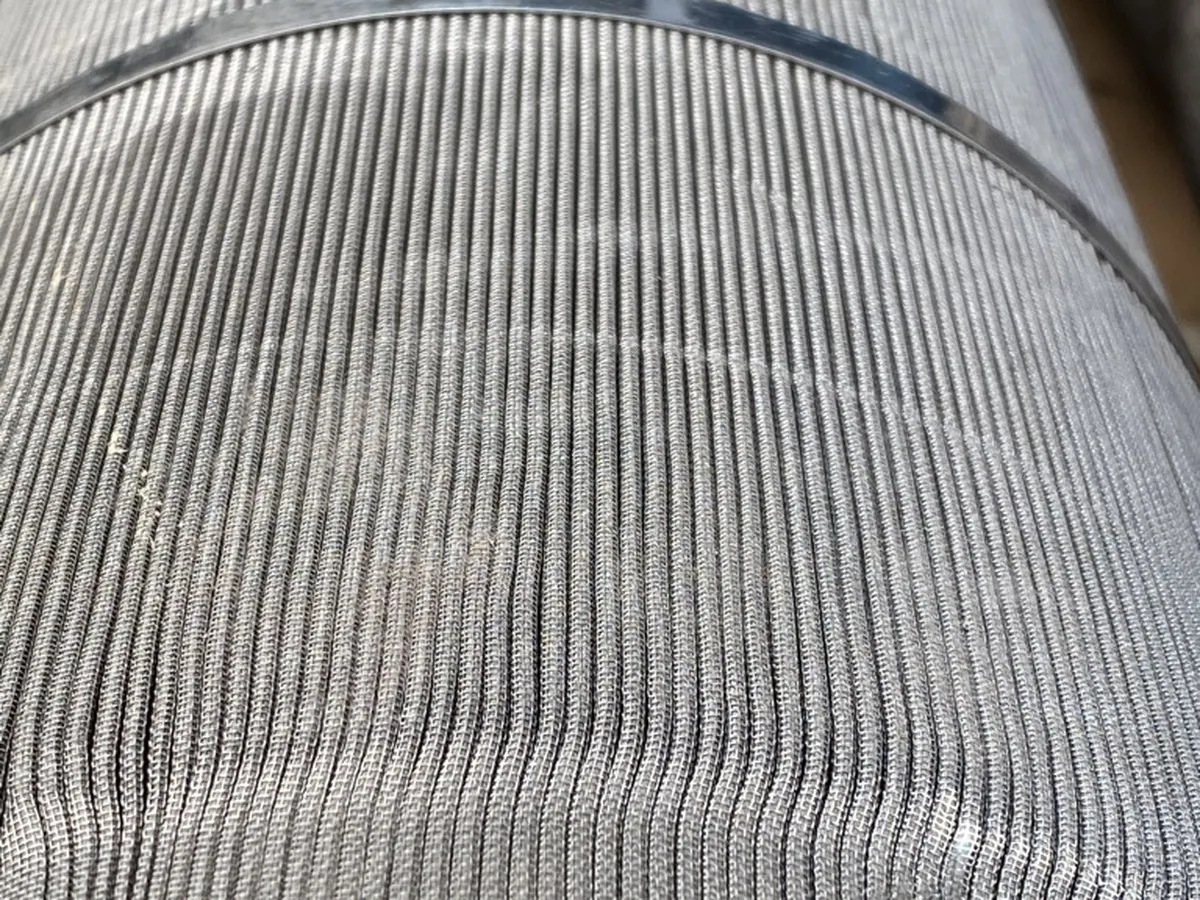
| Pleated stainless mesh candle | Carbonised deposit bonded to the wire, packed in the fold root | MetalTek 100 at 25% v/v, 75 °C, 60 minutes, 25 kHz, one bath (as run) | Pleats open and weave readable, collar and seal face clean |
| Candle filters, process filters, demister pads | Process fouling, scale, oil-carried solids | Alkaline degrease, then Descale where carbonate or silica is present, then directional flush | Flow or pressure drop against clean baseline, per serial |
| Melt filter discs and screen packs | Degraded polymer, carbonised melt, pigment in the pores | Bulk removal, then a hot alkaline strip at 25 to 40 kHz depending on disc robustness | Bubble point and flow against a new-disc baseline |
| Diesel particulate filter | Soot, oil and lubricant ash | Two baths: alkaline for carbon and oil, then RegeniK for the ash | Flow and weight, before and after |
Process figures for the mesh element are as run on that job. Yours are set by a trial against your own deposit.
Ultrasonic cleaning against the other methods
| Method | What it does | What it leaves |
|---|---|---|
| Backwash in service | Releases loose cake from the face | Bonded coating in the pleat and the pore |
| Brush or lance | Clears what it can reach | Closed and stretched pleats, a lost rating or a bypass |
| Burn-off oven | Burns off polymer | Damaged sinter and metallurgy, ash bridging the pores |
| Solvent soak | Softens fresh residue | Stalls on cross-linked residue, film left on the hole wall |
| Ultrasonic immersion | Cavitation in the fold root, the core perforations and the pores | Nothing mechanical touches the element; the result is measured |
Clean or replace?
Cleaning does not beat replacement on every element. Four numbers decide it, and they are all yours:
- What one element costs to replace, and how many are in the housing.
- The lead time, and what you carry in spares to cover it.
- How often the set is being changed out now.
- What the plant costs per hour when the housing is down.
Where those add up, the elements stop being purchase orders and become a rotating pool with a known recovery rate. Some elements will not come back, and the sum has to allow for them. Send us six months of element invoices and one fouled element and we will do the sum with you.
The machines and chemistry that do it
- EvoSonic floor tanks: 25 kHz, heated, with a powered platform so a wet element is not a manual lift. The mesh elements above were cleaned in an EVS 300.
- UltraWash: soak, ultrasonic clean, rinse and dry in one enclosed sequence, for melt filter disc recovery.
- MSX benchtop: for lab-scale screen packs and small elements.
- Filtration on the bath: what comes out of the elements has to be taken out of the tank, or it settles on the next one.
Questions we are asked
Can you clean a pleated filter element instead of replacing it?
Yes, when the element is built to be taken out and cleaned, such as pleated stainless mesh or sintered metal. Ultrasonic immersion reaches the root of each pleat without touching it. A flow or pressure-drop test then says whether it goes back in.
Why does backwashing stop working?
A backwash moves loose cake. Once the deposit carbonises or polymerises it bonds to the wire inside the fold, and a pressure reversal does not shift it. Differential pressure climbs and the backwash interval shortens.
What chemistry and temperature do you use?
It depends on the deposit. Alkaline chemistry takes carbon, polymer and oil. An inhibited acid stage takes carbonate and silica scale. On one set of stainless mesh elements we ran MetalTek 100 at 25% v/v and 75 °C for 60 minutes. Your figures are set by a trial.
How do you know the element is clean?
By a number. Flow or pressure drop against a clean baseline, logged per element serial. For sintered and laser-drilled discs, a bubble-point test as well.
Will ultrasonic cleaning damage the element?
Immersion touches nothing, so pleats are not closed or stretched. Frequency and exposure are set to the element: 25 to 40 kHz for melt filter discs depending on how robust they are, and limited power for ceramic substrates.
Is a DPF cleaned the same way?
A DPF needs two baths: alkaline for soot and oil, then an ash stage. See DPF cleaning: soot and ash and the DPF cleaning machines.
Case studies: Pleated mesh filter elements · Power station filter program · Melt filter discs · DPF ash removal