An engineered line is designed around the part, the throughput and the building it goes into.
Some cleaning installations are big enough that the building has to be designed around them. Floor loads, crane paths, power, gas, water, extraction and drainage all follow from the cleaning process. We design that process with your project engineers, so it is in the plant design from the first drawing.
For greenfield plants, brownfield expansions and production-line upgrades where component cleaning is part of the capital works.
An engineered line is designed around the part, the throughput and the building it goes into.
On a new plant or a major upgrade, the cleaning system is usually specified late. By then the floor, the services and the crane are fixed, and the cleaning line has to fit what is left. That is where the cost goes up: tanks cut down to fit, a second boiler, a drain in the wrong place, parts carried by hand because the crane does not reach.
We work at the front-end engineering design stage (FEED, the early stage when requirements, layouts, equipment and costs are set). We give your engineers the process, the layout and the utility loads they need to design the building, and a whole-of-life cost to put in the business case.
The parts, what is on them, how clean they have to be and what happens to them next: welding, coating, assembly, inspection or storage.
Chemistry, ultrasonic cleaning, rinsing, passivation where it is needed, drying, and how the result is checked.
Batch size, cycle time per stage, parts per shift and how much of the handling is automated.
Footprint, loaded floor weights, crane or overhead carriage access, loading space and maintenance clearances.
Electrical demand, water quality and volume, tank heating, extraction, drainage, bunding and effluent handling.
What Misonics supplies, and what your engineers and contractors provide. Written down before anything is built.
Trial evidence. We clean your actual parts in a documented trial before anything is designed, and write down the chemistry, concentration, temperature, time and filtration at every stage. That becomes the process card the line is built to run. On a recent pipe project the trials covered stainless, mild steel and cupronickel pipe with weld marks and carbon, and the stainless passed a ferroxyl test after passivation.
Process and layout. Stage sequence, tank sizes, frequency per stage, filtration, drying, and how the load moves from tank to tank. General arrangement drawings and 3D views showing the line in the building, with loading, storage and chemical handling areas marked.
Utilities schedule. Installed and running electrical load for generators, cabinet cooling, pumps and carriages. Heat load for the tanks and the dryer. Feed water and RO water volumes. Extraction, drainage, bunding and work platforms, and effluent. Your services engineer designs from these numbers, not from guesses.
Whole-of-life cost model. A year-by-year operating cost that takes in the building and plant amortised over their life, electricity, gas, water, chemistry make-up and top-up, maintenance and labour, and ends in a cost per part. It is built for the business case, so the finance team can see what the line costs to run before it is approved.
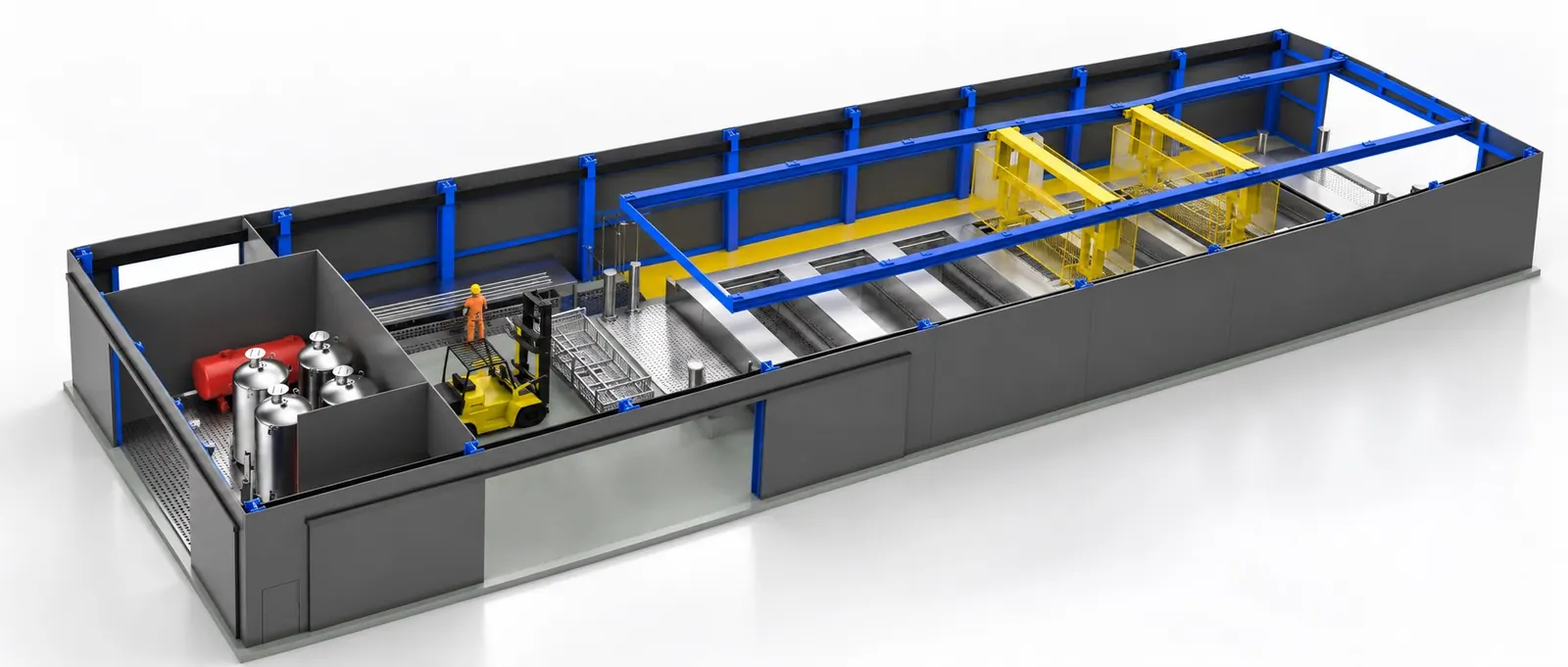
Designed for a fabrication shop cleaning welded pipe spools before assembly. The line sits in its own building, 40.5 m by 13.2 m, and the building was laid out around it.
| Stage | What it does |
|---|---|
| Ultrasonic degreasing | Removes oil, weld residue and carbon in Brulin AquaVantage 815 GD |
| Rinse | Stops degreaser carrying into the passivation tank |
| Ultrasonic passivation | Citric acid passivation of the stainless, in its own tank so neither bath contaminates the other |
| Two rinses | RO water rinses after passivation |
| Corrosion inhibitor dip | Protects mild steel spools until they are used |
| Hot-air drying | Dries the spool inside and out before it leaves the line |
Each process tank is 5,000 × 1,800 × 1,000 mm. Two overhead carriages move the loads. The design package included six- and seven-tank layouts, general arrangement drawings, the utilities schedule and a nine-year operating cost model ending in a cost per spool.
The passivation chemistry and the cost model are written up in the citric passivation case study, and the method in the citric acid passivation guide.
These are our renders and drawing for the pipe line above. Your engineers get the same: the line in the building from every side, the plant room laid out, and a dimensioned general arrangement to design the building from.
The split is agreed in writing on every project. This is where it usually lands.
| Misonics | Your engineers and contractors |
|---|---|
| Process design and trials | The building, slab and civil works |
| Tanks, ultrasonic generators and transducers, filtration and heating | Power, gas and water brought to the agreed connection points |
| Load handling on the line, bunding and work platforms | Extraction ducting to outside and drainage to the trade waste point |
| Process chemistry and the dosing and top-up plan | Trade waste approval and site permits |
| Installation, commissioning, operator training and service | Site access, lifting on site and integration with the plant's own systems |
The machines inside an engineered system come from our own ranges where they fit: EvoSonic and UltraMax HX for large immersion tanks, automated lines for transfer between stages, and custom builds where nothing standard suits.
The same approach suits any plant where cleaning is a production step, not a maintenance chore.
Where the part is too big or too heavy for a line, the cleaning stage is a large immersion tank. These are the tanks we build engineered plants around.
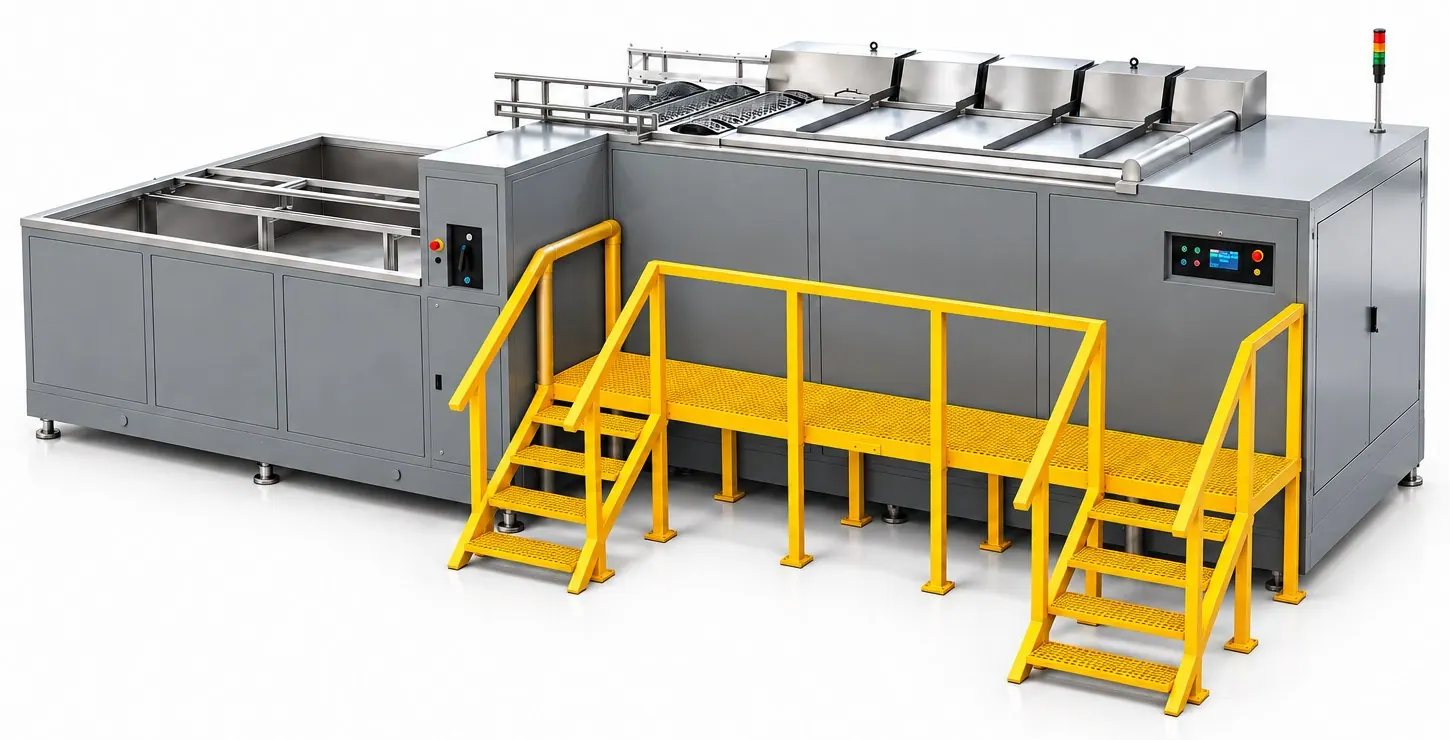
63,000 W at 25 kHz, an elevator platform doing every lift, and factory oil management. Engine blocks, heat exchanger cores and fabricated assemblies.
See the EVS 7000 →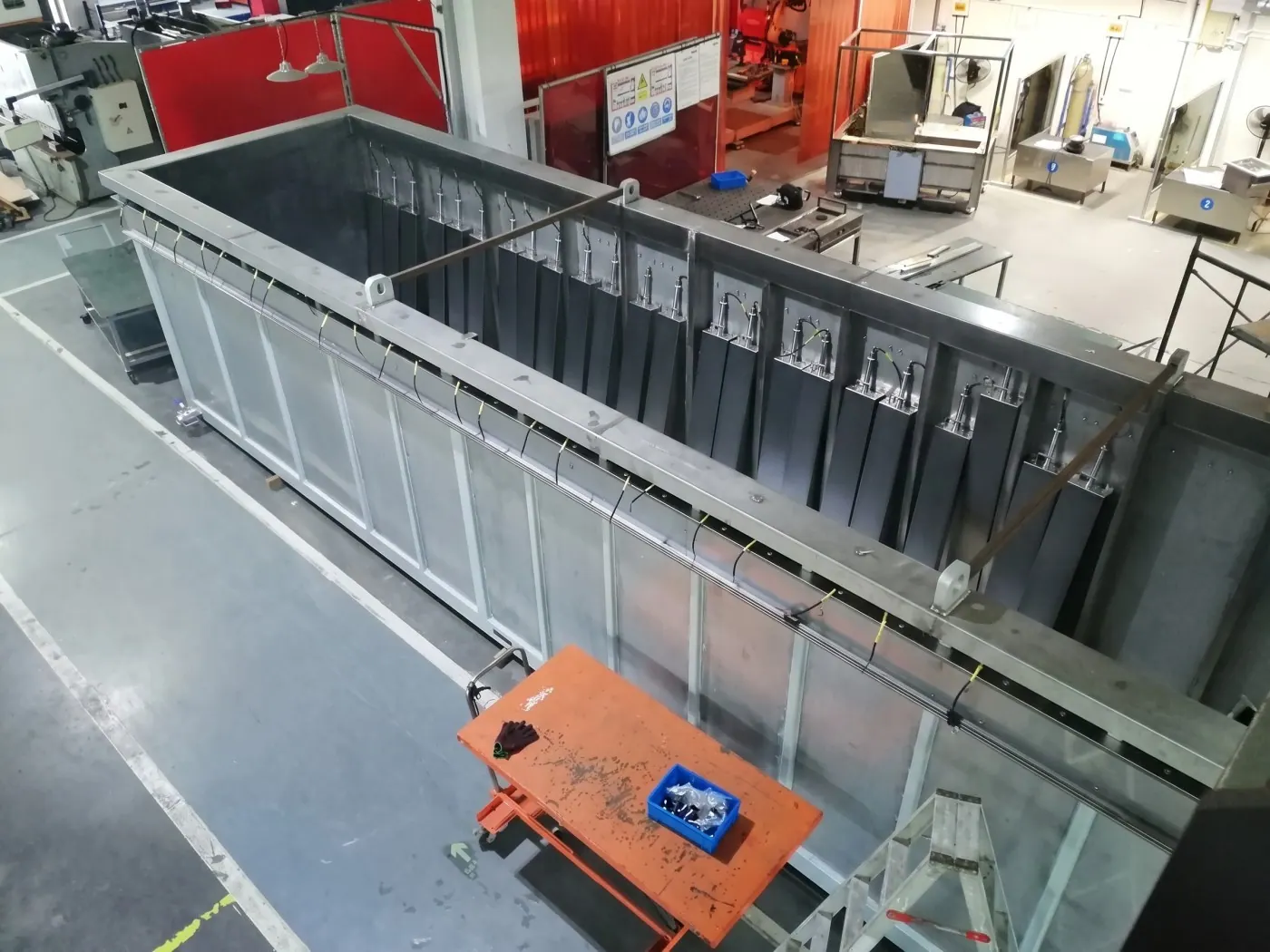
Large immersion tanks built around the heat exchanger bundle, in working lengths to 12 metres. The bundle is cleaned whole, not in pieces.
See the UltraMax HX →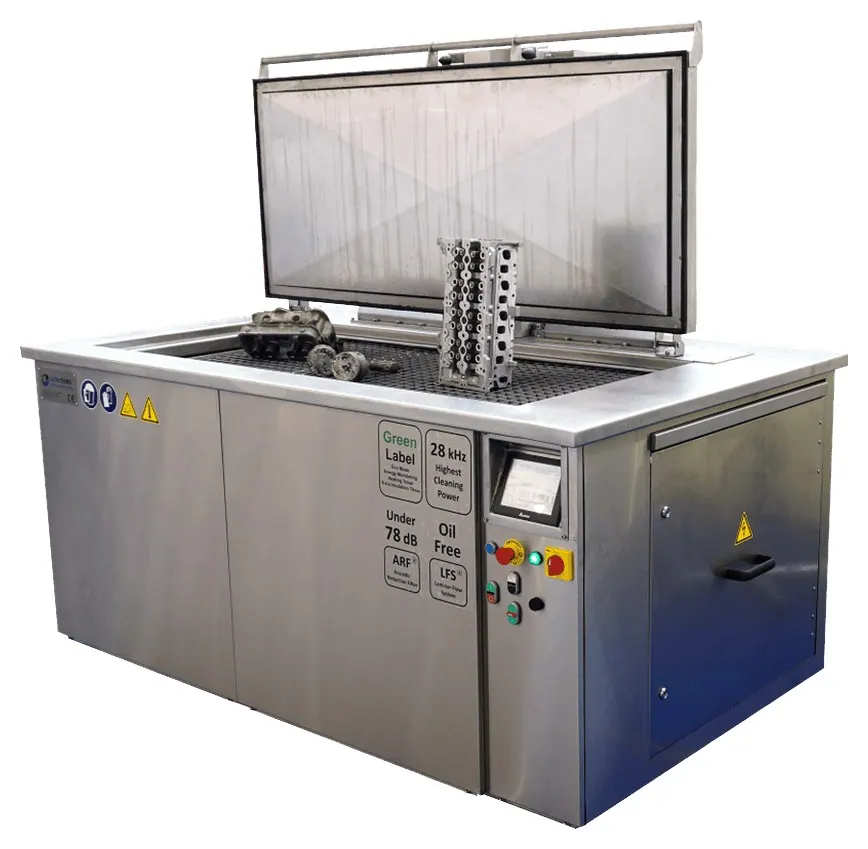
Spanish-built 28 kHz tanks with a pneumatic platform lift, so parts load at bench height. Supplied and serviced in Australia by Misonics.
See the UltraTecno ACM →At the concept or FEED stage, before the floor slab, crane and services are fixed. That is when the tank sizes, utility loads and handling can still shape the building rather than be squeezed into it.
Three-phase power for the ultrasonic generators, pumps and carriages, heat for the tanks and the dryer, mains and RO or DI water for rinsing, extraction, drainage to trade waste, and bunding for the chemistry. We give your services engineer the loads for each.
Yes. We design, build, install and commission degreasing and passivation lines, including the chemistry and operator training. The split between our scope and your contractors is agreed in writing before work starts.
Yes. Trials on your parts set the chemistry, temperature, time and filtration for each stage. The results become the process card the line is built to run.
General arrangement drawings and 3D views of the line in your building, a utilities schedule, an interface list showing who supplies what, and a whole-of-life cost model ending in a cost per part.
Tell us what has to be cleaned, how many a shift, and where the project is up to. If the building is still on paper, that is the best time to talk.


