Home / Heat exchanger cleaning / Oil coolers
Nobody can see down a tube.
So prove it with a number.
An oil cooler that has been in service carries two deposits, and they do not come off the same way. The oil is a degreasing job. The coolant silicate sits where the obvious chemistry is closed to you, because the core is aluminium. And neither is any use to you unless you can show the passages are clear at the end of it.
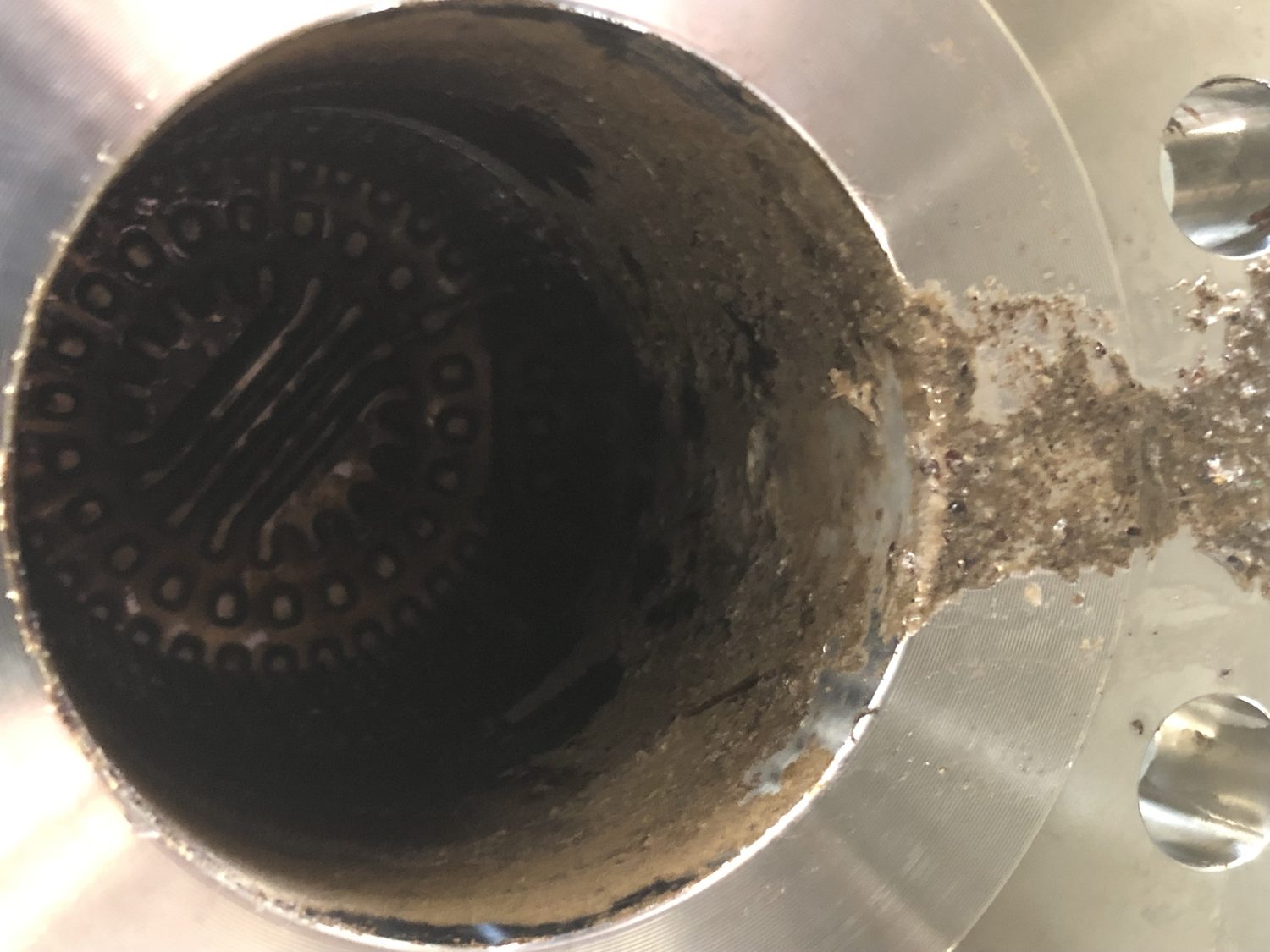
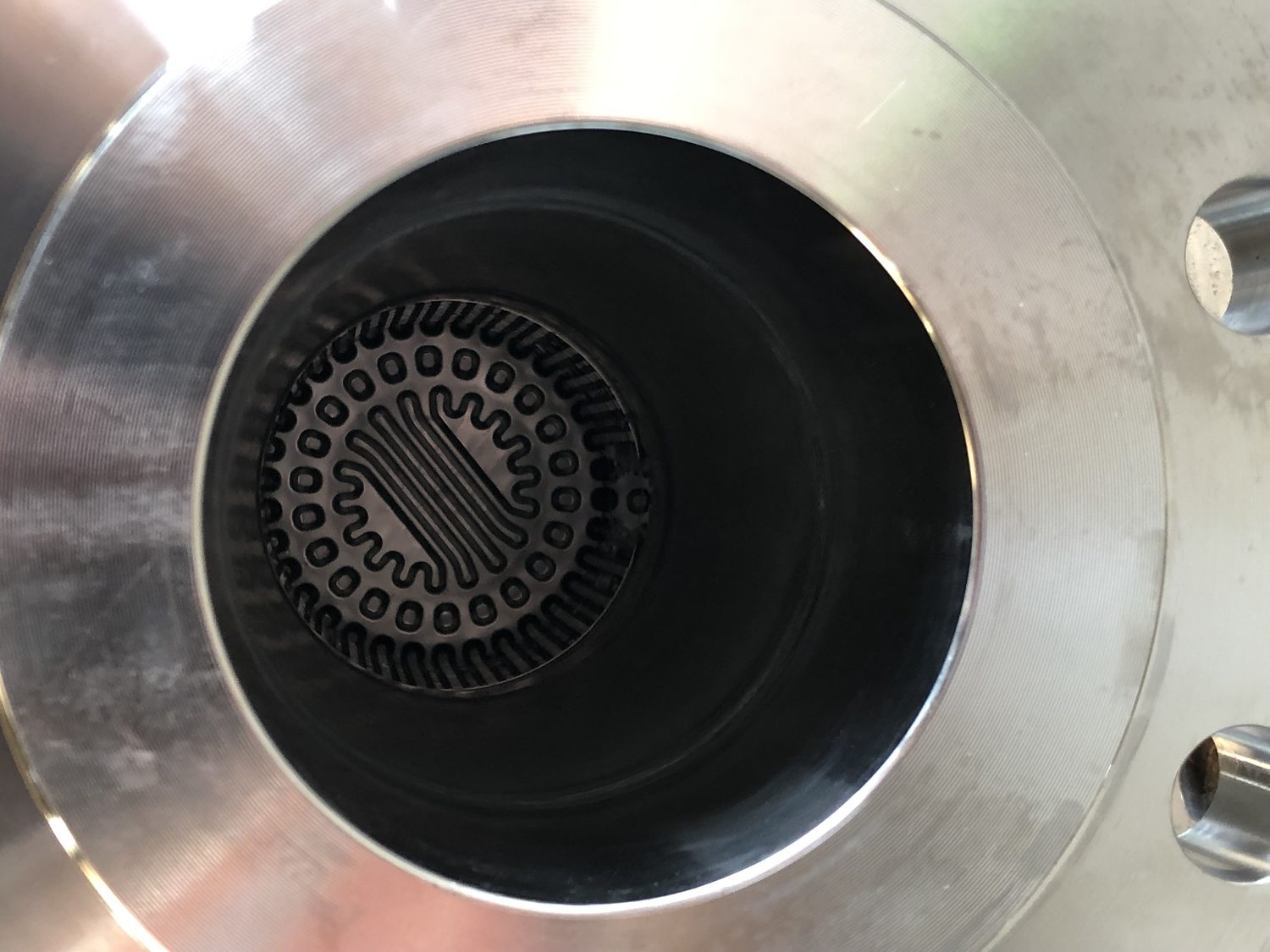
That is the only photograph that matters on a cooler job, and it is taken down the bore — not of the outside of the core. Everything below is about getting there, and about being able to prove it without the photograph.
Two deposits, two problems
The oil is straightforward: heat, a detergent that splits oil instead of emulsifying it, and enough flow to carry it out.
The silicate is the one that catches people. Older inhibited coolants use sodium silicate to protect the aluminium they run through. It does that job for a few years, then drops out of solution as a gel which lines the passages. Chemically it sits in an awkward corner:
- Silica dissolves in strong alkali — and strong alkali destroys aluminium.
- Acids barely touch it. The ones that do are fluoride-based — and those destroy aluminium faster.
Both obvious routes are closed. What is left is a staged process at moderate pH, with the mechanical work done by something other than the chemistry.
Flow does the inside. Cavitation does the rest.
A cooler core is not a basket of parts. Most of the deposit is inside passages you cannot see down and cannot reach, and cavitation attenuates quickly inside a narrow bore — a bath cleans the first few diameters and the outside of the tubes. It will not clean a metre of tube.
What cleans a metre of tube is flow.
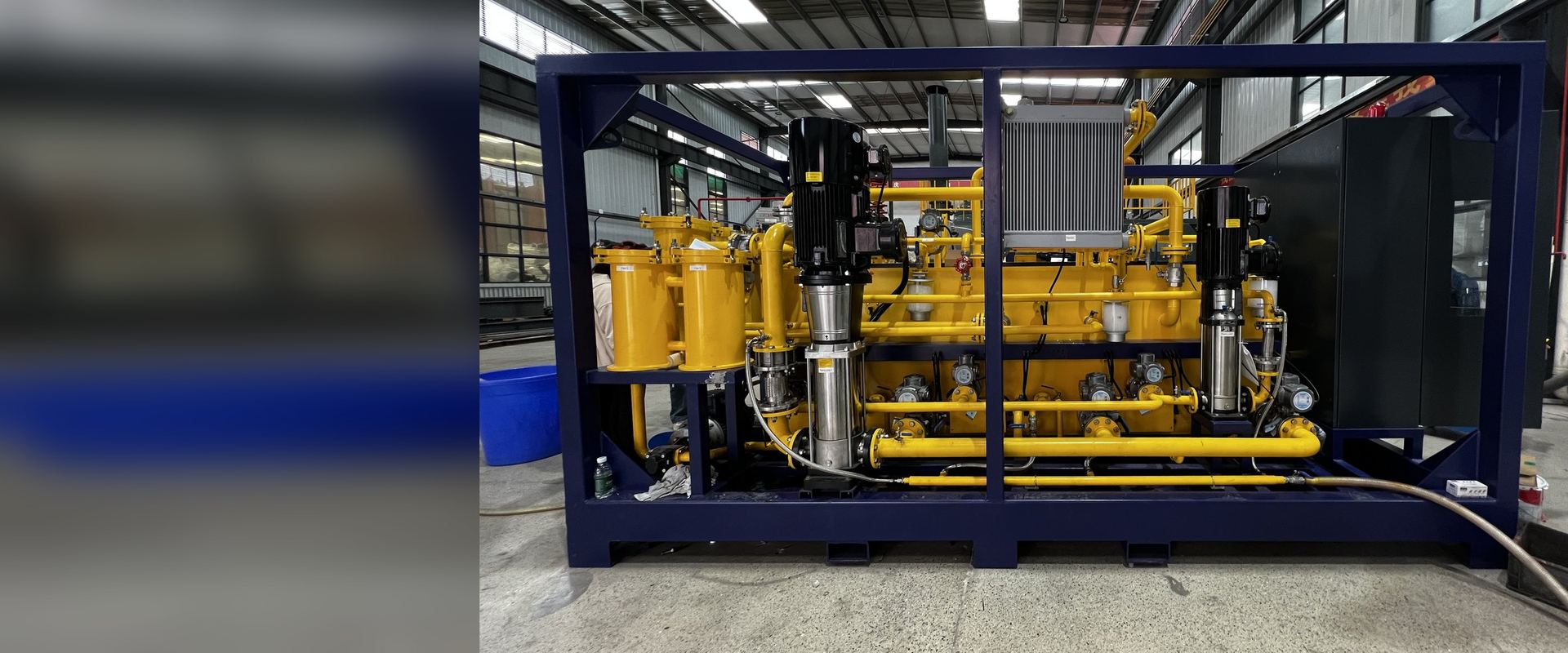
The HFU 600 flushing unit circulates the solution along the service path and reverses it, so debris comes back out the way it went in rather than being driven further in. What leaves the core is caught in staged filtration instead of being pumped back through it.
And it ends the job with a number
Every cooler job finishes on the same question, and nobody can answer it by looking: is it actually clean inside?
The flushing unit answers it with an in-line particle count. The job is done when the count falls to the cleanliness class the customer asked for — not when the operator thinks it looks right. That is a figure that goes on a report and travels with the unit, and it is the part of this a workshop cannot do with a wash bay.
Where the tank earns its place
The flushing unit goes where fluid goes. It does nothing for the fin pack, the tube sheet or the outside of the tubes, and on an air-to-oil cooler that is a large part of the core. Ultrasonic immersion cleans all of it at once, in the same cycle, without rodding anything or bending a fin.
Run them together and the core comes out clean through its whole section. Flow without cavitation cleans the bore and leaves the fin pack. Cavitation without flow loosens deposit and leaves it sitting in the passage.
Choosing the chemistry
Two baths, in order, each asked to do one job.
For the oil — AquaVantage 1990 GD
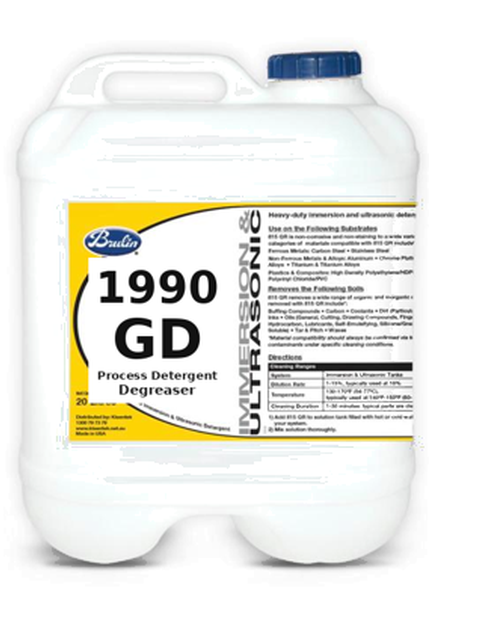 AquaVantage 1990 GDSilicate-free alkaline degreaser. Very low foaming, so it holds up in a circulating loop.View the product, SDS and TDS →
Three reasons it is the one, and only one of them is about cleaning power.
- Very low foaming. Decisive in a circulating loop, where foam breaks pump suction and you spend the day chasing the pump instead of the oil.
- It splits oil rather than emulsifying it, so the released oil rises and is skimmed off instead of being carried back through the passages on the next pass.
- Silicate-free and safe on aluminium. Its alkalinity comes from phosphate rather than caustic, so there is no free hydroxide to attack the metal and no silicate film left behind. How that works.
Not a general workshop degreaser: those run at a higher pH with a narrow aluminium window — a few per cent, fifty degrees, five minutes, rinse at once — which is no use on a core with oil down the passages. And not a ferrous decarboniser, which will take an aluminium core apart.
For what is underneath — CoreKleen HX
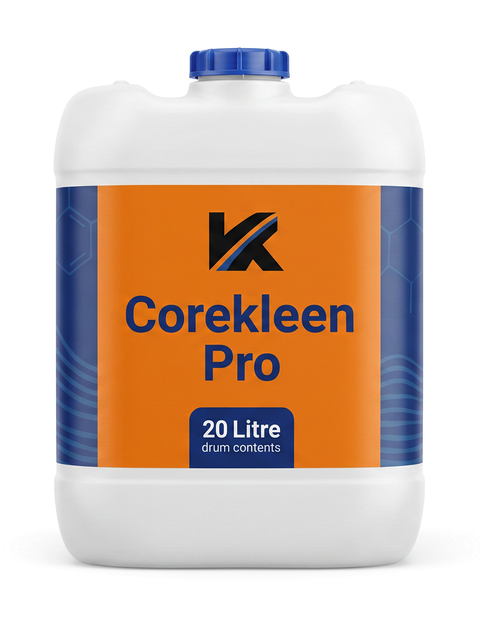 CoreKleen HXNear-neutral chelating descaler for cooler cores. Lifts the corrosion product, not the base metal.View the product, SDS and TDS →
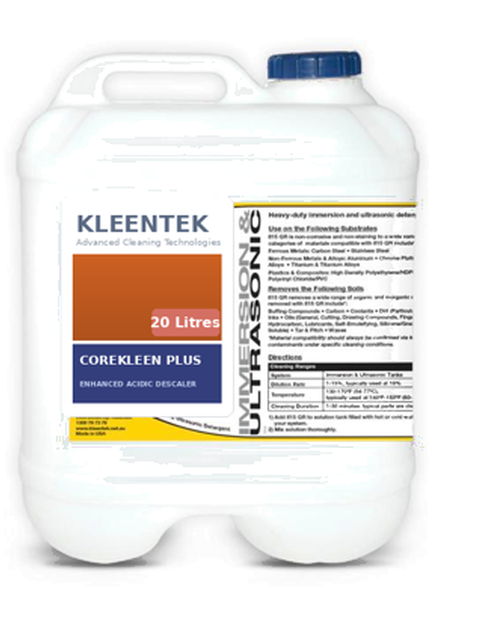 CoreKleen PlusThe surfactant dosed into the CoreKleen HX bath at 1–2%.View the product, SDS and TDS →
Near-neutral at pH 6.0 to 6.5, with CoreKleen Plus dosed alongside. It chelates the oxide instead of dissolving the base metal the way acid pickling does, and it passivates the surface as it works — which matters, because freshly stripped aluminium greys over quickly.
It is not the silicate stage. Chelants work by pulling a metal ion out of a deposit, and sodium — the ion in coolant silicate — is not one they grab. The gel comes off in the first bath and under the cavitation. What the chelant takes is the grey aluminium corrosion product, iron and red dirt carried in from any steel upstream, and hardness scale from the water in the coolant mix.
One exception: where the core has seen raw cooling water rather than coolant, the deposit is likely magnesium or calcium silicate instead. That ion the chelant does grab, and it works on the deposit directly.
On a mixed-metal core — aluminium fins on copper tubes, soldered joints, brass end caps — the first bath changes to the near-neutral option instead, because some of the chemistry that protects aluminium attacks copper alloys.
The fins set every number on this page
It is tempting to think about the tubes. The fins are what actually limit you.
A tube wall can lose a few microns and carry on doing its job. A cooler fin is a fraction of a millimetre, with an enormous surface area for its mass, so the same loss takes a measurable share of its section — and with it the heat transfer the core was cleaned to recover. A core that comes back bright and three per cent thinner in the fin pack has not been recovered. It has been quietly spent.
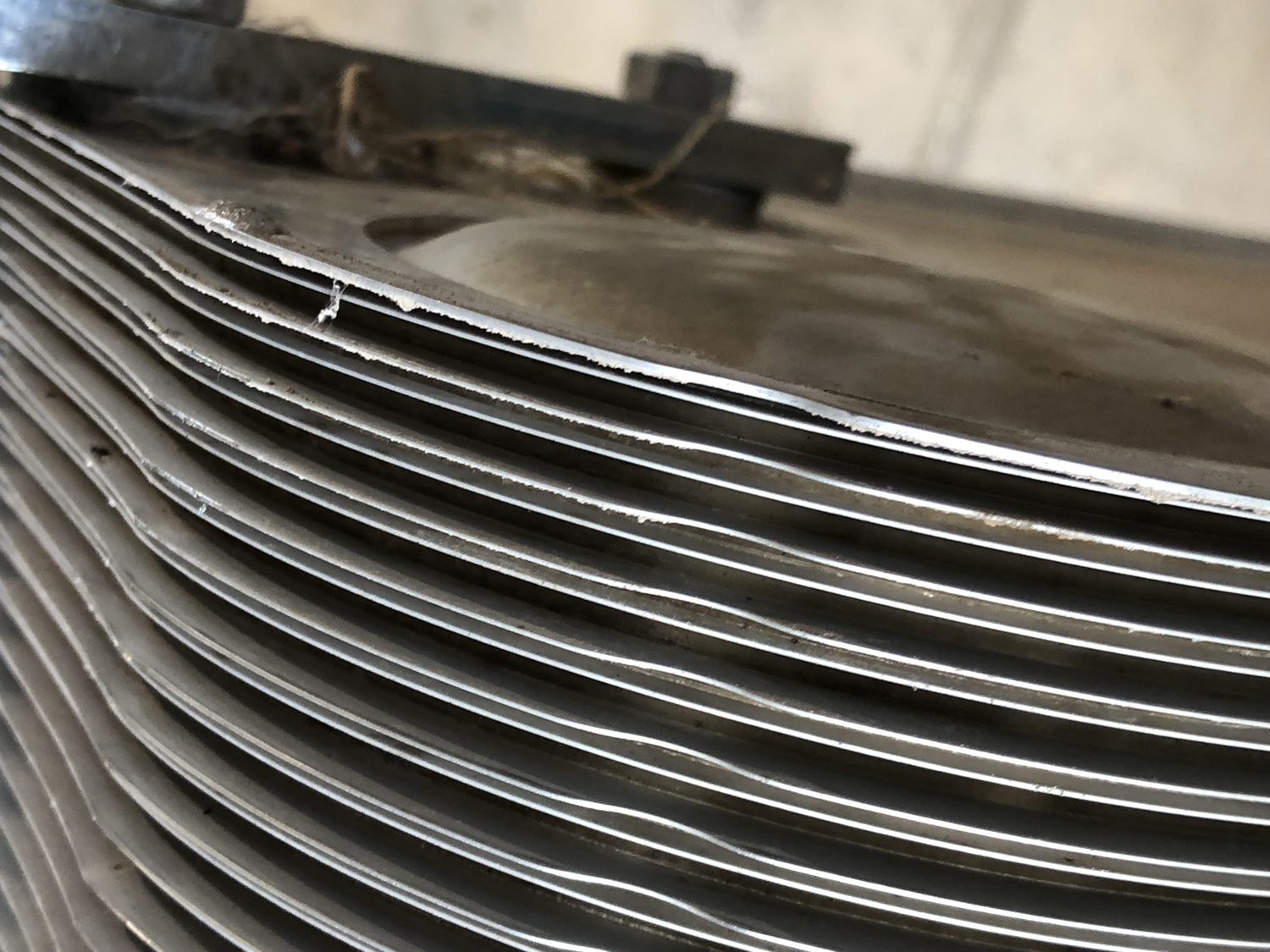
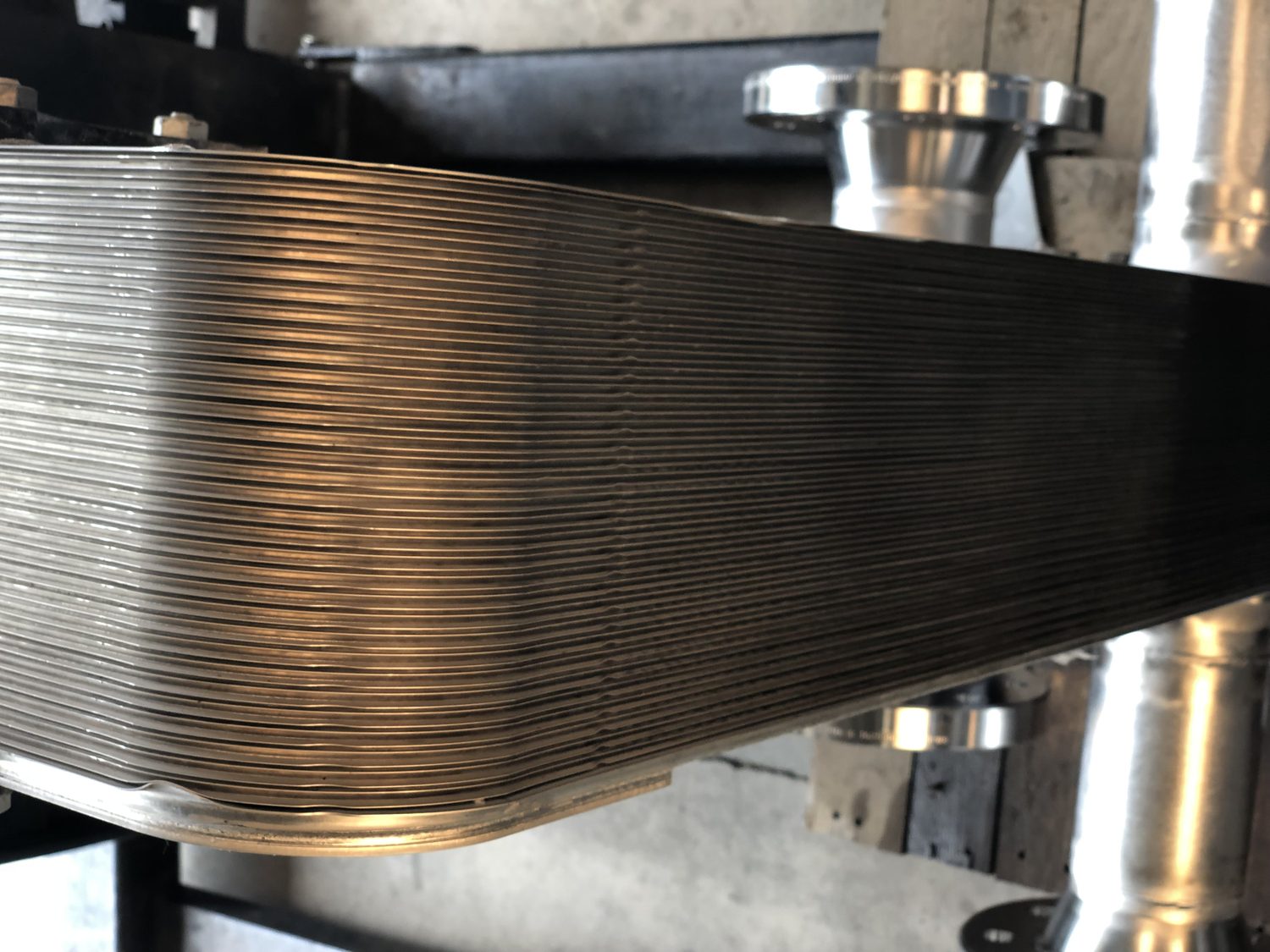
Four things follow from that, and they are the whole process discipline:
Dose is fin protection, not cleaning power
In a silicate-free cleaner the inhibitor is the phosphate, and the phosphate needs its concentration. A weak bath loses the buffer and the passivating film together, and it attacks the thinnest metal first. That is the fins.
The working figures
Run 7.5% as the minimum, and stronger on a heavily fouled core — up to the top of the data sheet range where the oil load justifies it.
The hard floor on aluminium is 5.0% and the bath must never go under it. That extra margin is not generosity: a circulating bath drifts downward on its own, because solution leaves held in the core and is made up with water. Set it at 7.5%, titrate it, and hold it there. If it is allowed to find 5% it will be under 5% by the next shift.
Temperature
Do not take the bath over 60 °C. Aluminium is attacked at both ends of the pH scale and heat accelerates it. Sixty is a ceiling, not a target.
Frequency and time
Thin aluminium held in one place at high power for a long cycle will erode. Run a higher frequency on a fin pack — the cavitation is gentler and it still reaches between the fins. Keep the power sensible, and move the part through the field rather than parking it: a lifting platform on a long cycle exists for exactly this reason.
Never chase a faster result with more heat or more chemical
If it is going slowly, give it time or more cavitation. The two levers that feel as though they should help are the two that cost you the core.
And do not let a core dry between stages. A fin pack holds solution by capillary action long after the outside looks dry, and whatever is in it dries onto the metal.
The process
Degrease
AquaVantage 1990 GD at 7.5% or stronger · 55–60 °C · circulating through the passages · cavitation running · skim as you go.
Run it until the oil stops coming. At this pH the bath will also lift some of the silicate, because silica solubility climbs sharply above about pH 9. Treat that as a bonus, not the plan.
Flush
Not a dunk and a drain. A core holds solution; it does not drip dry like a basket. Flush hot water along the same path until it runs clear and comes back neutral.
Stop and look at it
You may be finished. If the core comes out as bright metal, do not run the next stage out of habit.
Lift the corrosion product
CoreKleen HX at 20% with CoreKleen Plus at 1–2% · 60 °C · 60–90 minutes · cavitation running.
Flush to a particle count
Clean fluid through the passages until the count falls to the class required. That number is the end of the job and the evidence it was done.
The mistake that makes it worse
Anything the alkaline stage dissolved is held in solution because the pH is high. Silica comes back out of solution as the pH falls.
Take a loaded alkaline rinse straight into the near-neutral bath and the dissolved silicate drops back onto the metal — and it can come back harder than it went on, in a form nothing safe on aluminium will shift.
Flush it out between stages. You are getting dissolved silicate off the job, not rinsing a surface.
At a glance
| Degrease stage | Chelant stage | |
|---|---|---|
| Product | AquaVantage 1990 GD | CoreKleen HX with CoreKleen Plus |
| Dose | 7.5% minimum, stronger when heavily fouled hard floor 5.0% on aluminium | 20% with Plus at 1–2% |
| Temperature | 55–60 °C | 60 °C |
| Time | until the oil stops coming | 60–90 minutes |
| pH | 11.3 concentrate · silicate-free | 6.0–6.5 |
| Foaming | very low — suits a pumped loop | — |
Two things to settle before you start
- Which side is the deposit on? If the oil is in the oil circuit and the silicate is in the coolant circuit, those are two separate passages and two separate jobs.
- Prove it on one core. Run a single unit and look down the bore before committing a batch. If the deposit turns out to be hard amorphous silica rather than a coolant gel, nothing that is safe on aluminium will move it — better to know that on the first one.
Oil cooler cleaning: common questions
Why is coolant silicate so hard to get out of an aluminium cooler?
Because the two chemistries that dissolve it both destroy aluminium. Silica dissolves in strong alkali, and strong alkali eats aluminium. The acids that touch silica are fluoride-based, and those attack aluminium faster still. What is left is a staged process at moderate pH, with flow and cavitation doing the mechanical work the chemistry cannot.
Can you clean the inside of a cooler tube without taking it apart?
Yes, but not by soaking it. Cavitation attenuates quickly down a narrow bore, so a bath cleans the first few diameters and the outside of the tubes. What cleans a metre of tube is flow. Circulating the solution along the service path, and reversing it, is what moves deposit out of the passages.
How do you prove a cooler core is clean inside?
With a particle count, not an opinion. A flushing unit running an in-line particle counter ends the job when the count falls to the cleanliness class the customer asked for. Nobody can see down a tube; a particle count is a figure that goes on a report and travels with the unit.
What dilution should I run on an aluminium cooler core?
Seven and a half per cent as the working minimum, and stronger on a heavy oil load. The data sheet puts a hard floor of five per cent on aluminium and the bath must never go under it, so the extra margin is there to absorb the drift that happens as solution leaves on the job and is made up with water.
Why does under-dosing damage aluminium?
Because in a silicate-free cleaner the inhibitor is the phosphate, and the phosphate needs its concentration. A weak bath loses both the buffered alkalinity and the passivating film, so it is more aggressive on aluminium, not less. That is why the minimum is a floor rather than a recommendation.
What temperature can an aluminium core take?
Do not take the bath over sixty degrees Celsius. Aluminium is attacked at both ends of the pH scale and heat accelerates it. Sixty is a ceiling, not a target, and heat is one of the two levers that feel as though they should help and in fact cost you the core.
Why are the fins the limiting factor rather than the tubes?
Because of how thin they are. A tube wall can lose a few microns and carry on. A fin is a fraction of a millimetre, so the same loss takes a measurable share of its section, and with it the heat transfer the core was cleaned to recover. Everything about dose, temperature, frequency and cycle time on a cooler is set by the fins.
Can ultrasonic cleaning damage cooler fins?
It can if it is run badly. Thin aluminium held in one spot at high power for a long cycle will erode. Running at a higher frequency, keeping the power sensible and moving the part through the field rather than parking it are what prevent that. A lifting platform helps on a long cycle for exactly this reason.
Can a rinse make the job worse?
Yes, and this is the mistake that catches people. Silica holds in solution because the pH is high and comes back out as the pH falls. Carry a loaded alkaline rinse straight into a near-neutral bath and the dissolved silicate drops back onto the metal, harder than it came off.
Which side of the cooler are you cleaning?
Settle that before anything is mixed. If the oil is in the oil circuit and the silicate is in the coolant circuit, those are two separate passages and two separate jobs, not one bath doing both.
What if the deposit is not coolant silicate?
If it is hard amorphous silica rather than a coolant gel, nothing that is safe on aluminium will move it. Prove it on one core before committing a batch, so that is found out on the first unit rather than the twentieth.
Does this work on copper or cupronickel coolers?
The process changes. Some of the chemistry that protects aluminium attacks copper alloys, so the metallurgy has to be settled first. Tell us the tube material and the headers and we will specify against it.
Talk it through before you commit a bath to it
Tell us the coolant history, the core material, the tube length and what the passages look like inside, and we will be specific about dose, temperature, frequency and cycle before anything is mixed.
Talk to us or call 1300 647 664