Silicate protects the metal
and spoils the finish.
Three things decide whether a cleaner suits a job as much as how well it cleans: what it leaves on the part, what it sends down the drain, and what it puts on somebody’s restricted-substances list. These are the questions a specifying engineer asks and usually cannot get answered.
What the three mean
Silicate — what it leaves on the part
Silicate is the usual aluminium inhibitor in an alkaline bath. It is what lets a cleaner run at high pH on aluminium without eating it, and it works as a builder besides.
The cost is a film that does not fully rinse away, and that film ruins adhesion. It dries to white marking on aluminium if a part is allowed to dry wet, and over months it builds on heaters and transducer faces.
Specify silicate-free when the part is painted, powder coated, adhesive bonded, anodised, plated, brazed or welded after cleaning. Optical and electronics work. Anything where something has to stick.
Phosphate — what goes down the drain
Phosphate is a builder. It sequesters hardness, buffers the alkalinity and holds soil in suspension so it does not land back on the part. It does nothing for the metal and nothing to the finish.
It costs nothing on the part and everything at the discharge. Phosphorus is capped in most trade waste agreements, and some customer specifications ban phosphates outright.
Specify phosphate-free when the site discharges to sewer under a trade waste agreement with a phosphorus limit, or the customer’s own specification prohibits it. Ask where the spent bath goes before quoting volume.
APE and NPE — what goes on the audit
Alkylphenol and nonylphenol ethoxylates are a surfactant class. They work, they are cheap, and they are on their way out.
Restricted under European chemicals law, on most automotive and aerospace restricted-substances lists, and an aquatic concern because they break down to nonylphenol, which persists.
Specify APE/NPE-free when the customer exports, supplies a European chain, or works to a restricted-substances list. If their customer audits chemicals, this is the line that gets picked up.
How a cleaner can be silicate-free and still safe on aluminium
This is the part that surprises people, and it is worth understanding before choosing anything.
What attacks aluminium is free hydroxide. Aluminium is amphoteric: put it in free caustic and it dissolves straight to aluminate, with hydrogen coming off. Silicate’s job in a caustic-built cleaner is to lay a protective film down fast enough to stop that happening.
So silicate is only needed when the alkalinity comes from caustic. Build the alkalinity from phosphate and amine instead of sodium or potassium hydroxide and you hold a high pH without a reservoir of hydroxide sitting there waiting to attack the metal. That alkalinity is buffered, not free.
There is a second half to it that turns the phosphate column on its head. Phosphates are aluminium corrosion inhibitors in their own right — they form a passivating film on the surface. So in a phosphate-built cleaner, the very thing flagged on the drain-side question is part of what protects the metal.
Which is why the minimum dilution matters
If the inhibitor is the phosphate, then the phosphate needs its concentration. A weak bath loses both the buffer and the film, so under-dosing is more aggressive on aluminium, not less.
That is why a silicate-free cleaner carries a hard minimum on aluminium rather than a recommendation. And because a circulating bath drifts downward on its own — solution leaves on the job and gets made up with water — it has to be titrated and held, not set and forgotten.
The reverse case is just as real. In a caustic-built decarboniser the silicate is the only reason the bath can go near aluminium at all. The question was never whether silicate is good or bad. It is what happens to the part after it leaves the bath.
The range
| Product | Silicate-free | Phosphate-free | APE/NPE-free | What it is for |
|---|---|---|---|---|
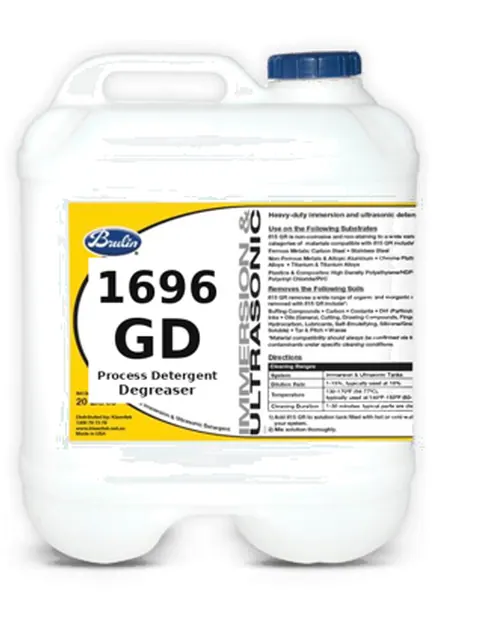 AquaVantage 1696 GD | ✓ declared | ✓ declared | ✓ declared | Near-neutral. Mixed-metal assemblies and sensitive substrates. The only one that declares all three on its own data sheet. |
 MetalTek 100 | ✓ | ✓ | ✓ | Ferrous decarbonising, hot and hard. Clear on all three despite being the most aggressive bath in the range. |
 AlloySolve | ✓ | ✓ | ✓ | The solvent half of the alloy system. |
 CoreKleen Plus | ✓ | ✓ | ✓ | The surfactant additive dosed into the CoreKleen HX bath. |
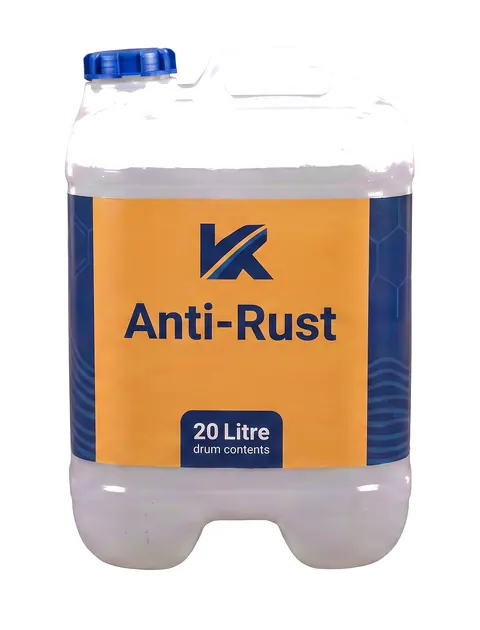 Anti-Rust | ✓ | ✓ | ✓ | Post-wash flash-rust inhibitor. |
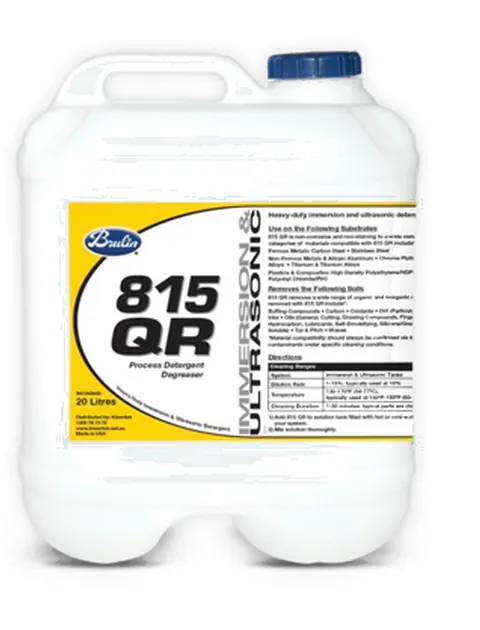 AquaVantage 815 QR-NF | ✓ | phosphate | ✓ | Rebuild and overhaul duty — service carbon and baked greases. APE/NPE-free, which is the reason to reach for it on an audited site. |
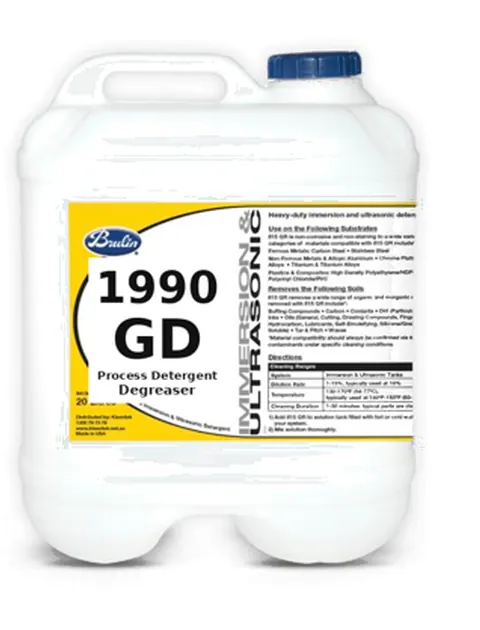 AquaVantage 1990 GD | ✓ | phosphate | ✓ | Spray cabinets, inline washers and circulating work. Very low foaming. |
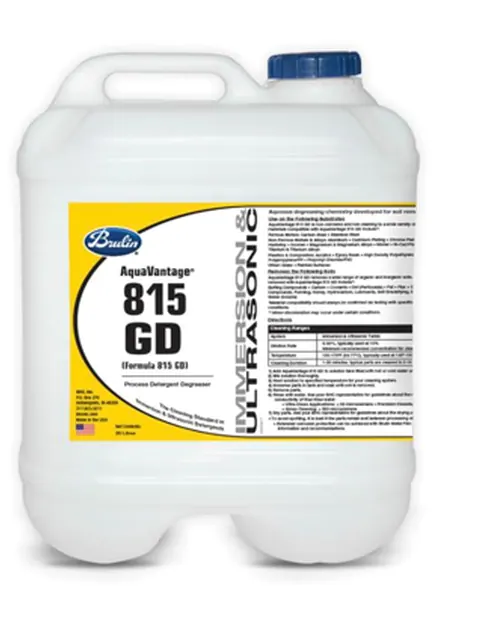 AquaVantage 815 GD | ✓ | phosphate | APE/NPE | The aerospace benchmark, approved to magnesium and qualified for oxygen service. |
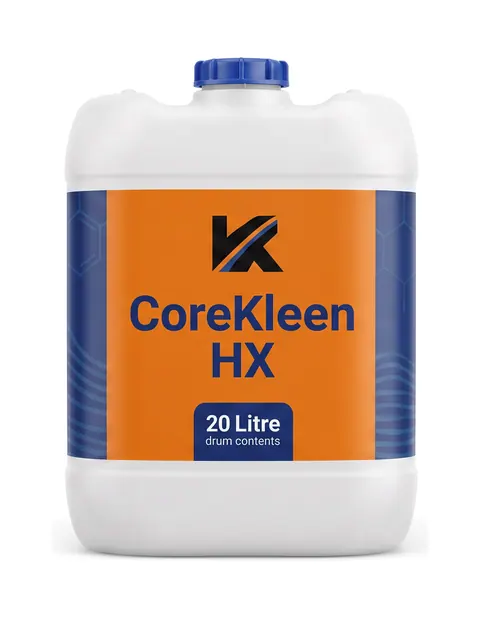 CoreKleen HX | ✓ | phosphonate | ✓ | Near-neutral chelating descaler for cooler cores. The phosphonate is the chemistry, not a builder. |
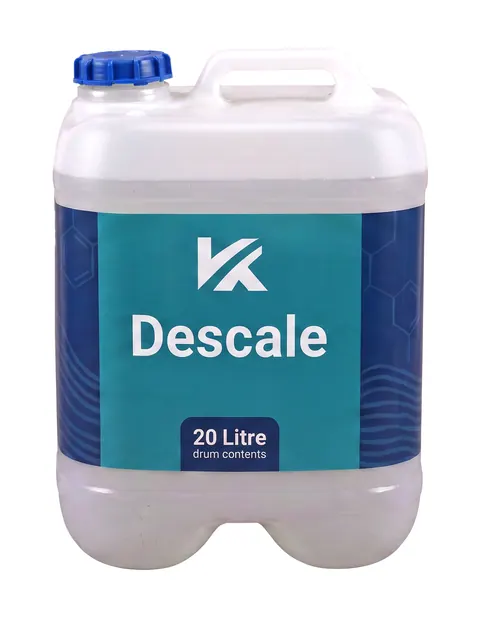 Descale | ✓ | phosphoric | ✓ | Acid descaler. The phosphoric acid is the active. |
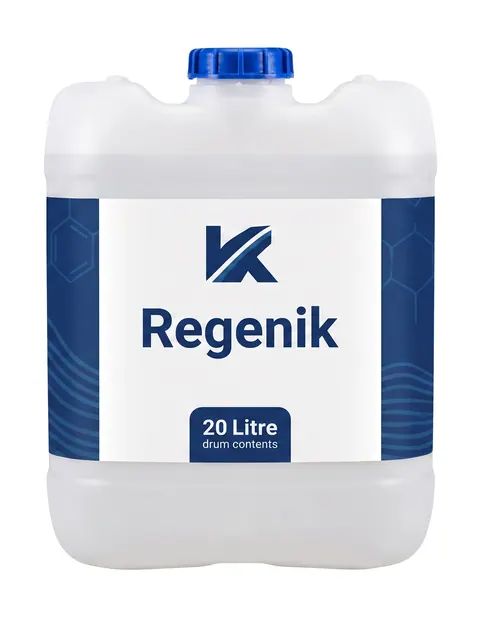 RegeniK | ✓ | phosphoric | ✓ | Ash dissolver for diesel particulate filter cores, used neat. |
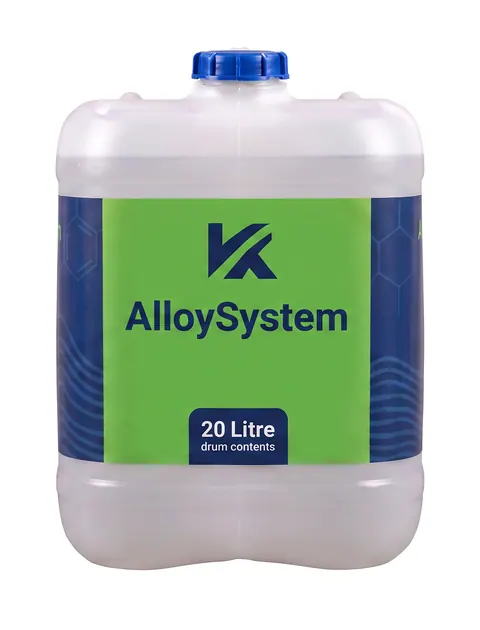 AlloySystem | silicate | ✓ | ✓ | The alloy pair as run. The silicate is there to protect the alloy. |
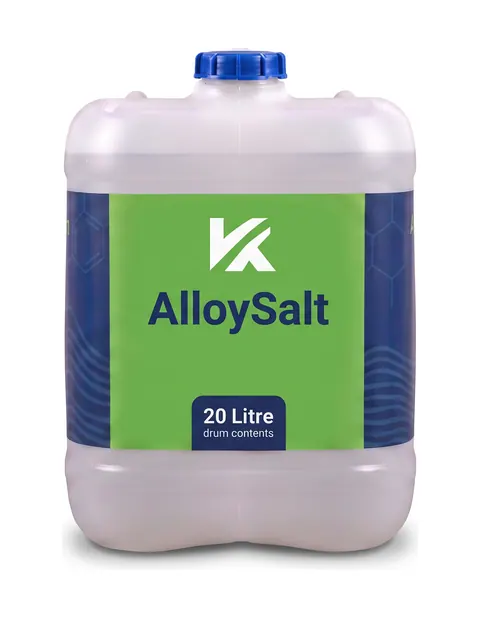 AlloySalt | silicate | ✓ | ✓ | The salt half. The silicate is what carries the alloy bath at that alkalinity. |
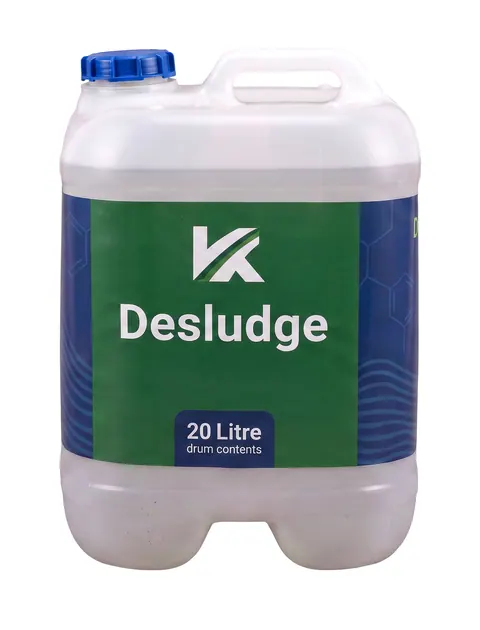 Desludge | silicate | ✓ | APE/NPE | Workshop decarbonising. The silicate is the point: it is what lets a strong alkaline bath run on aluminium. |
How to read a tick. One product declares all three on its own technical data sheet. Every other tick means the substance is not named in the composition section of the safety data sheet — strong, but not the same as a declaration, because ingredients below the disclosure threshold need not appear. Sodium metasilicate and the phosphate builders are classified, so they would be declared at any working level.
Choosing by what happens next
| If the part… | The question behind it | What to specify |
|---|---|---|
| gets painted or powder coated | Will anything stop the coating sticking? | A silicate-free bath. Residue is the only thing that matters here. |
| gets bonded or anodised | Same question, less forgiving | The near-neutral option first — it is the one that declares it rather than us reading an absence. |
| comes off a site on trade waste | Is there phosphorus in it? | A phosphate-free bath. Ask for their phosphorus limit before sizing anything. |
| goes to a customer who audits chemicals | Is anything on a restricted-substances list? | An APE/NPE-free bath. Worth checking even where the cleaning performance is not in question. |
| is aluminium, and nothing follows | What stops it being etched? | Here silicate is the useful answer, not the problem — so long as nothing has to stick to the part afterwards. |
The pattern worth holding on to: silicate protects the metal and spoils the finish. Which way you want that decided is a question about what happens to the part after it leaves the bath — and almost nobody asks it.
Common questions
What does silicate do in a cleaner, and why would I want it gone?
Silicate is the usual aluminium inhibitor in an alkaline bath, and it is what lets a cleaner run at high pH on aluminium without eating it. The cost is a film that does not fully rinse away, and that film ruins adhesion. If the part is painted, powder coated, bonded, anodised, plated, brazed or welded afterwards, you want a silicate-free cleaner.
How can a cleaner be silicate-free and still safe on aluminium?
Because silicate is only needed when the alkalinity comes from caustic. What attacks aluminium is free hydroxide. A cleaner built on phosphate and amine alkalinity instead of sodium or potassium hydroxide holds a high pH without that reservoir of hydroxide, and phosphates form a passivating film on aluminium in their own right. No free caustic, no need for the silicate.
Why does a silicate-free cleaner have a minimum dilution on aluminium?
Because the inhibitor is the phosphate and the phosphate needs its concentration. A weak bath loses both the buffer and the film, so under-dosing is more aggressive on aluminium, not less. A recirculating bath drifts downward on its own as solution leaves on the job and is topped up with water, so it has to be titrated and held.
What does phosphate-free actually buy me?
Nothing on the part. It is a discharge question. Phosphorus is capped in most trade waste agreements, and a few customer specifications ban phosphates outright. Ask where the spent bath goes before specifying a phosphated product in volume.
What are APEs and NPEs, and why do they matter?
Alkylphenol and nonylphenol ethoxylates are a surfactant class. They are restricted under European chemicals law and sit on most automotive and aerospace restricted-substances lists, because they break down to nonylphenol, which persists. If your customer audits your chemicals, this is the line that gets picked up.
Does silicate residue really affect paint adhesion?
Yes. Silicate leaves a film that does not fully rinse, and a coating or adhesive has to key to the metal, not to a film sitting on it. It also dries to white marking on aluminium if a part is allowed to dry wet, and it builds up on heaters and transducer faces over time.
Is silicate always a bad thing?
No. In a caustic-built decarboniser it is the only reason the bath can go near aluminium at all. The question is not whether silicate is good or bad, it is what happens to the part after it leaves the bath. If something has to stick to it, you want the silicate gone. If you need a strong alkaline bath to run on aluminium, the silicate is what makes that possible.
How do I know what is in the cleaner I am using now?
Section 3 of its safety data sheet. Sodium metasilicate and the phosphate builders are classified, so they have to be declared at any working level. If the sheet declares no hazardous ingredients at all, there is nothing to read and no claim can honestly be made either way.
I have already cleaned aluminium in a silicated bath and it has to be painted. How do I get the silicate off?
Rinse it before it dries, then take it off with an acid deoxidiser. Silicate film comes away easily while the part is still wet from the cleaner; let it flash off and it polymerises into a silica gel bonded to the oxide, and then you are fighting it. So the part goes from the bath straight into rinse, never onto a drip rack. Rinse hot, finish on de-ionised water, then run an acidic deoxidiser, which both dissolves the residue and strips the oxide so the conversion coating can key into bare metal. Ultrasonics in that acid stage helps, because cavitation refreshes solution at the surface and carries the loosened film away instead of letting it settle back down.
Why can I not just rinse harder?
Because a set silicate film is no longer water-soluble. While it is wet it rinses; once it dries it cross-links into a glassy layer that water will not lift at any pressure or temperature. More rinsing after that point only wastes water. At that stage the only thing that removes it is acid.
Does the rinse water itself matter?
More than most people expect. Calcium and magnesium in hard tap water react with the silicate and form insoluble calcium and magnesium silicates on the part, which are harder to remove than what you started with. A hot cascade rinse followed by a de-ionised final rinse is not a refinement when paint or adhesive follows. It is the difference between a part that coats and a part that fails at the adhesion test.
Which acid removes silicate?
A deoxidiser, not a descaler. Fluoride-bearing deoxidisers are the effective ones on silica specifically, because fluoride attacks the silicon-oxygen network that plain mineral acids slide straight off. Sulphuric and ferric-sulphate blends and nitric-based deoxidisers are the usual chemistries. Match the acid to the substrate before you run it: an acid built for ferrous scale is a different product from one formulated for aluminium, and the data sheet names the metals each one is cleared for.
How do I prove the silicate is off before the part is painted?
The water-break test. Pull the part from the final rinse and watch the film: an unbroken sheet of water holding for about thirty seconds means a clean surface. Water that beads or breaks into islands means something is still sitting on the metal. It costs nothing, it takes half a minute, and it is the only check you have before you find out at the adhesion test instead.
What should I have cleaned it in?
A silicate-free cleaner, if anything has to stick to the part afterwards. Within our range AquaVantage 1696 GD is near-neutral at about pH 8 and carries no silicates, which makes it the one for aluminium heading to paint, powder coating, anodising, bonding or a conversion coating. Tell us what happens to the part next and we will tell you which of the range fits it.
Tell us what happens to the part next
Give us the substrate and what follows the wash — coating, bonding, anodising, assembly — and we will specify against it rather than against the soil alone.
Talk to us or call 1300 647 664