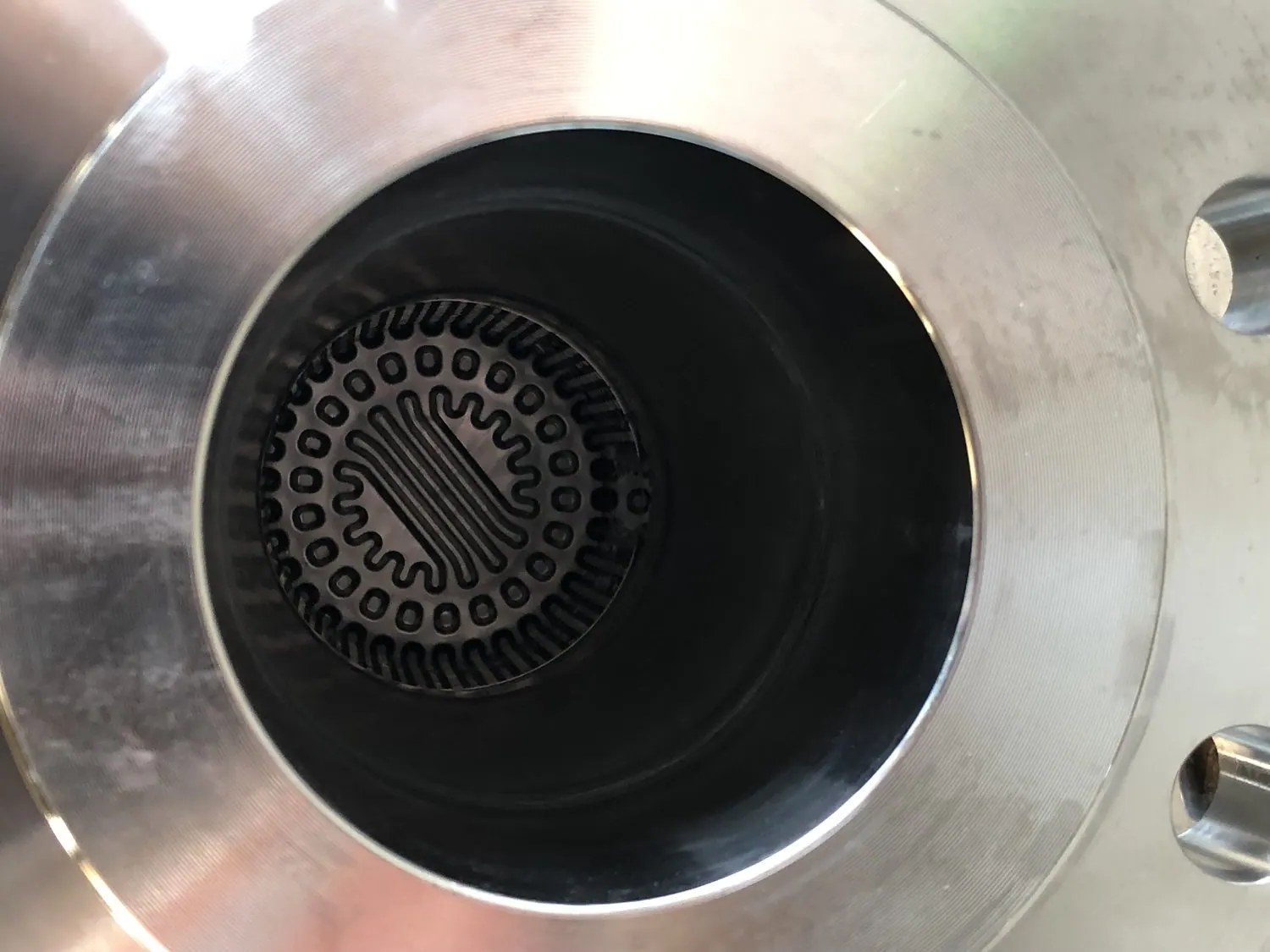
Tube bundles, plate packs, oil coolers, radiators and cooler cores cleaned whole, inside and out, without rodding the tubes or bending the fins. The same method suits graphite, silicon carbide and PTFE exchangers that cannot take mechanical cleaning.
Scale, oil sludge, biofilm and process deposits all insulate the heat transfer surface. The exchanger loses duty, the pressure drop climbs, and the plant makes up the difference with more fuel, more pumping or a lower throughput.
Most cleaning methods reach only part of the surface. A lance clears a straight tube bore but not the shell side. A pressure washer cleans the face of a radiator and bends the fins it reaches. Ultrasonic immersion cleans every wetted surface at once, because the cavitation happens wherever the liquid is.


Each method has its place. The right one depends on whether the unit can come out of service, what the deposit is, and what the exchanger is made of.
| Method | What it reaches | Watch for |
|---|---|---|
| Hydro-jetting | Straight tube bores, open shell faces | Misses U-bends, fin roots and plate channels. Can erode thin or brittle tube walls. |
| Rodding and brushing | Straight tube bores | Scores tube walls. Not usable on finned, U-tube or brittle exchangers. |
| Chemical circulation (CIP) | The side the chemistry is pumped through | Works in place, but only where the flow goes. Dead legs and hard deposits stay. |
| Bundle blasting | Outside of the tubes on the shell side | Abrasive contact with the tube surface. Not for coated, soft or brittle tubes. |
| Ultrasonic immersion | Every wetted surface: tube side, shell side, fins, plates and passages | The unit has to come out and fit the tank. The chemistry must suit the material. |
Ultrasonics is often used alongside the other methods, not instead of them. A bundle can be soaked and cavitated to loosen hard scale, then flushed, so the jetting pass is shorter and gentler.
Large parts go in the EvoSonic and UltraTecno ACM tanks, which have platform lifts so a heavy core is lowered rather than dropped. For an existing pit or vessel, rod resonators retrofit the ultrasonics into it.
Where the process fluid would eat a metal exchanger, plants use impervious graphite, silicon carbide or fluoropolymer. Hydrochloric, sulphuric, phosphoric and hydrofluoric acid duties, pickling lines, vinyl chloride and pharmaceutical processes all rely on them. The best-known makers are SGL Carbon (DIABON graphite), Mersen (Graphilor graphite blocks and shell-and-tube units, and silicon carbide shell-and-tube exchangers) and Saint-Gobain (silicon carbide). They resist corrosion, but they foul like any other exchanger, and they are far less forgiving to clean.
| Material | How it is built | What to watch when cleaning |
|---|---|---|
| Impervious graphite | Graphite blocks or tubes, impregnated with phenolic resin, PTFE or carbon to seal the pores. Block units use PTFE gaskets between blocks. | Brittle: no steel rods, no impact, support blocks on soft cradles. Phenolic grades resist most acids and solvents but not strong alkalis or oxidisers, so a caustic degreaser that suits steel can damage them. Stay inside the maker's temperature limit for the grade, commonly 220 °C for phenolic. |
| Silicon carbide | Sintered SiC tubes in PFA-lined tube sheets, inside a steel, lined or glass shell. | Very hard and almost universally corrosion resistant, so the chemistry can be chosen for the deposit. Tubes are still ceramic: handle the bundle without point loads and check the seals and linings separately. |
| PTFE and fluoropolymer | Bundles or immersion coils of thin PTFE or PFA tube. | Smooth and slow to foul, but soft. No abrasives or brushes. Thin tubes need low handling loads and a gentle rinse. |
Ultrasonic immersion suits these materials because no tool touches the surface. A graphite block, silicon carbide bundle or PTFE coil sits on a support in the tank, and the cavitation works inside the bores and passages where a jet or a brush would have to be forced in.
How we approach a non-metallic exchanger. We read the maker's data first: material grade, impregnation, temperature limit and approved cleaning agents. We then trial the chemistry and the ultrasonic power on an offcut, a spare block or a single tube before the whole unit goes in. If the maker does not allow a step, we do not do it.
Material limits above are taken from published maker data. Always confirm against the data sheet for your unit and grade.
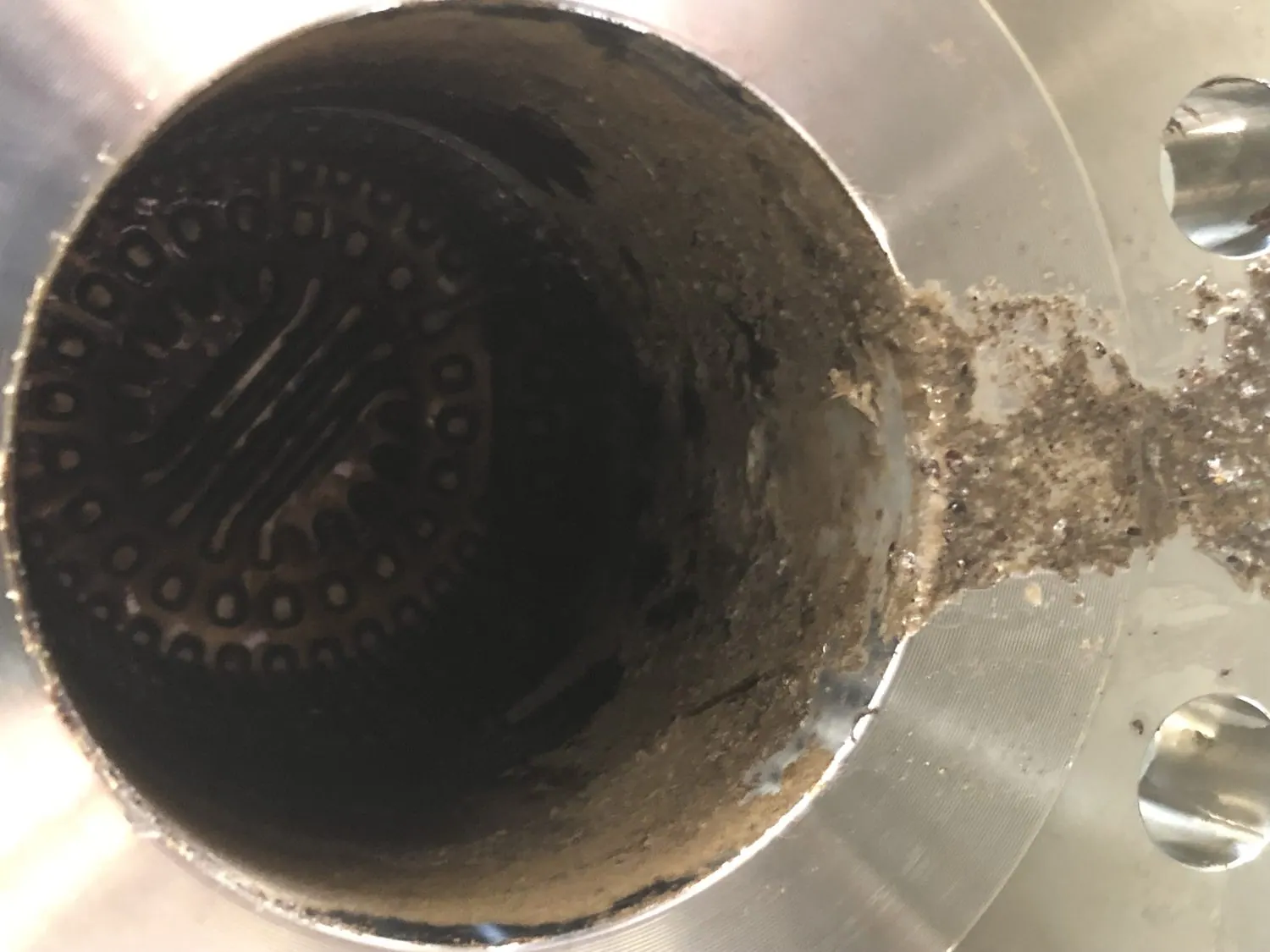
Cycle times depend on the deposit. A cooler core in CoreKleen HX typically runs 60 to 90 minutes at 50 to 60 °C. Hard scale on a large bundle takes longer across the stages.
Plate packs have to be opened so the plates can be racked. Shell-and-tube bundles, coolers and radiators are usually cleaned whole once they are out of service: the unit goes into a tank sized to it and the liquid reaches the tube side and shell side together.
Not when the frequency, power, temperature and chemistry suit the material. Most damage in exchanger cleaning comes from rods, brushes, abrasive blasting or the wrong acid. No tool rubs or strikes the surface. Thin, coated or brittle units are trialled on a sample first.
Yes, with care. Graphite blocks and tubes are brittle, so immersion avoids the rods and impact that crack them. The chemistry must suit the impregnation: phenolic-impregnated graphite resists most acids and solvents but not strong alkalis or oxidisers. Check the maker's data for your grade and trial a spare block first.
It depends on the deposit and the metal. Oil sludge needs a solvent or degreaser, rust and red dirt a mild acid cleaner such as CoreKleen HX at pH 6, and heavy oxide or heat scale on steel an acid descaler. Aluminium, copper and non-metallic exchangers each limit what can be used.
Cooler cores and plates fit the EvoSonic and UltraTecno tanks. Shell-and-tube bundles to 12 metres long go in the UltraMax HX range, and an existing pit or vessel can be fitted with rod resonators.
Tell us what the exchanger is, what it is made of, its size and what is fouling it. We will tell you whether immersion suits it and which tank and chemistry would do the job, and we can trial a core, a plate or a spare block first.