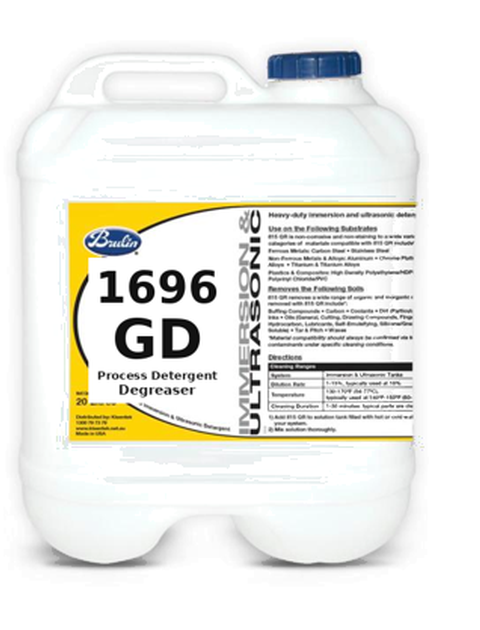
Precision cleaning for the substrates that scare you
Mixed-metal assemblies are where cleaning chemistry goes to get sued: aluminium beside copper beside solder beside plated contacts, and every aggressive option attacks something. AquaVantage 1696 GD cleans at pH 7.9 — near-neutral, effective, and safe across combinations that disqualify everything stronger.
It is the Brulin answer for electronics-adjacent hardware, medical assemblies and precision mixed-material work: real cleaning performance from chemistry gentle enough that the compatibility check becomes a formality.
Where soils are heavier, its 815-series siblings take over; where substrates are the risk, 1696 GD is the specification.
Where it earns its keep
Sensitive substrates — electronics adjacent, medical, mixed-metal precision assemblies.
Dose: 3–15% (typ. 5%). The trial sets your exact process values; the TDS governs.
The working process
Right product, right job
1696 — near-neutral
Sensitive and mixed-metal assemblies.
AquaVantage 815 GD
The qualified default for precision work
View →AquaVantage 815 QR-NF
Heavy MRO soils
View →Delivered within Australia. Outside Australia, request a delivered price.
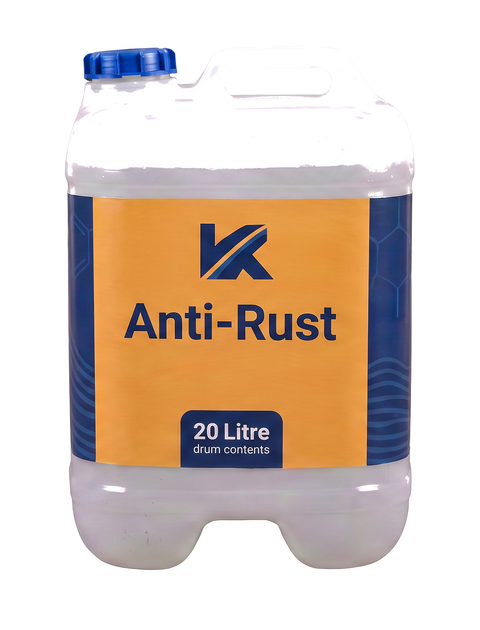 Anti-RustStops flash rust on cleaned steelView & buy →
| Mild & carbon steel | Safe in prescribed use |
| Stainless steel | Safe in prescribed use |
| Cast iron | Safe in prescribed use |
| Aluminium & titanium | Near-neutral (pH ~8) — aluminium and titanium on the TDS list |
| Magnesium & soft alloys | Not on the TDS list — test first |
| Zinc & galvanised | Not on the TDS list — test first |
| Copper & brass | Copper alloys and plating on the TDS list — the mildest in the range |
| Plated finishes (Cd·Cr·Ni) | Cadmium and chrome plating listed; nickel — test first |
| Plastics & rubbers | HDPE · nitrile · PVC on the TDS list |
| Painted / coated surfaces | Not on the TDS list — test first |
| Transport | Not classified as Dangerous Goods for road and rail |