Ultrasonic degreaser: how to choose the right one for the job
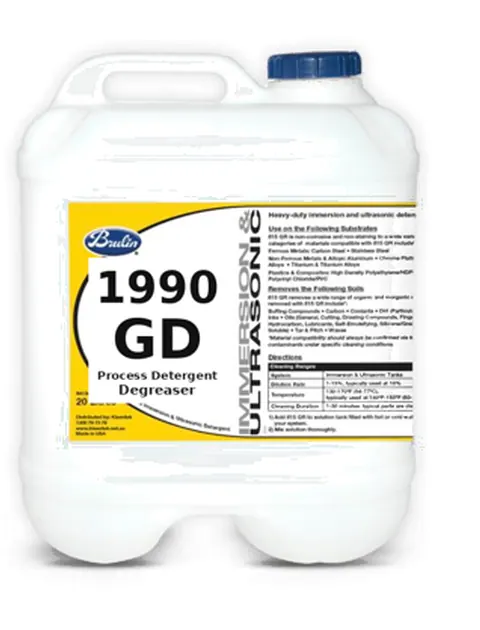
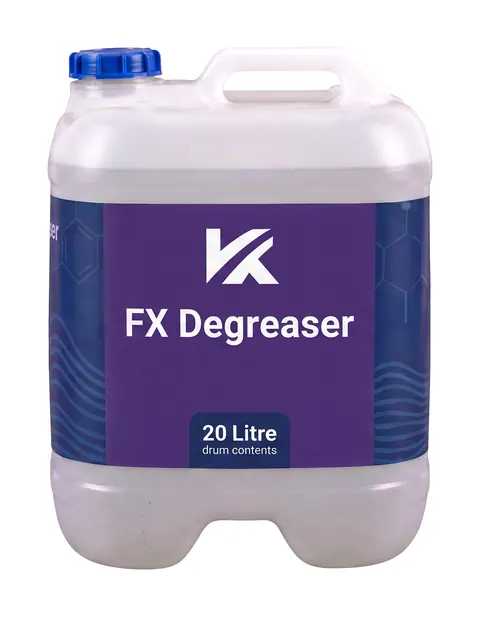
The right degreaser for an ultrasonic cleaner or parts washer depends on the metal, the dirt and the machine. The Brulin AquaVantage degreasers share a name and look alike on the shelf. They do different jobs. 815 GD is our pick for new manufactured parts. 815 QR-NF is for workshop and maintenance. 1990 GD is for spray wash systems. 1696 GD is for sensitive alloys in the workshop, carbies included. FX Degreaser handles light soils on steel and iron for less.
A degreaser is a cleaning chemical made to lift oil, grease and oily dirt that water alone will not shift. In an ultrasonic tank, cavitation bubbles knock the dirt loose. The degreaser gets under the oil and keeps it off the part.
Water-based degreaser
Supplied as a concentrate and mixed with water. Every degreaser on this page is water-based. This is the type that goes in an ultrasonic tank or a spray washer.
Solvent degreaser
Dissolves oil directly. Needs its own equipment, ventilation and handling. Never put petrol, thinners, acetone or another flammable solvent in a heated ultrasonic tank. Read why.
Where does the oil go?
Oil-separating
Released oil floats to the top, so the weir and skimmer take it off and the bath lasts longer. The Brulin AquaVantage grades work this way.
Emulsifying
Oil stays mixed through the bath. Simple to run, but the bath loads up with oil and is changed sooner. A particle filter will not take emulsified oil out.
Pick the grade for the dirt
Baked carbon is degreaser work if you pick the right grade. 815 QR-NF is made for heavy grease and baked carbon, and the 815 GD data sheet lists carbon too. Mineral scale and paint need a different chemical. See cleaning solution for an ultrasonic cleaner for scale and paint removers.
A higher pH does not mean a better degreaser. pH tells you how alkaline the solution is. It does not tell you how well it cleans or which metals it is safe on. The formula, strength, temperature and time all matter.
Before you buy
How to choose the right degreaser for the job
Answer these in order. The metal rules out more products than the dirt does.
1. What is the metal?
Steel, cast iron and aluminium suit all of them. Brass and copper rule out 815 QR-NF. A soft or mixed basket points to 1696 GD.
2. What is the machine?
An ultrasonic tank suits 815 GD and 815 QR-NF. A spray cabinet or rotary basket washer needs a low-foam degreaser, so 1990 GD or 1696 GD.
3. What is the dirt?
Cutting oil and coolant on new parts suit 815 GD. Baked grease and carbon from service suit 815 QR-NF. Light oil and fuel varnish suit 1696 GD.
4. What must the part pass?
Workshop clean, ready for paint, or an approved process? If a customer or OEM manual names a cleaner, check that exact product. A shiny outside does not prove the passages are clean.
Check every material in the part, including plating, seals and plastics. In a mixed assembly the softest material decides the degreaser.
The degreasers
Our industrial degreasers compared
Each card gives the working strength, temperature, cycle time, the metals it is safe on and the ones to keep out. Press Buy now to order, or Data sheets for the TDS and SDS (safety data sheet).
Our pick
New manufactured parts
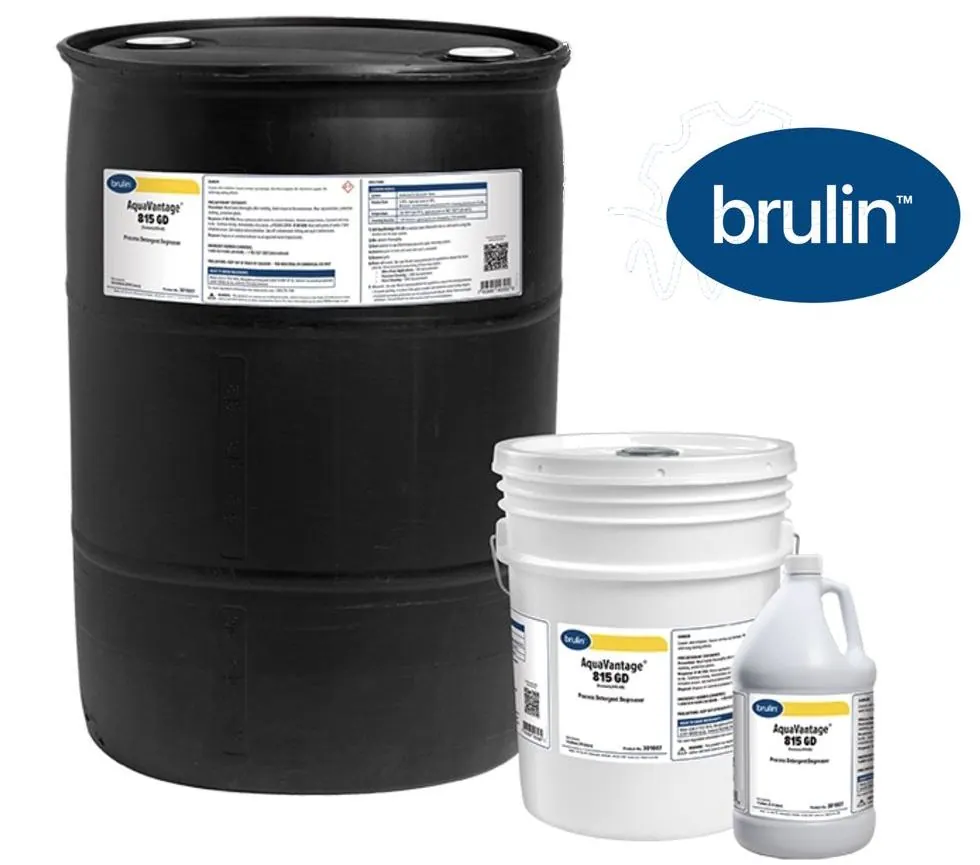
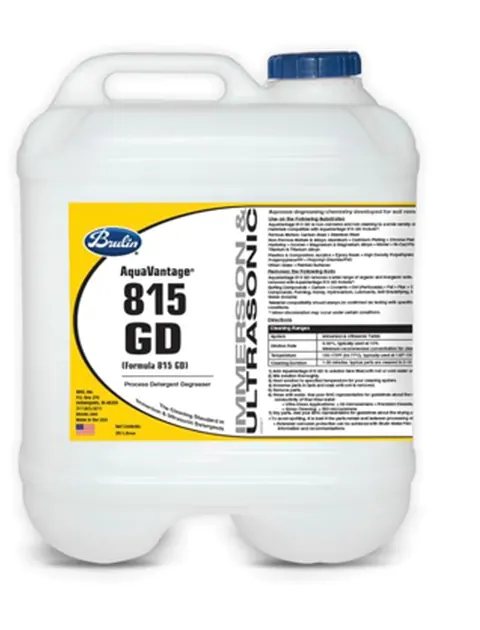
AquaVantage 815 GD
Lifts cutting oil, coolant, buffing compound and flux off newly machined parts. Separates oil so it floats to the weir for skimming.
7–30% (typ. 10%) · 54–77 °C · 3–10 min · pH 12
Steel, stainless, aluminium, magnesium, titanium, nickel, chrome and cadmium plating. Copper alloys may discolour slightly.
Zinc, tin and soft solder are not on its approved list. Test first.
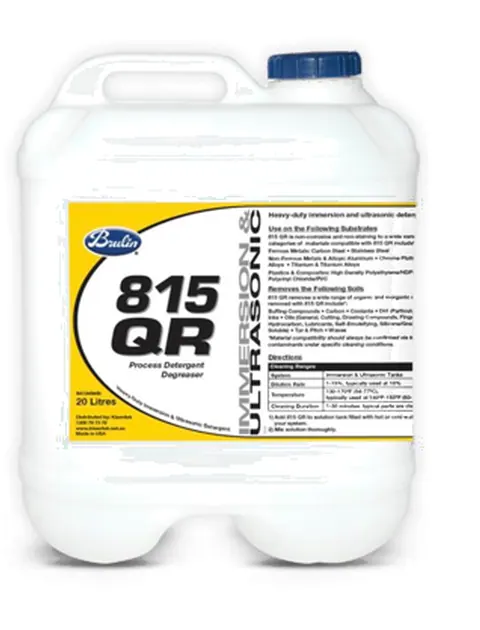
The heavy-duty grade for workshop and maintenance: baked grease, carbon, tar and wax on parts that have been in service. Built for engine reconditioning, heavy diesel and general workshop work. Contains a short-term flash-rust inhibitor.
Near-neutral, non-silicated and non-phosphated. The mildest degreaser in the range. Works in spray washers, circulating parts washers and agitated tanks, including ultrasonic.
3–15% (typ. 5%) · 49–82 °C · 1–5 min · pH 7.9–8.3
Steel, stainless, aluminium, titanium, copper, brass and copper alloys, chrome and cadmium plating.
Magnesium and zinc are not on its approved list. Test first.
For light to medium oil and grease on steel, cast iron and stainless. Works in a tank or a spray washer. AQIS food-grade approved. No aerospace OEM approvals.
5–15% (typ. 10%) · 45–65 °C · pH 12.5–13.5
Steel, cast iron, stainless, nickel, titanium, chrome plating. Aluminium only at 5%, 50 °C, 5 minutes, rinsed at once.
Zinc, galvanised, magnesium, cadmium, tin and solder. Brass and copper tarnish.
pH figures are for the concentrate, from each TDS. The working bath is diluted, so it sits a little closer to 7.
815 GD or 815 QR-NF
Same family, different dirt
Both are mildly alkaline ultrasonic degreasers at the same price. The choice comes down to where the part has been and what it is made of.
AquaVantage 815 GD
For parts coming off the machine or the bench.
Cutting, drawing and honing oils, coolant, buffing compound, flux
Safe on copper alloys, with slight discolouration possible
Safe on magnesium and nickel
Not classed as dangerous goods for transport
Foam is moderate to high. Run it inside 54–77 °C and degas after a fresh fill.
AquaVantage 815 QR-NF
For parts coming out of an engine, gearbox or machine after service.
Baked grease, carbon, tar, pitch and wax
Keep brass, bronze and copper out of the bath
Contains a short-term flash-rust inhibitor
Dangerous goods for transport, UN 2491, Class 8
Run it hot and degas after a fresh fill
Mixed basket with brass fittings? Use 815 GD, or 1696 GD if the soil is light. Steel and aluminium only with heavy service dirt? Use 815 QR-NF. Our piston ring-groove case study ran 815 QR-NF at 10% and 70 °C.
Lower cost
FX Degreaser: the lower-cost option
The Brulin grades carry aerospace OEM approvals. That is a big part of what you pay for. If no customer or spec asks for an approved cleaner, and the parts are steel or iron, FX Degreaser does the everyday degreasing for less.
Pay for Brulin when
A customer, auditor or OEM manual names an approved cleaner. The 815 GD data sheet lists Boeing, Airbus, Rolls-Royce and Pratt & Whitney approvals.
The basket has aluminium, magnesium or brass
You want the oil to separate for skimming, so the bath lasts longer
You need in-process corrosion control on the part
Use FX Degreaser when
The parts are steel, cast iron or stainless
No approved cleaner is called for
Cost per litre matters. It is $120 for 10 L ex GST, against $220 for the Brulin grades.
The machine is a tank or a spray washer. It works from 30 °C and runs at 45–65 °C.
Keep soft metals out of FX Degreaser
It is strongly alkaline, pH 12.5–13.5. Zinc, galvanised, magnesium, cadmium, tin and solder must stay out. Brass and copper tarnish. Aluminium only at 5%, 50 °C maximum and 5 minutes, then rinse at once. For carbies use 1696 GD.
A spray cabinet throws the solution at the part under pressure. A degreaser that foams fills the cabinet with suds and the pump starts drawing air. Spray machines need a low-foam degreaser.
Keep 815 GD and 815 QR-NF in the tank
Both are made for immersion and ultrasonic tanks. 815 GD foams moderate to high. In a spray cabinet use 1990 GD or 1696 GD. For steel and iron only, FX Degreaser also runs in a spray washer.
AquaVantage 1990 GD
The spray wash grade. Very low foam above 49 °C. Keep it at 5% or more when the load has aluminium.
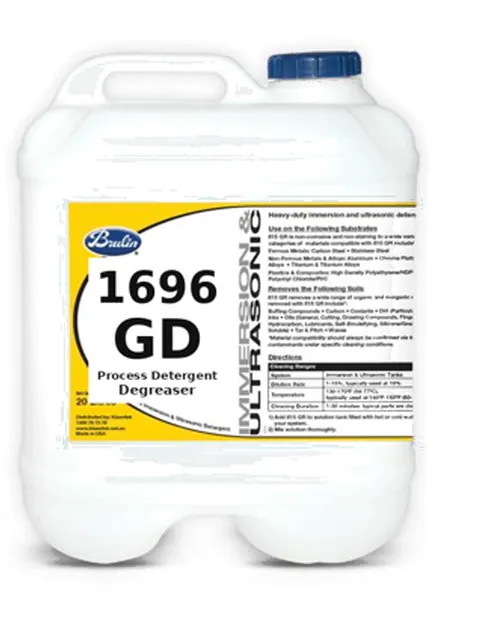
AquaVantage 1696 GD
Low foam above 49 °C. Foams below that, so let the cabinet come up to heat before you start the pump.
Heat first, then spray
Both run from 49 °C. Typical working range is 54–66 °C for 1990 GD and 49–66 °C for 1696 GD.
Strong alkaline degreasers clean fast. They also tarnish brass and attack soft metals, and the damage is quicker in a hot bath. A carburettor has aluminium or zinc in the body and brass in the jets. 1696 GD is the safe start.
Part
Usually made of
In 1696 GD
Body, float bowl, top cover
Aluminium or zinc die-cast
Aluminium is on the TDS list. Zinc is not, so test a scrap part first.
Jets, emulsion tubes, needle seats
Brass
Copper and copper alloys are on the TDS list.
Floats, seals, O-rings
Plastic, nitrile rubber
HDPE, nitrile rubber and PVC are on the TDS list. Take out anything else.
Screws, springs, linkages
Steel
Safe. Dry straight away, or dip in Anti-Rust.
Run 1696 GD at 5% and 49–66 °C for 1 to 5 minutes, then check the part. A heavy varnish may need a second cycle. For a carburettor that is all aluminium with heavy varnish, 815 GD also works. The full method and the machine settings are on the ultrasonic carburettor cleaner page.
Side by side
The degreasers in one table
Prices are ex GST.
815 GD
815 QR-NF
1990 GD
1696 GD
FX Degreaser
Machine
Ultrasonic, immersion
Ultrasonic, immersion
Spray wash
Spray wash, parts washer, agitated tank
Immersion, spray wash
pH (concentrate)
12
12.5
11.3
7.9–8.3
12.5–13.5
Dose
7–30% (typ. 10%)
5–30% (typ. 10%)
3–15% (typ. 5%)
3–15% (typ. 5%)
5–15% (typ. 10%)
Temperature
54–77 °C
54–77 °C
49–77 °C
49–82 °C
45–65 °C
Typical cycle
3–10 min
3–10 min
3–10 min
1–5 min
Set by trial
Foam
Moderate to high
Run hot, degas
Very low above 49 °C
Low above 49 °C
Not stated on TDS
Brass and copper
Yes, may discolour
No
Yes
Yes
Tarnishes
Aluminium
Yes
Yes
Yes, 5% minimum
Yes
5%, 50 °C, 5 min only
Magnesium
Yes
Yes
Yes
Test first
No
Zinc
Test first
Test first
Test first
Test first
No
OEM approvals on the TDS
Boeing, Airbus, Rolls-Royce, P&W and more
None listed
Boeing, Airbus, Rolls-Royce and more
Boeing, Safran
None. AQIS food grade.
Dangerous goods
No
UN 2491, Class 8
No
No
No
Price ex GST
$220 10 L · $390 20 L
$220 10 L · $390 20 L
$220 10 L · $415 20 L
$220 10 L · $390 20 L
$120 10 L · $225 20 L
FX Degreaser is the lower-cost option for steel and iron. When to use it.
Good results
How to get a good result from a degreaser
Knock off loose dirt and excess oil first. Less goes into the bath, so it lasts longer.
Measure the dose. Work it out on the final volume of the bath. More concentrate is not a fix for a poor clean.
Run inside the temperature and time. Use the lowest limit of the chemical, the machine and the part. Try one part before a full basket.
Degas a fresh fill. Run the ultrasonics for a few minutes with no load. Use a basket, do not overload it, and turn parts so the solution reaches blind holes.
Rinse and dry straight away. Rinse hot so the part dries itself. Dry steel and cast iron at once, and dip in Anti-Rust if it will sit.
Look after the bath. Skim the oil, filter the solids and check the strength. Change it when the clean slows down at the right strength.
Mixing example
30 L bath at 5% = 1.5 L concentrate, then water up to 30 L
Do not add 1.5 L to a tank already full to 30 L. The dosage calculator works it out for any tank.
Problems
When the result is not right
The part is still greasy
Check it is the right degreaser, the strength, the temperature, how loaded the bath is, and whether the solution can reach the dirty area.
The part has stained or gone dark
Stop and check the metal against the data sheet, the time and the temperature. Aluminium and zinc darken in a degreaser that is too strong for them.
A film is left after drying
Check the rinse. Dirty rinse water, or solution drying on the part before the rinse, leaves a film.
Steel rusts after washing
Cut the time between rinse and dry. The inhibitor in the bath does not protect the part on the shelf. Use Anti-Rust for storage.
Buy
Order degreaser
Order online. Each product page has the TDS, the SDS and the 200 L and 1,000 L prices.
Degreaser
10 L
20 L
AquaVantage 815 GDOur pick for new manufactured parts
Prices ex GST, delivered within Australia. Outside Australia, ask for a delivered price.
FAQ
Questions buyers ask
What is a degreaser?
A cleaning chemical made to lift oil, grease and oily dirt. Workshop degreasers are mostly water-based concentrates mixed with water. An ultrasonic degreaser is one made to work in a heated ultrasonic tank, where cavitation bubbles knock the dirt loose and the degreaser holds the oil away from the part.
What is the best degreaser for an ultrasonic cleaner?
It depends on the metal and the dirt. For new machined parts, AquaVantage 815 GD at 10%. For baked grease and carbon on steel and aluminium, AquaVantage 815 QR-NF at 10%. For aluminium, brass or a carburettor, AquaVantage 1696 GD at 5%.
What is the difference between 815 GD and 815 QR-NF?
815 GD is for oil, coolant and buffing compound on new parts, and it is safe on copper alloys. 815 QR-NF is the heavy-duty grade for baked grease and carbon on service parts. It must not be used on copper, brass or bronze.
Which degreaser goes in a spray wash cabinet?
AquaVantage 1990 GD, or 1696 GD for aluminium and brass. Both are low foam above 49 °C. 815 GD and 815 QR-NF are made for immersion and ultrasonic tanks.
Which degreaser is safe on brass?
AquaVantage 1696 GD and 1990 GD have copper alloys on their approved list. 815 GD is safe, with slight discolouration possible. Keep brass out of 815 QR-NF and FX Degreaser.
Which degreaser for a carburettor?
AquaVantage 1696 GD at 5%, 49–66 °C, for 1 to 5 minutes. It is near-neutral, so it suits aluminium bodies and brass jets. Zinc is not on its approved list, so test a zinc body on a scrap part first.
Can I use a household degreaser in an ultrasonic cleaner?
A household spray degreaser is made to wipe on and rinse off. Many foam, and foam soaks up the cleaning power in an ultrasonic tank. Most have no inhibitor, so steel flash rusts. Never put a flammable solvent in the tank. Read why.
Is there a cheaper degreaser than the Brulin range?
Yes. FX Degreaser is $120 for 10 L ex GST, against $220 for the Brulin grades. It has no aerospace OEM approvals, so use it where none is called for. It suits steel, cast iron and stainless. Keep zinc, magnesium and brass out, and aluminium only within its TDS limits.
Does a higher pH mean a better degreaser?
No. pH shows how alkaline the solution is. It does not show how well it cleans or which metals it is safe on. A strong alkali cleans fast on steel and attacks aluminium, zinc and brass.
How much degreaser do I add?
The dose is a percentage of the tank. A 30 L tank at 10% takes 3 L of concentrate. The dosage calculator works it out for any tank.
Reviewed 1 October 2026. The data sheets on each product page govern.
Tell us what the part is made of, what you need to remove, which machine you use and what the part must pass. Send a photo and the name of your current cleaner if you have it. We will name the degreaser, the dose and the temperature.