Most workshops do not need another vessel. They have a perfectly good tank — a rinse bath, a process tank, a soak tank that has been there for fifteen years — and what it lacks is ultrasonics. Naked Sonics is that hardware sold on its own: generators, immersible arrays and rod resonators, without a tank wrapped around them.
The same components that go into every machine we build. Sold separately, retrofitted into yours.
Everything here is sold on its own — retrofitted into a tank you already own, as parts for a system you are building, or as replacements for a machine that has gone quiet. Start with what goes in the tank; the generator follows from it.
Everything here runs on one of these two. The generator is chosen by the transducer — never the other way round.
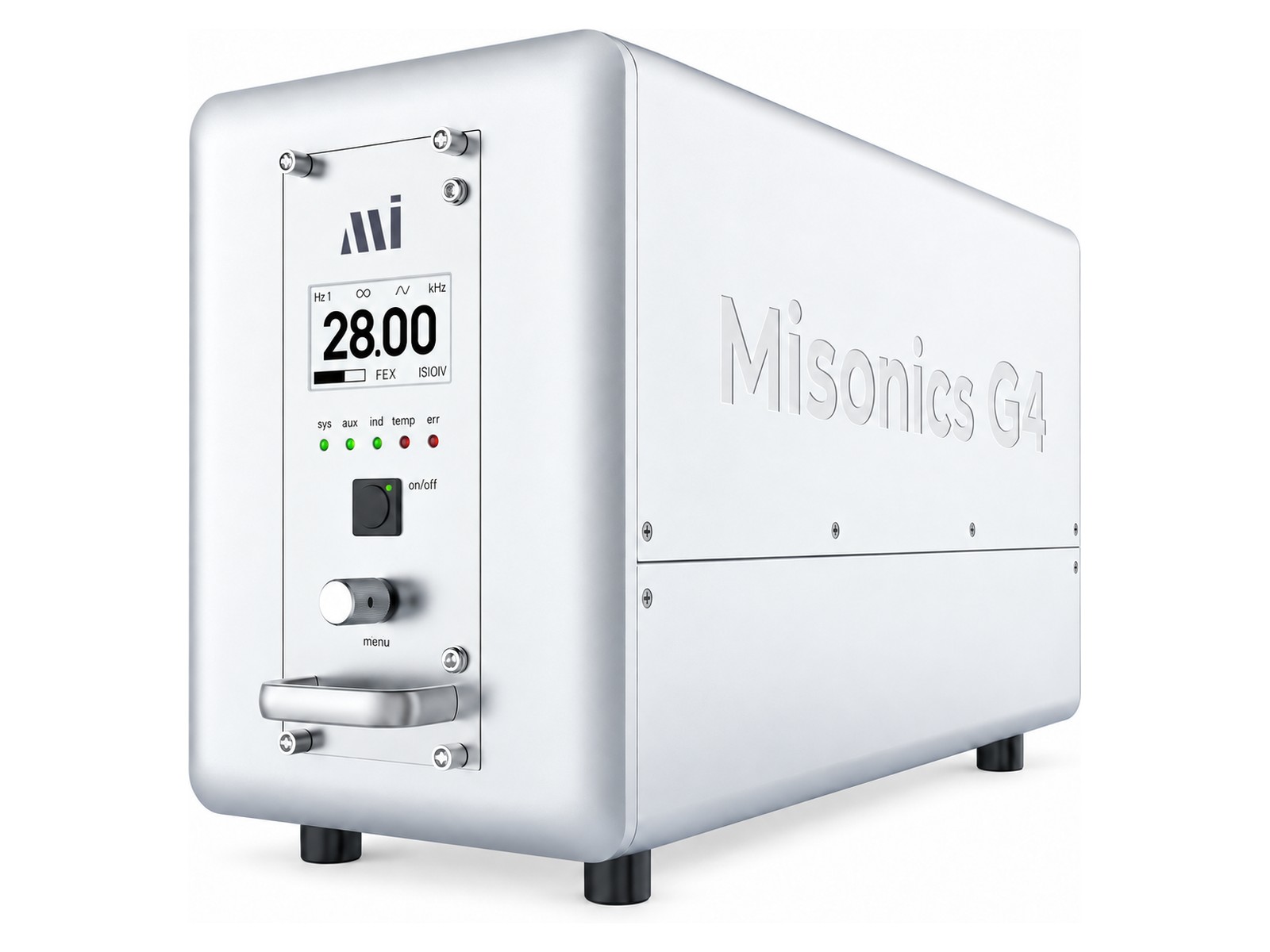
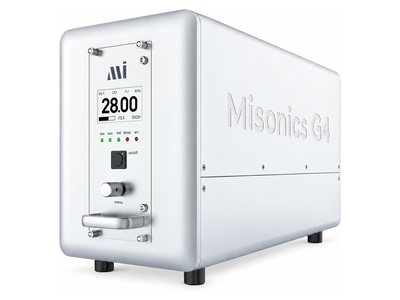 VarioSonic G4
Multi-frequency. Nine models · 28/45, 40/80, 80/130, 40/130 kHz · 800 to 1,500 W dual, higher single
Pick a model →
VarioSonic G4
Multi-frequency. Nine models · 28/45, 40/80, 80/130, 40/130 kHz · 800 to 1,500 W dual, higher single
Pick a model →
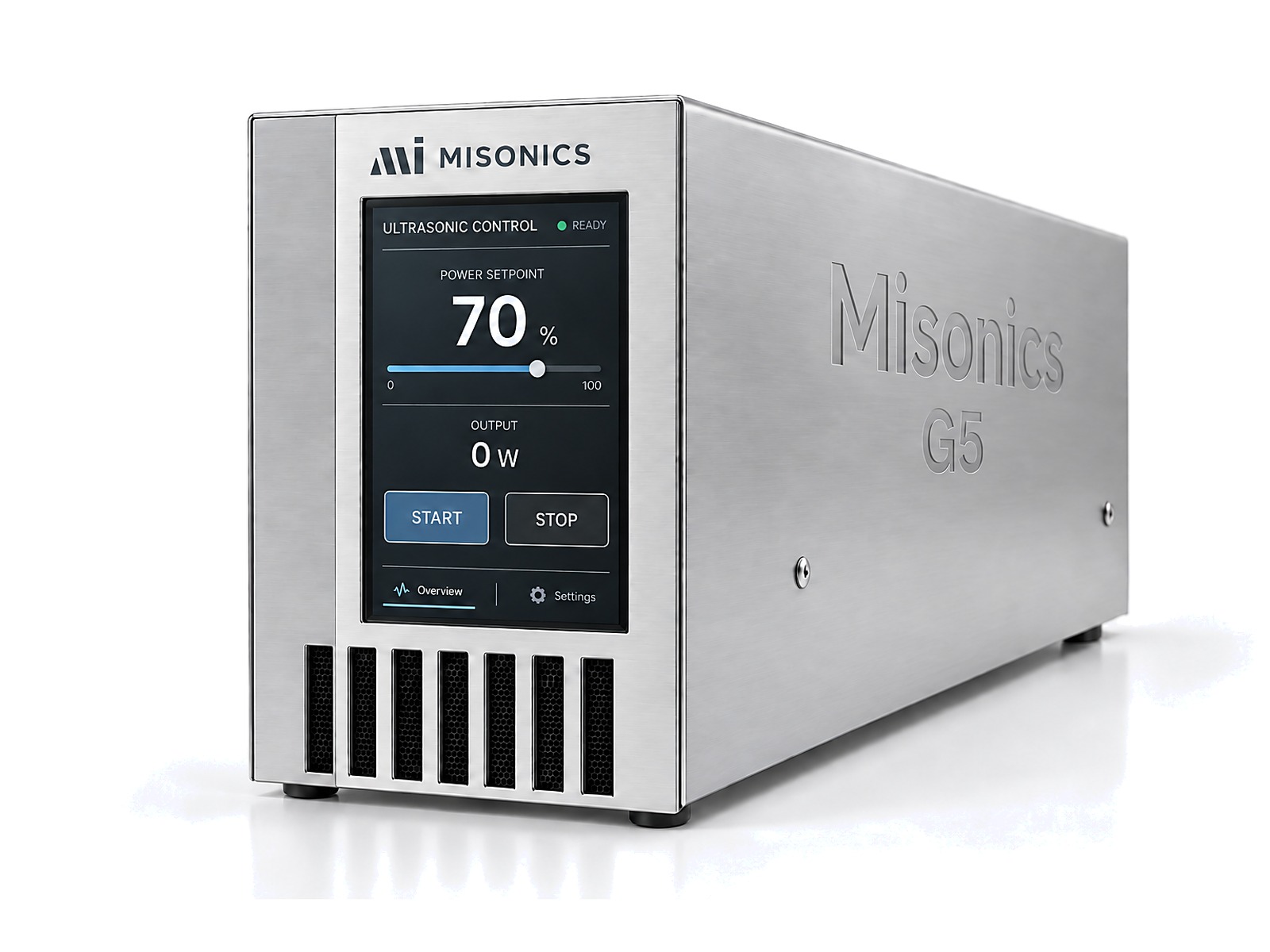
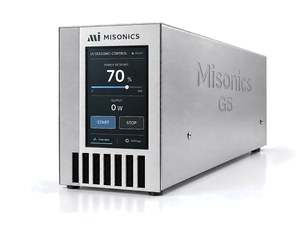 SonoDrive G5
Fixed frequency, matched to the rod for power output — 25 kHz standard, 40 kHz optional
The SonoDrive →
SonoDrive G5
Fixed frequency, matched to the rod for power output — 25 kHz standard, 40 kHz optional
The SonoDrive →
We do not sell a generator on its own to drive transducers we have not specified, and we do not sell transducers to run on a generator we did not supply. It is not a policy about paperwork — the two are tuned to each other, and an unmatched pair usually means no cavitation, a drive running hot, and both halves replaced inside a year.
There is no warranty on an unmatched pair. If you already own one half, tell us what it is and roughly when it went in and we will tell you where you stand before you spend anything.
Start here. What goes in the tank decides the drive, and each of these is quoted with the generator that matches it.
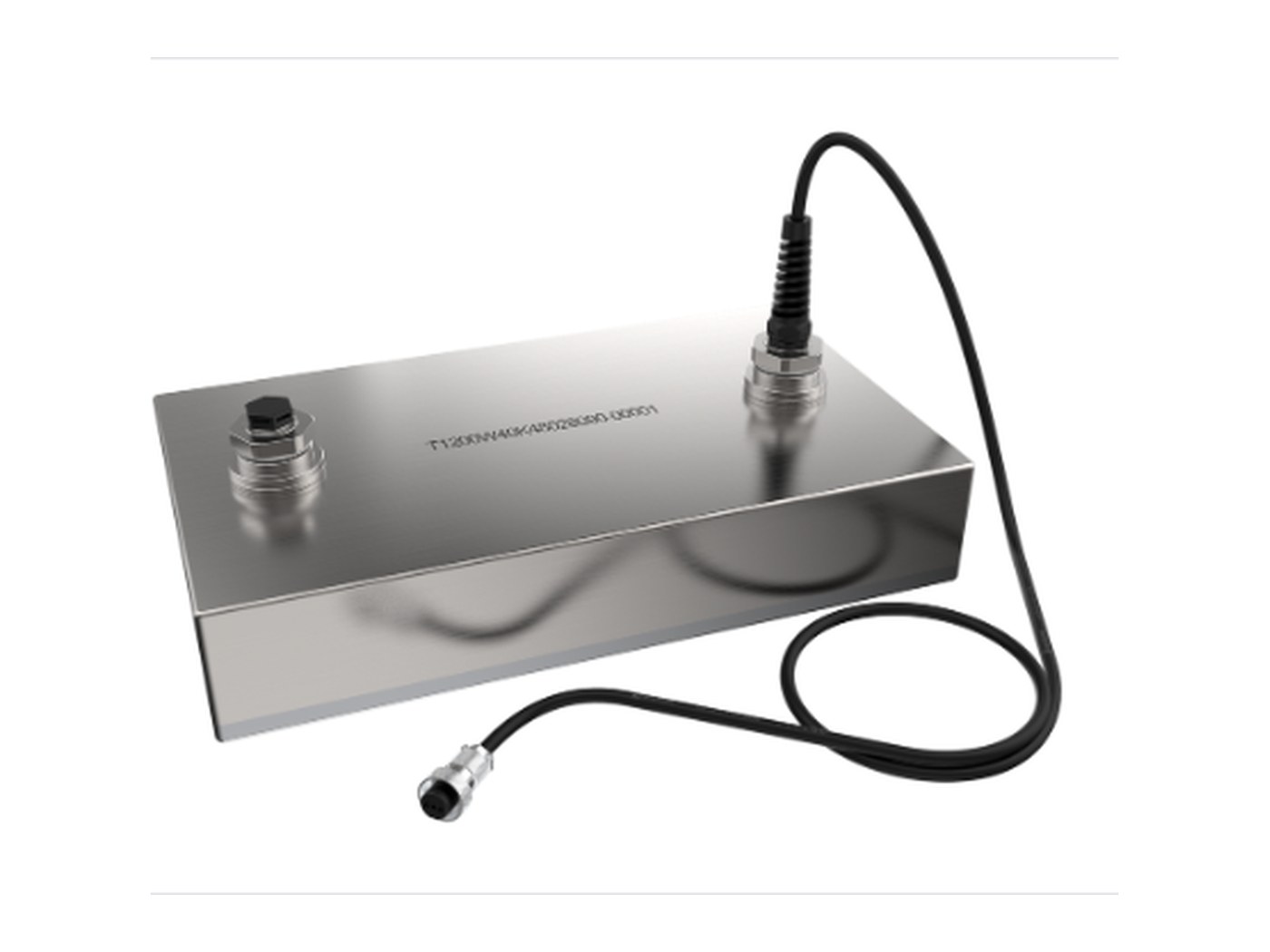
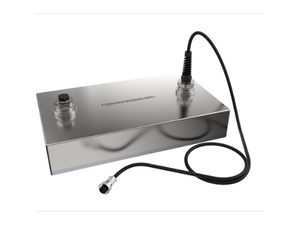 Immersible transducers
Custom built — your dimensions, SS304 or SS316L, your frequency, your fixing points. Driven by the VarioSonic G4
Specify a box →
Immersible transducers
Custom built — your dimensions, SS304 or SS316L, your frequency, your fixing points. Driven by the VarioSonic G4
Specify a box →
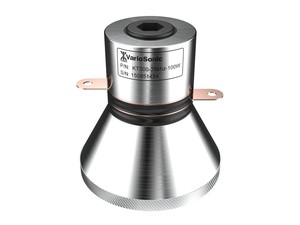 BLT transducers — single frequency
The bolted element on its own, one tuned note — 28, 40, 68, 80 and 130 kHz. For transducer plates, OEM builds and repairs. Driven by the VarioSonic G4
Single-frequency elements →
BLT transducers — single frequency
The bolted element on its own, one tuned note — 28, 40, 68, 80 and 130 kHz. For transducer plates, OEM builds and repairs. Driven by the VarioSonic G4
Single-frequency elements →
 BLT transducers — dual frequency
One element, two tuned notes, switched at the generator — 25/45, 28/68, 40/80, 40/130 and 80/130 kHz. Coarse pass and finish pass in the one tank
Dual-frequency elements →
BLT transducers — dual frequency
One element, two tuned notes, switched at the generator — 25/45, 28/68, 40/80, 40/130 and 80/130 kHz. Coarse pass and finish pass in the one tank
Dual-frequency elements →
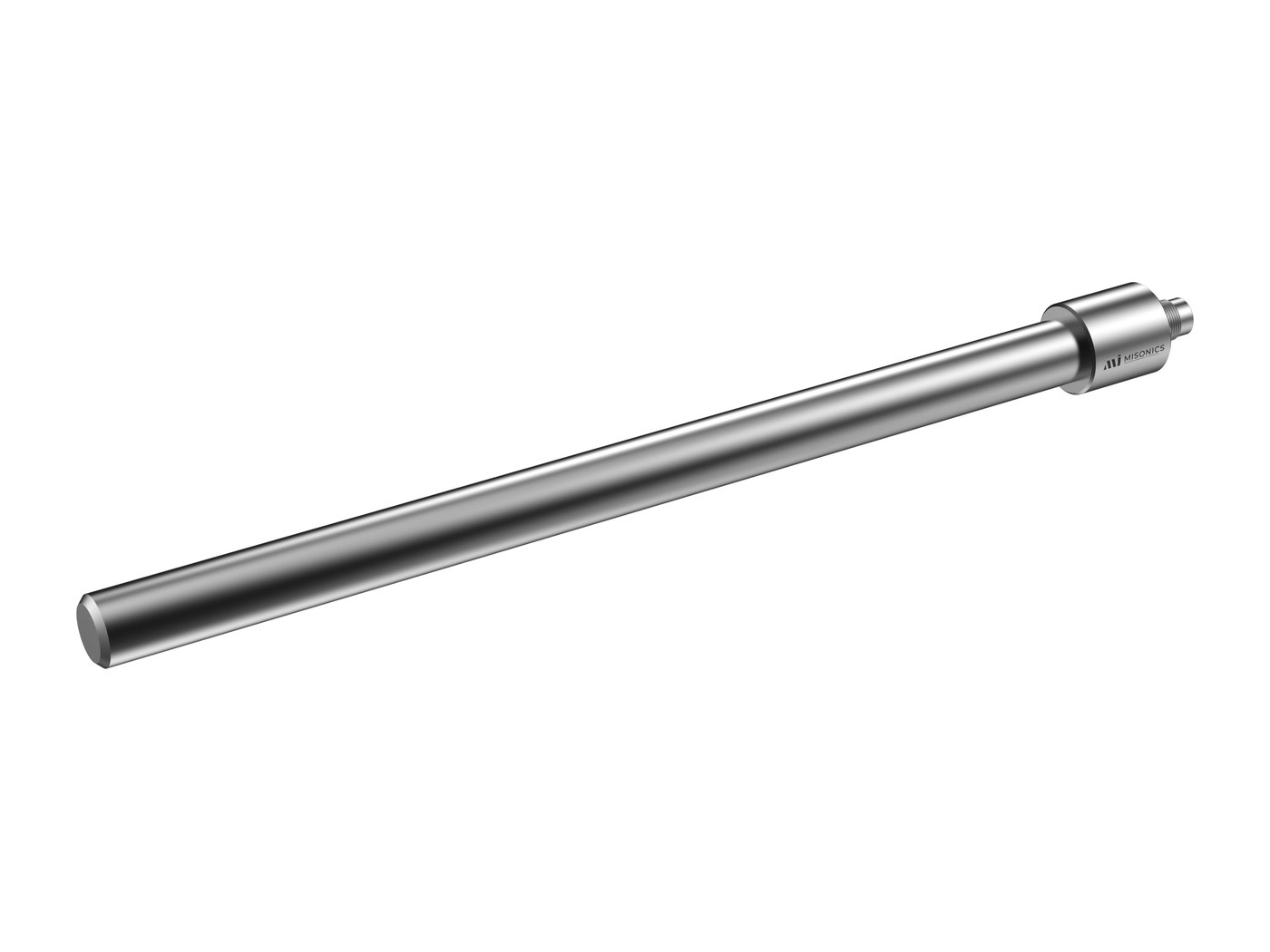
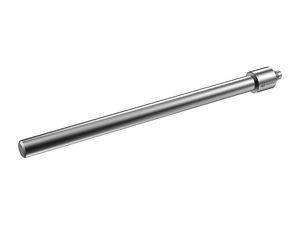 Solo 360 rod resonators
Twelve lengths, 340 to 1327 mm · 800 to 1,500 W · 25 or 40 kHz. Driven by the SonoDrive G5
Pick a length →
Solo 360 rod resonators
Twelve lengths, 340 to 1327 mm · 800 to 1,500 W · 25 or 40 kHz. Driven by the SonoDrive G5
Pick a length →
They do not cross over. The G4 is a multi-frequency generator for immersibles and plates. Rod resonators are fixed-frequency and run on the matched SonoDrive G5. Fitting one to the other does not work — if you are unsure which system your tank wants, send the dimensions and the duty and we will tell you.
If you are converting a tank you already own, start here: adding ultrasonics to an existing tank →
Stainless, sound, the right size, already plumbed, already heated. Replacing it to gain ultrasonics is buying a tank you already have. A rod or an immersible array drops in and changes what it is.
Bonded transducers fail. Generators drift off resonance and nobody notices until parts stop coming clean. Transducers and generators are replaceable line items — not a reason to scrap the machine.
A process line, an OEM machine, a one-off rig. You need the ultrasonic engine and the engineering to size it — not a catalogue product bent to fit.
If the vessel is near the end of its life, retrofitting it is money into a tank you will replace. We will tell you that rather than sell you the hardware.
| Rod resonator | Immersible array | |
|---|---|---|
| Field shape | 360° along the whole immersed length — fills the vessel | Directional from the array face — aimed where the work sits |
| Best for | Deep tanks, cylindrical work, brutal soil loads, awkward vessels | Rectangular tanks, defined work zones, high power density |
| Frequency | Fixed per rod — 25 kHz standard, 40 kHz optional | Fixed single — 28, 40, 68, 80 or 130 kHz. Or a selectable pair — 28/45, 40/80, 80/130 or 40/130 kHz |
| Fitting | Horizontal or vertical, through the wall or from the rim — and out again in minutes | Hung, floor-stood or bulkhead-mounted |
| Room taken | Very little — several rods fit where one plate would go, so more power goes into the same tank | Takes a face of the tank |
| Fine finishing work | Not its strength — robust deep-field cleaning | Better for finer, controlled work |
The engineering limit: rod resonators are single-frequency devices, and their strength is robust, even, deep-field cleaning rather than high-frequency finesse. Precision multi-frequency work belongs on bonded and immersible platforms. The rod owns depth and durability.
All specifications — incl. dimensions, ultrasonic power and volume — are confirmed at quotation.
That is genuinely all we need to tell you whether a retrofit will work — and whether it is worth doing.
A generator is tuned to the transducers it drives. Four things have to line up: the frequency the generator tracks, the total capacitance of the array wired to it, the impedance and phase that array presents once it is in the liquid, and the voltage across the group under load. We specify all four against each other, so the pair is quoted, built and commissioned as one item.
A new generator will not rescue an old set. Transducers age — output falls away, the resonant point drifts and the impedance climbs — so an older array is no longer the load a new drive was tuned for. A set of mixed ages is worse again: the weakest element pulls the rest off tune and the drive spends its power hunting for a resonance that has moved. What you get is a generator running hot or dropping out, a bath cleaning unevenly, and transducers failing earlier than they should — and from the outside there is no way to tell which end is at fault, so you end up replacing both anyway.
There is no warranty on an unmatched pair. Equipment warranty covers a generator and transducers supplied and matched by Misonics. A Misonics transducer driven by a generator we did not supply, or a Misonics generator fitted to transducers we have not specified, is not covered — we have no way to characterise the combination, so we will not stand behind it. If you already own one half, tell us what it is and roughly when it went in, and we will tell you where you stand before you spend anything.
Send the five feasibility details and a photo of the tank. The answer comes back fast — including if the answer is no.
 VarioSonic G4
 SonoDrive G5
 Immersible transducers
 Solo 360 rods