Specification
| Immersed length | 669 mm |
|---|---|
| Ultrasonic power | 1,500 W |
| Frequency | 25 kHz |
| Frequency options | Fixed per rod25 kHz standard; 40 kHz optional — on application |
| Rod diameter | 50.5 mmThe same on every length |
| Material | SS316LTitanium to order on any length |
| Mounting | G1″ threaded entryThrough a single 34 mm hole, lock nut and seal |
| Max liquid temperature | 95 °C continuous |
| Pressure | Vacuum, atmosphere or positive pressure |
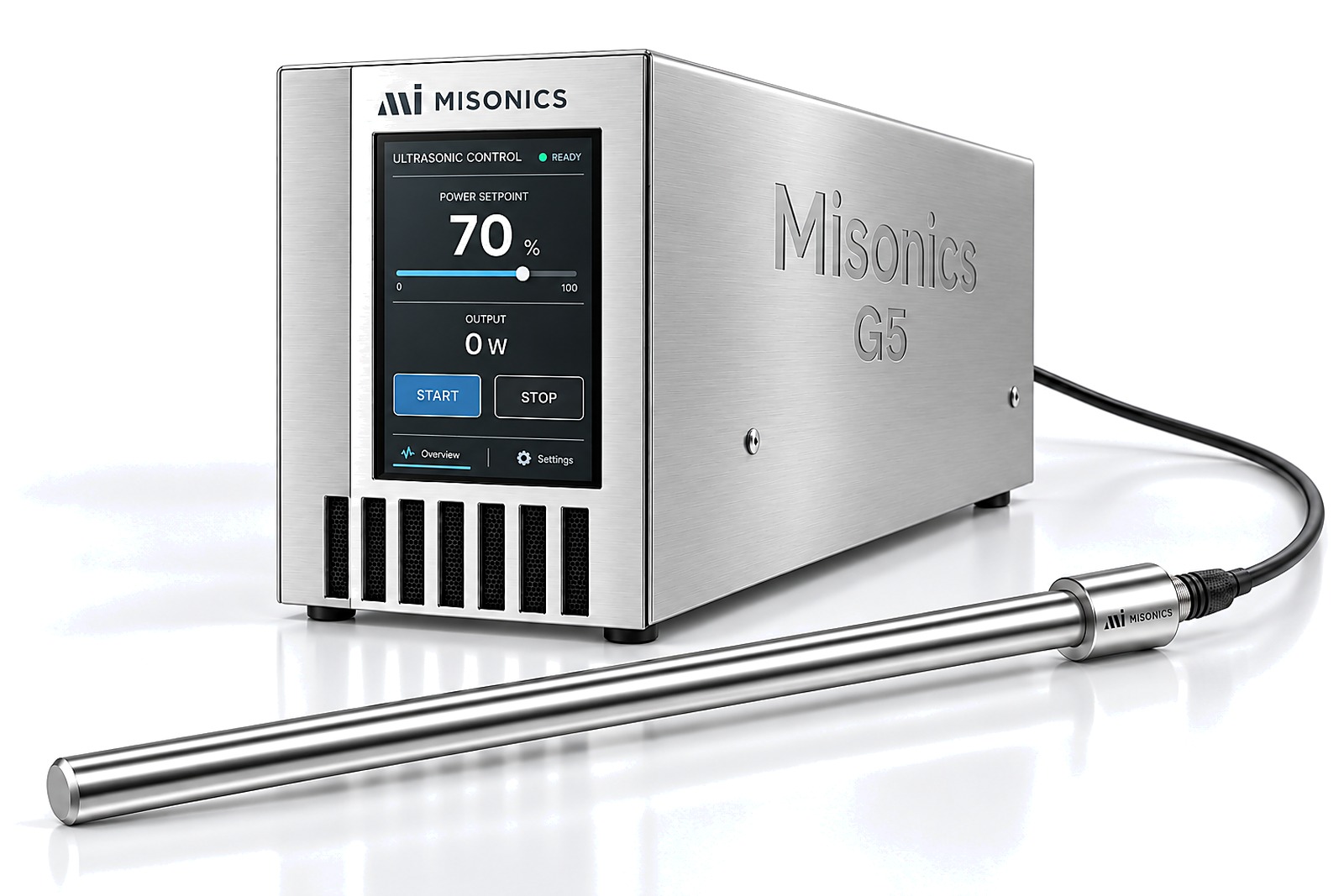
| Drive | SonoDrive G5Matched to the rod for power output — the rods do not run on the VarioSonic multi-frequency generators |
| Marking | Length, power and frequency on the collar |
Why a rod and not a plate
| It fits either way up | Horizontal across the tank or vertical from the rim. The mounting follows the vessel and the parts, not the other way round. |
|---|---|
| In and out in minutes | One fitting. A rod comes out for a bath change, a service or a move to another tank without touching the vessel. |
| More power in the same tank | A rod takes very little room. Several fit where one bonded plate would go, so where the duty needs power you add rods instead of a bigger vessel. |
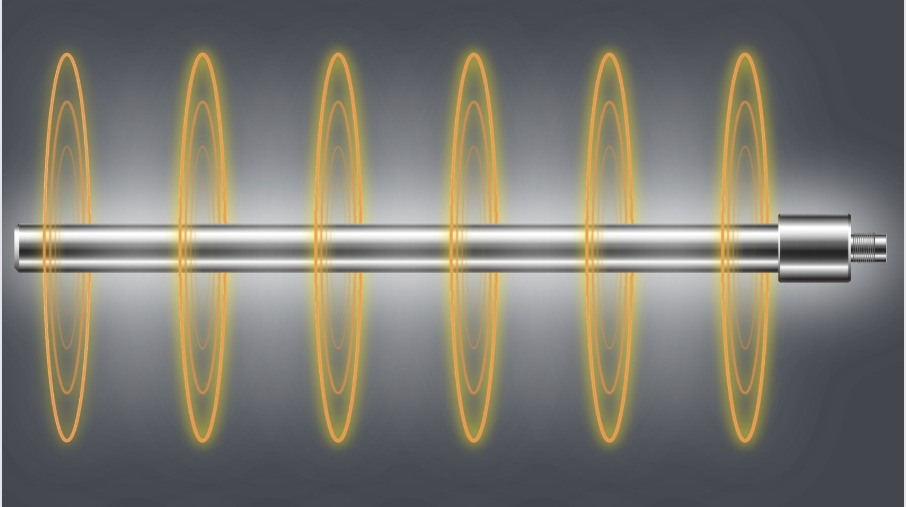
| It radiates all the way round | 360 degrees along the whole immersed length, not one face pointing one way. No dead side, and the field does not fade as it climbs. |
| Nothing settles on it | A vertical rod has no horizontal face for sludge to bury. That is what kills bonded plates in heavy-soil duty. |
| It goes in a tank you own | One 34 mm hole. No rebuild, no new vessel, same footprint and same chemistry. |
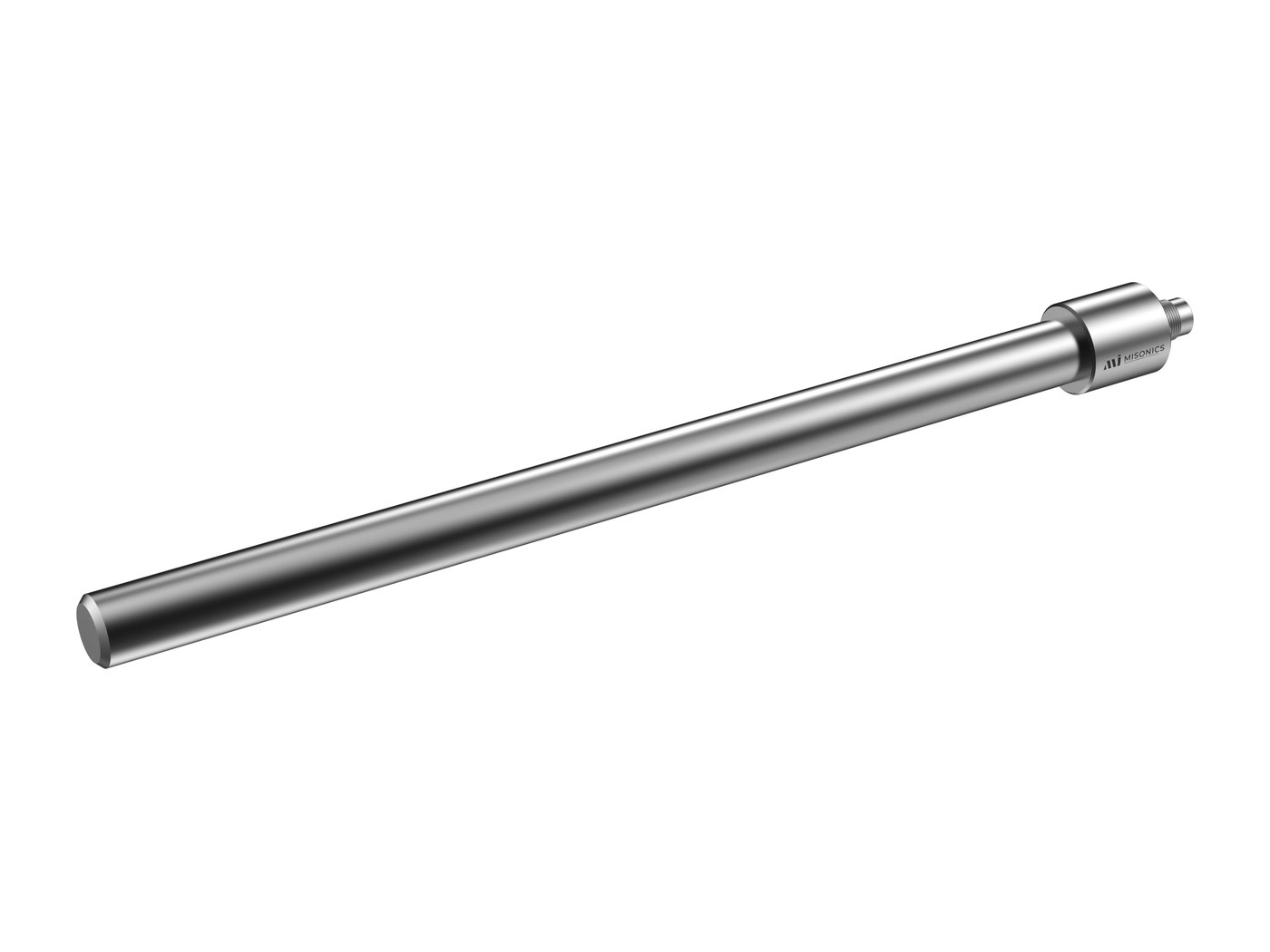
Solo 360 / 669
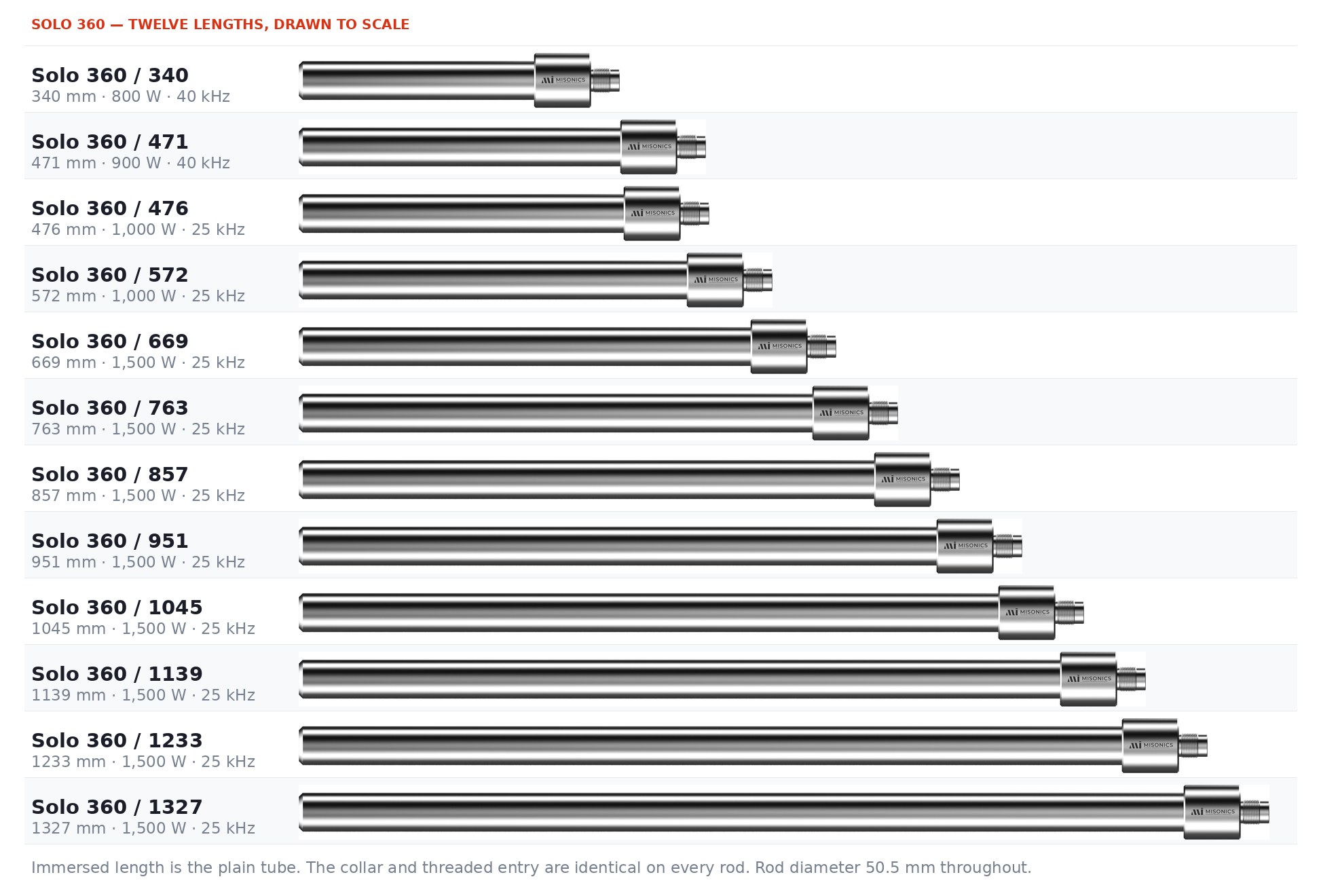
Twelve lengths off the same patented tubular geometry. Start with the frequency — it decides which lengths exist — then pick the one that fits under your liquid line. Quoted with the matched SonoDrive G5.
Which frequency should I choose? →
Each rod is built for one band and holds it. 25 kHz is the standard across the range; 40 kHz is made on the two shortest rods, for finer work in shallower baths.
Stainless is what most baths get. Titanium is the choice where the chemistry or the duty demands it — quoted on application, on any length.
Only after a generator? Read this firstOpen
We do not sell a generator on its own to drive transducers we have not specified, and we do not sell transducers to run on a generator we did not supply. It is not a policy about paperwork — the two are tuned to each other, and an unmatched pair usually means no cavitation, a drive running hot, and both halves replaced inside a year.
There is no warranty on an unmatched pair. If you already own one half, tell us what it is and roughly when it went in and we will tell you where you stand before you spend anything.