Does ultrasonic cleaning damage aluminium?
Not when the solution, the strength, the temperature, the frequency and the time all suit the metal. Get one of them wrong and aluminium goes dark, dull or pitted. This page sets out what causes it, which of our solutions are safe on aluminium and at what strength, how hot to run the bath, and how to use frequency to protect soft parts.
Updated · Fred Shaw, Misonics
Ultrasonic cleaning is safe on aluminium when you use a solution with aluminium on its data sheet, make it up to the data-sheet strength and no stronger, keep the bath at 60 °C or below, run the higher frequency for most of the cycle, and lift the part out to look at it between short cycles. Most damage comes from trying to get a faster result by adding more chemical or turning up the heat.
 The right solutionAluminium named on its data sheet
 The data-sheet strengthMade up to it, never stronger
 60 °C or belowHeat speeds the attack up
 45 kHz most of the cycleSmaller bubbles, gentler collapse
 Short cyclesLift it out and look at it
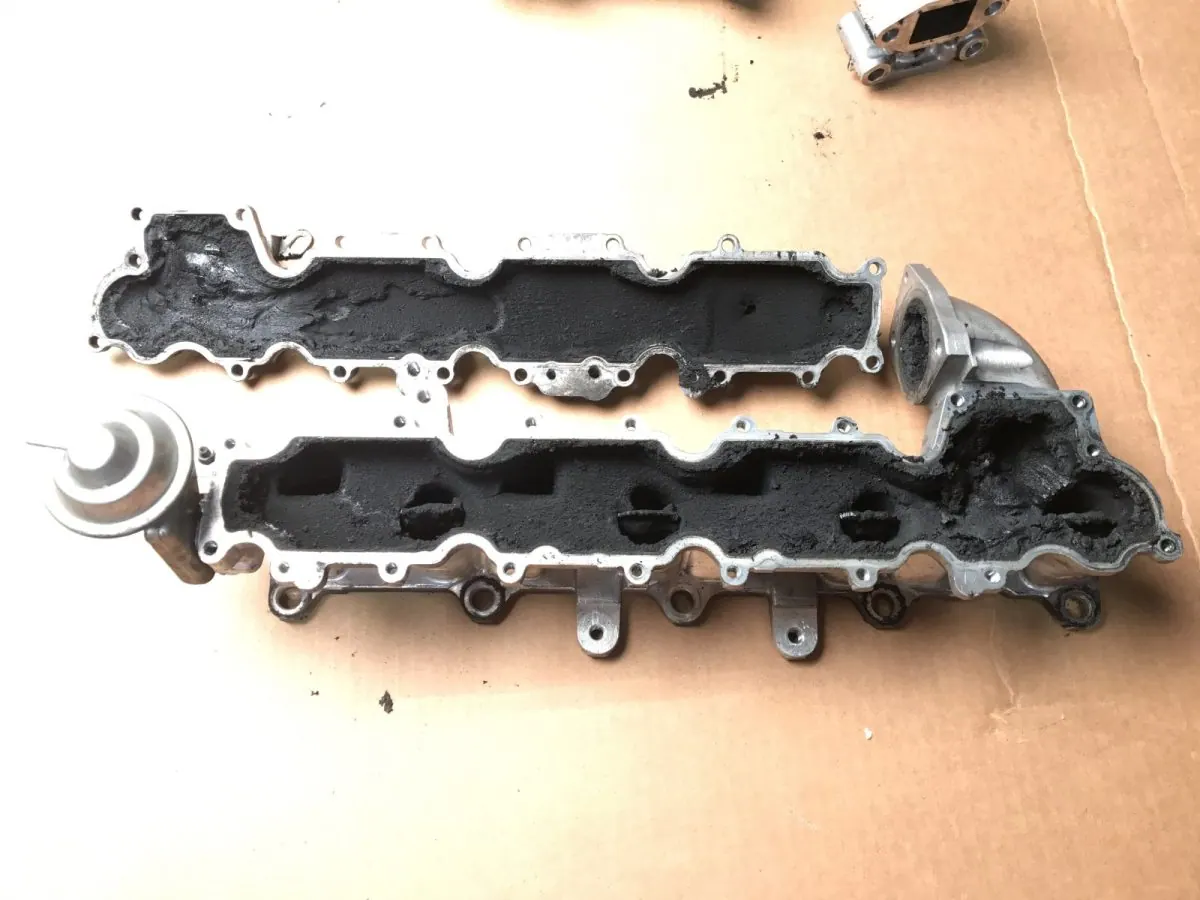
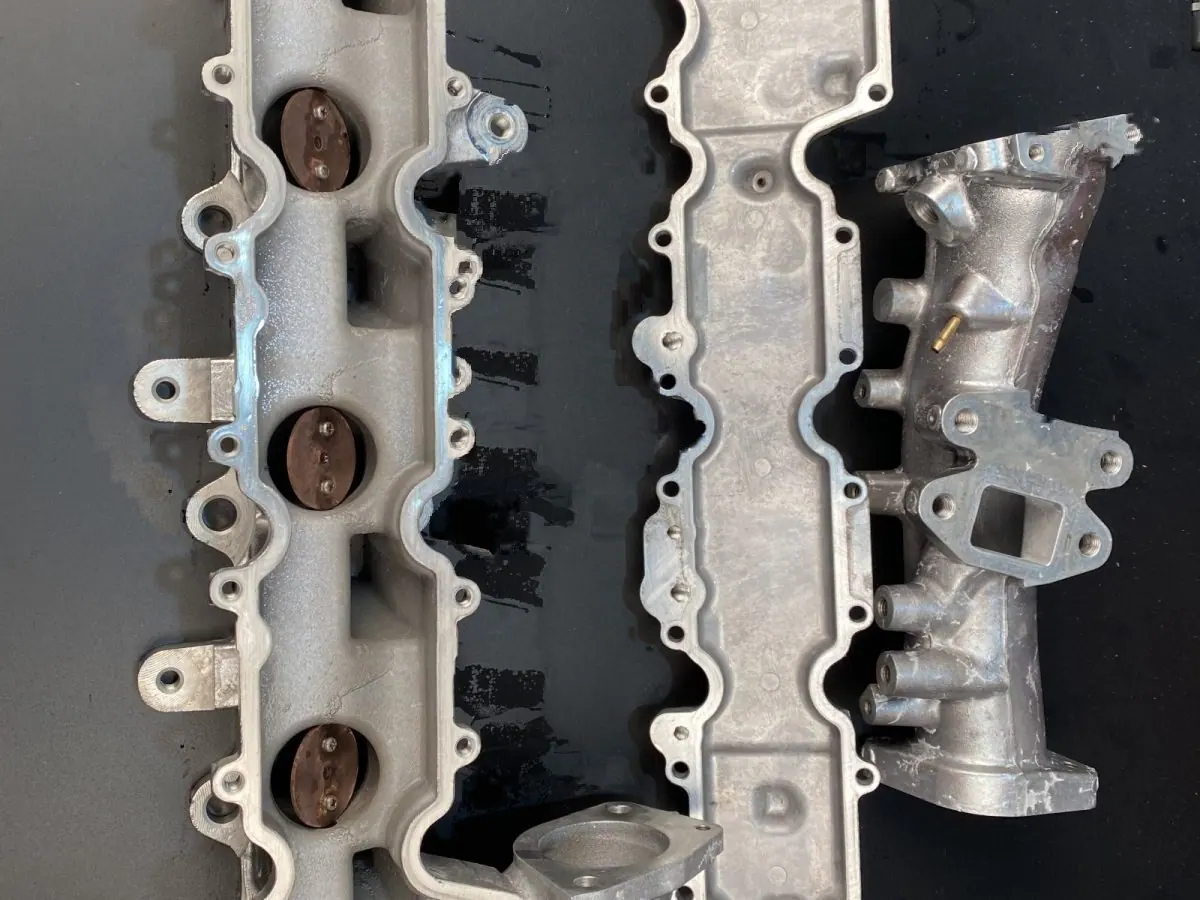
Aluminium inlet manifolds, cleaned on an aluminium-safe solution at the data-sheet strength. Bright is what a correct cycle gives you. Dark is what the wrong one gives you, and it does not come back off in the bath.
Why does aluminium go dark in an ultrasonic cleaner?
Bare aluminium carries a thin, clear oxide skin that it grows on its own. That skin keeps it bright. A strong alkaline cleaner eats through the skin and starts on the metal underneath.
That grey-black film is the dark colour you see on the part. It is the alloying metals left standing after the aluminium around them has gone, and no amount of extra time in the bath brings it back.
Cast aluminium is not pure aluminium. It is mixed with silicon, copper, zinc and iron so it casts well. When the surface is eaten back, the aluminium dissolves first and the other metals stay behind as a grey-black film. That film is the dark colour you see. Zinc die-cast goes dull grey or white for the same reason.
Heat speeds the reaction up and time lets it go deeper. A hot, strong bath and a long soak do the most damage.
Mixed metals in the same basket can make it worse. Aluminium sitting against brass, copper or steel in a conductive bath can darken from a galvanic reaction. Keep aluminium parts apart from the other metals in the basket.
Can the ultrasound itself mark aluminium?
Yes, if it is pushed too hard for too long. Cavitation bubbles collapse against the surface of the part. Given enough power and enough time it marks steel too, which is why cavitation erosion has a test method of its own. Aluminium gets there sooner. On soft aluminium, thin sections and polished faces, the larger bubbles made at low frequency hit harder. Left at high power for a long time, they can frost or pit the surface.
The industry's own test shows it. A sheet of aluminium foil hung in an ultrasonic tank is dimpled and then holed by the cavitation. That is how the cleaning action is checked. The same action works on a soft part left in too long.
Large parts that need longer cycles. A big casting can need more time in the bath than a small part, and the longer it sits still the more the cavitation works on the same spots. An elevator (lifting) platform helps. It raises and lowers the part through the bath during the cycle, so the cavitation does not dwell on one face, and it lifts the part out to drain and be checked between cycles.

It raises and lowers the part through the bath while the cycle runs, so the cavitation never works the same face for long, and it lifts the part clear to drain and be checked between cycles. An option on the EvoSonic machines.
Too strong, too hot or too long. The oxide skin goes, the aluminium goes with it, and the alloying metals stay behind as a grey-black film.

Large low-frequency bubbles collapsing on the same soft face for long enough dull a polished surface and, left far enough, pit it.
Both are controlled by the settings below. Neither is a reason to avoid ultrasonic cleaning on aluminium.
Why dual frequency suits aluminium
Lower frequency makes larger bubbles that collapse harder. That is what shifts heavy, baked soil. Higher frequency makes smaller bubbles that collapse more gently and reach into small drillings and passages. On soft metal, the risk of damage at the lower frequency grows the longer the part is exposed to it.
A dual-frequency machine lets you use both. The MSX 30 runs 25 kHz and 45 kHz, and its power can be turned down from 100% to 10%.
| Setting | Use it for | On aluminium |
|---|---|---|
| 45 kHz | Fine soil, small drillings, jets, passages, polished and thin parts | Run most of the cycle here |
| 25 kHz | Heavy, baked soil and carbon on solid castings | Short bursts only, then back to 45 kHz |
| Power down | Thin walls, soft or poor castings, polished faces | Turn the power down before you shorten the cycle |
A good sequence for a dirty casting: a few minutes at 45 kHz, a short burst at 25 kHz on the heavy soil, then finish at 45 kHz. Check the part between steps. The dual-frequency guide explains the difference in more detail.
Poor-quality aluminium marks first
Not all aluminium behaves the same. A good forging or billet part takes far more than a poor casting. These parts mark first:
- Unknown and recycled castings. Higher and uneven levels of silicon, copper, zinc and iron. They darken faster and patchier. The price of the part tells you nothing; the alloy does.
- Porous castings. Solution soaks into the pores and keeps working after the part leaves the bath. Rinse well and dry straight away.
- High-copper and high-silicon alloys. Copper alloys (the 2000 series) and high-silicon castings are the first to go dark in alkaline solution. Test one part first.
- Thin walls, fins and polished faces. Most exposed to cavitation. Use 45 kHz and lower power.
- Parts already corroded. The oxide skin is broken, so the solution gets straight to the metal.
- Anodised, painted or coated parts. The coating can be attacked or lifted. Check before they go in.
If you do not know the alloy, treat it as the weakest case: the mildest solution, the lowest temperature in the window, 45 kHz, and one part first.
Which cleaning solutions are safe on aluminium?
Our range, read from each product's technical data sheet and our chemical compatibility matrix. The aluminium temperature is our limit for aluminium. It sits inside each data-sheet window.
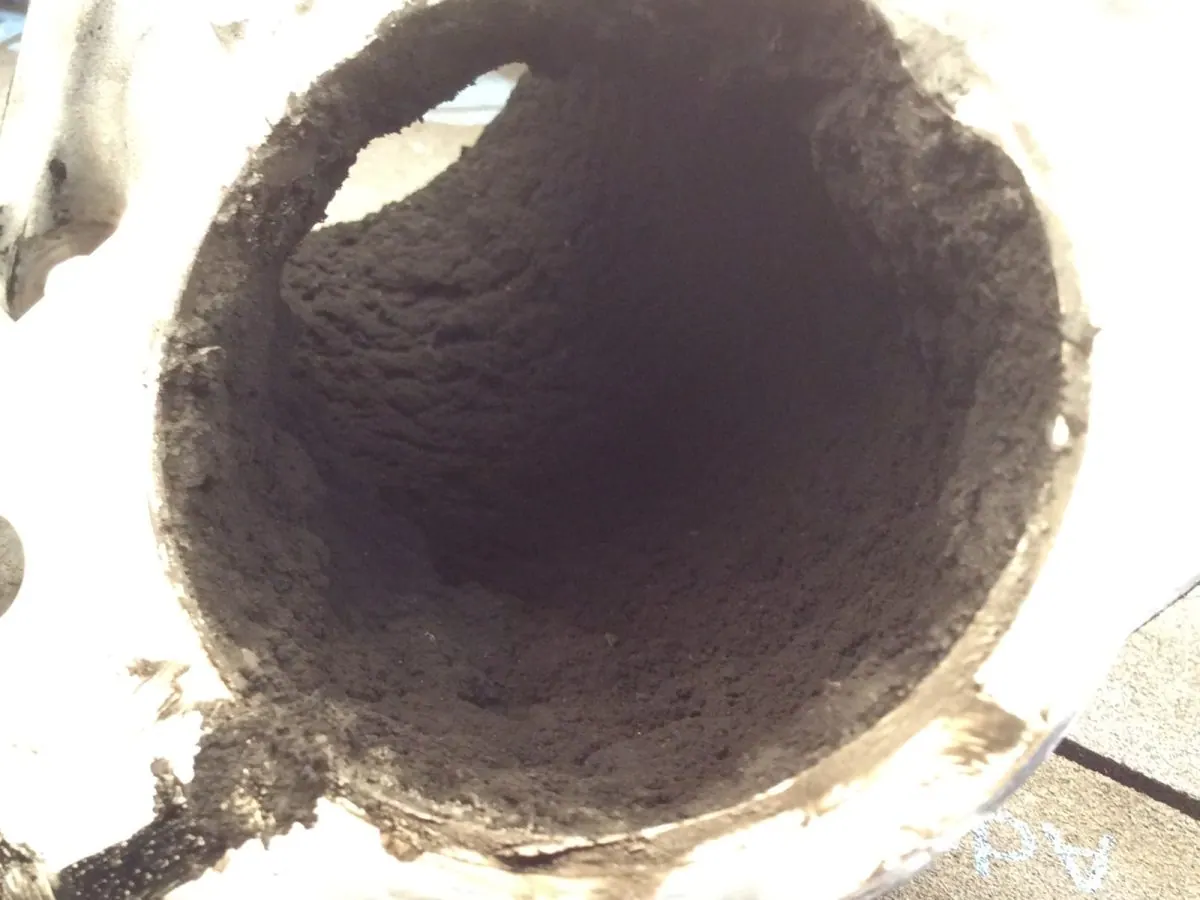
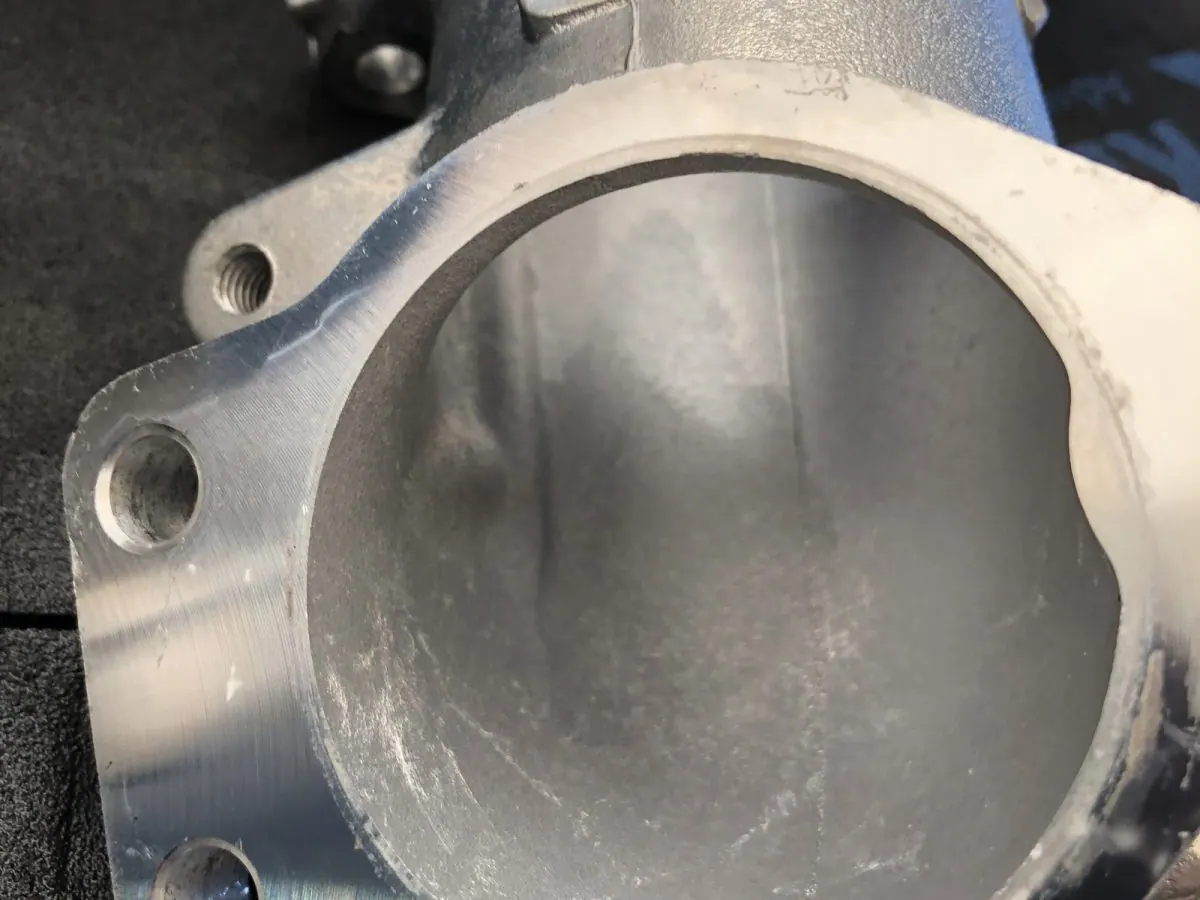
Cleaned on a near-neutral solution. Nothing here was scraped, blasted or wire-brushed.
| Solution | On aluminium | Strength | Aluminium temperature | What it is for |
|---|---|---|---|---|
| AquaVantage 1696 GD | Safe. Near-neutral, pH about 8, no silicates. | 5% | 50–55 °C | Carburettors, fuel varnish, light soils |
| AquaVantage 1990 GD | Safe. Mildly alkaline, corrosion control on the data sheet. | 5%, never less on aluminium | 54–60 °C | Precision and aerospace parts |
| AquaVantage 815 GD | Safe. Mildly alkaline, aluminium and corrosion control on the data sheet. Why. | 10% | 54–60 °C | Heavier varnish and workshop soils |
| AquaVantage 815 QR-NF | Aluminium and titanium on the data sheet. Not for copper, brass or bronze. | 10% | 54–60 °C | Grease and carbon on steel, aluminium and titanium |
| Desludge | Silicate-inhibited, protects aluminium at working strength. Zinc and brass are not protected. | 15% (10–20%) | 40–55 °C | Heavy carbon: intake manifolds, EGR parts, sumps |
| CoreKleen HX with CoreKleen Plus | Aluminium alloys on the data sheet. | HX 20% + Plus 1–2% | 50–60 °C | Dirt, rust and scale out of cooler cores |
| Alloy System | Made for aluminium. | 10% of the mixed system | 40–60 °C | Paint, powder coat and baked carbon off aluminium |
| FX Degreaser | Only inside its aluminium window. Silicate-inhibited. | 5% at most | 50 °C at most, 5 minutes, rinse at once | Light to medium workshop soils. Not for zinc die-cast. |
| MetalTek 100 | Do not use. Attacks aluminium rapidly. | — | Steel and cast iron only | |
| Descale · RegeniK · Anti-Rust | Not for aluminium. | — | Steel scale, DPF ash, rust protection on steel | |
A part made of more than one metal is governed by its most sensitive metal. A carburettor has an aluminium or zinc body and brass jets, so it goes in 1696 GD.
If a cleaner is alkaline, why is it safe on aluminium?
Raw caustic soda dissolves aluminium. That is why people worry. But most of the alkaline cleaners made for aluminium do not rely on raw caustic, and the ones that do carry an inhibitor.
Mild alkaline detergents. AquaVantage 815 GD, 815 QR-NF and 1990 GD are alkaline, and all three name aluminium on their technical data sheets with in-process corrosion control. Their cleaning comes from builders and surfactants rather than free caustic. We take that from the technical data sheet, not from the hazard list on the safety data sheet: an ingredient left off a hazard list is not proof it is absent from the drum. Their data sheets list aluminium as compatible and give in-process corrosion control. They lift oil and soil without eating the metal, provided they are run as the data sheet says.
Silicate-inhibited cleaners. Desludge and FX Degreaser are stronger alkalis. They carry silicate inhibitors. The silicate lays a thin protective film on the aluminium while the alkali works on the soil. The amount of inhibitor is matched to the amount of alkali at the working strength and temperature.
The inhibitor only protects inside the window it was designed for. The silicate film is balanced against the alkali at the strength and temperature on the sheet. Take the bath outside that window, stronger or hotter or longer, and the balance it was set up on stops holding. The FX Degreaser data sheet says it plainly: outside its aluminium window, the product will attack aluminium. Stop if the surface darkens, goes smutty or starts to gas.
That is why these products are good on aluminium. They clean hard enough to shift workshop soil and carbon, and at the right strength and temperature they leave the metal alone. Go outside the figures and they stop being safe.
How hot should the bath be for aluminium?
Keep the bath at 60 °C or below for aluminium. For light soils, near-neutral solutions and poor castings, 50–55 °C.
The data sheets allow some solutions to run hotter on steel. On aluminium we stay at the low end of each window. Heat speeds the attack up faster than it speeds the cleaning up. We do not publish a rate for that, because it moves with the alloy and the solution, but the working consequence is steady enough to plan around: a cleaner that holds at 55 °C can mark the same casting at 75 °C.
Heat also matters to the tank itself. Cavitation wears the tank floor faster at high temperature, and more so in strong alkaline solutions.
Do not go below the bottom of the data-sheet window either. A cold bath cleans slowly, and a slow bath tempts a longer soak, which does its own damage.
Why you must not exceed the dilution
More chemical does not clean faster on aluminium. It eats the part faster.
- The figure on the data sheet is the figure the product was built and tested at. Builders, surfactants and corrosion control are balanced against each other at that strength, and the aluminium compatibility on the sheet is stated at that strength and no other. Go past it and you are running something nobody has tested, on a metal that shows it.
- The oxide skin goes first, then the aluminium, and the grey-black film is left behind.
- A strong bath is harder to rinse off. What stays in the pores keeps working after the part comes out.
- It costs more, wears the tank faster and shortens the bath life.
Make the bath up to the data-sheet figure. Check it as the bath is used and top it up to that figure. Do not top it up by guesswork. One exception: AquaVantage 1990 GD has a minimum of 5% on aluminium. Do not run it weaker.
The quick fix is always more chemical, more heat or a longer soak. On aluminium all three cause the damage. If a part will not come clean at the right settings, run another short cycle, use a short burst at 25 kHz, or ask us for the next solution up. Do not turn up the heat or add more chemical.
How to clean aluminium without marking it
- Know the part. Aluminium, zinc die-cast or a mix. Note any brass, copper or steel in the same assembly. Note whether it is a poor casting, thin, polished or coated. Rubber, plastic and seals come off first.
- Choose the solution for the metal. Use the table above. Make it up to the data-sheet strength, not stronger.
- Set the temperature. 60 °C or below for aluminium, 50–55 °C for light soils and poor castings. Degas the bath before the first basket.
- Load the basket. Keep aluminium apart from brass, copper and steel parts. Do not overfill.
- Set the frequency. 45 kHz for most of the cycle. Short bursts at 25 kHz only for heavy, baked soil. Power down on thin or soft parts.
- Large parts. Where a big part needs a longer cycle, use a lifting platform to move it through the bath rather than leave it sitting in one place.
- Run short cycles and look. Lift the basket between cycles. If the aluminium starts to darken, stop and rinse. Run another short cycle rather than one long soak.
- Rinse and dry. Rinse in hot clean water straight away. Blow through the passages and dry. Aluminium does not need Anti-Rust; only the steel parts do.
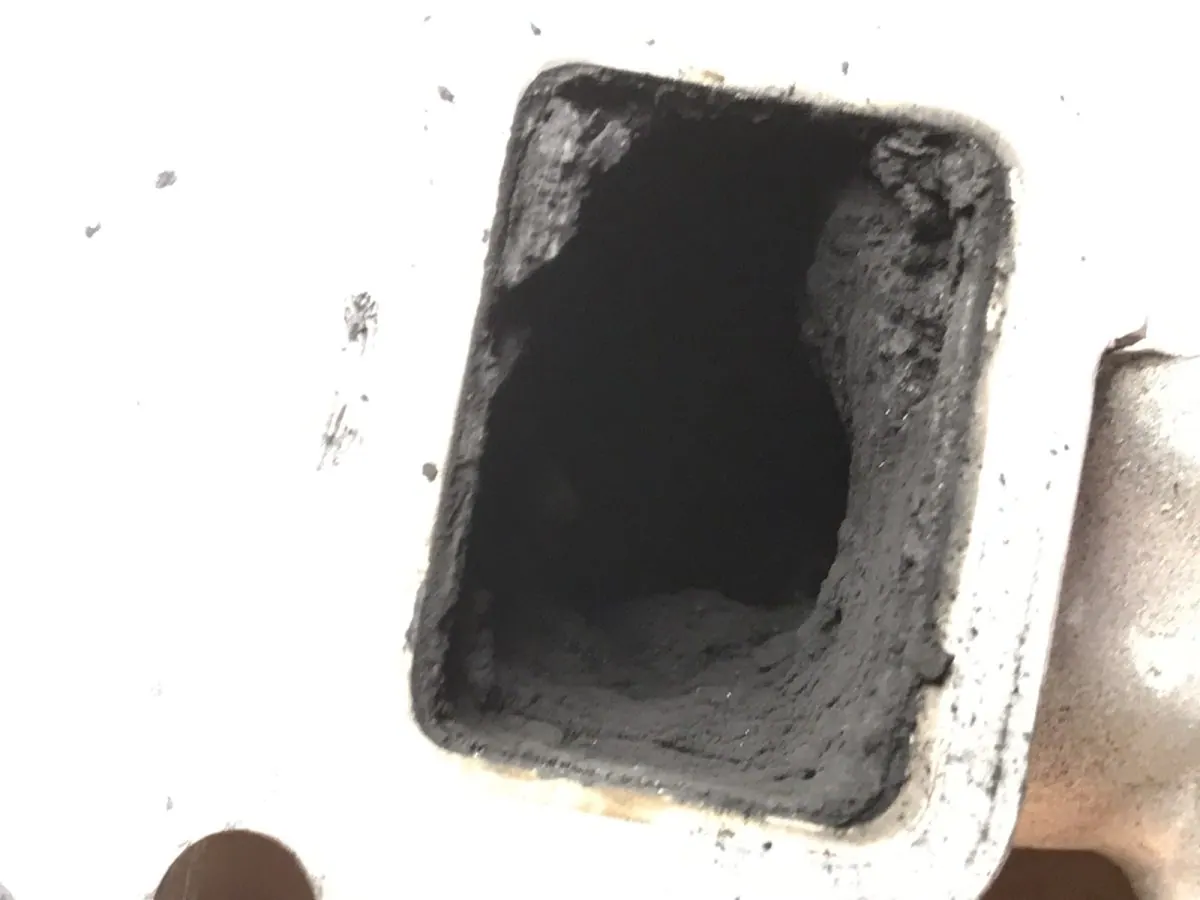
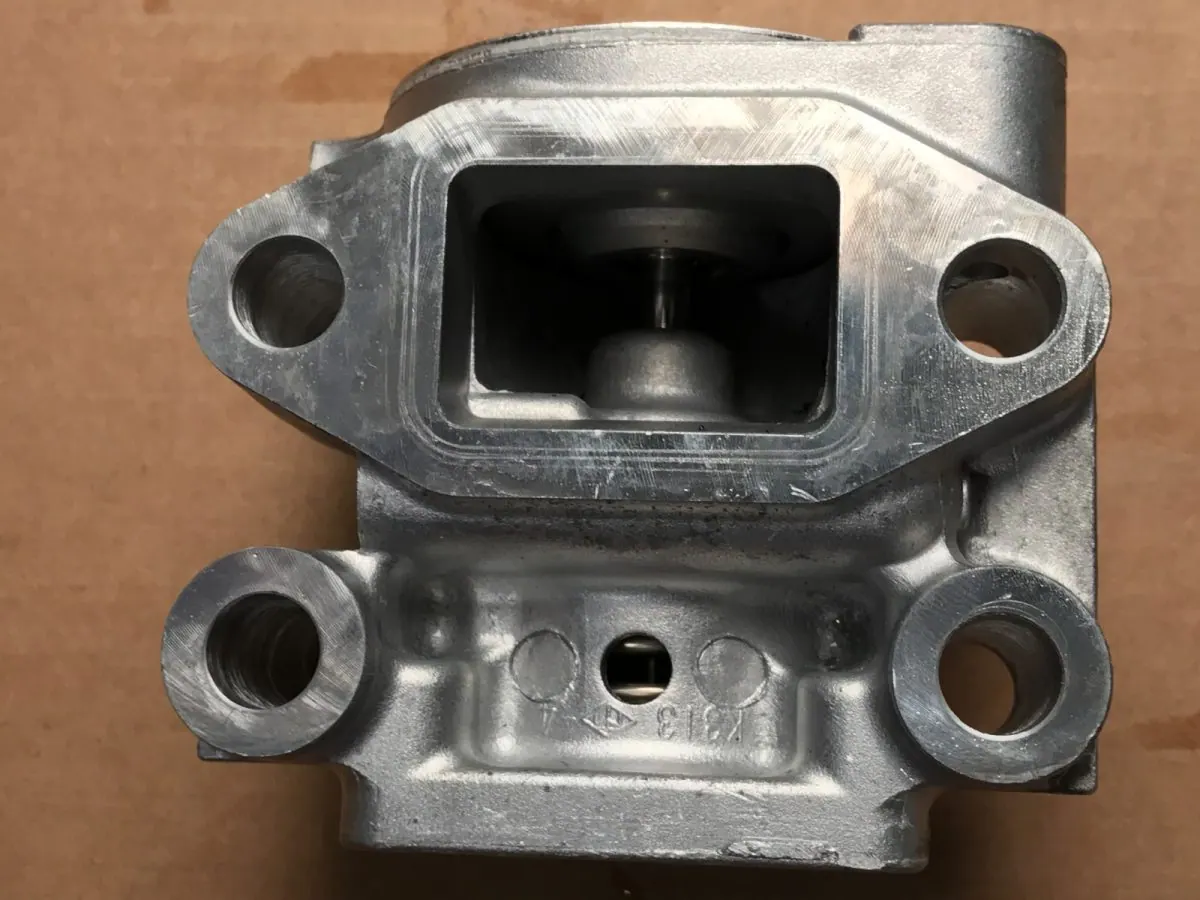
A heavy carbon load does not need a stronger bath. It needs the right solution, the right frequency and a check between cycles.
Stop and do not put the next part in the same bath. A part that comes out dark means the bath has dissolved metal off it. The copper and other metals now in the solution can settle back onto the next aluminium part as a dark film, so the problem carries forward. Check the strength and temperature. If it happens again, drain the tank and make up fresh solution. A casting that has already darkened will not come back in the bath. Vapour blasting is the usual way to bring the finish back, but it takes metal off the surface. Check it against the part’s finish and any critical dimensions before you send it.
Does the next part go dark too?
Yes, if the bath is carrying copper. And it is worth being clear about which metal does it, because only one of them matters.
The aluminium is gone and harmless. When an alkaline solution attacks a casting, the aluminium dissolves and stays dissolved. Nothing else in the tank is reactive enough to push it back out, so the aluminium that came off the first part will not settle on the second one.
Copper is the one that comes back. Some of it never leaves the surface — that is the grey-black film on the part you are holding. The rest goes into the bath as copper ions, and copper ions do not stay in solution once you give them a piece of bare aluminium. The aluminium hands over electrons and the copper plates straight onto it. No power supply, no current, nothing to switch on. It is the same reaction the plating trade uses on purpose to get a first layer onto aluminium.
It takes very little. Parts per million will stain a part. And once copper is sitting on an aluminium surface you have two metals in contact, so that spot keeps corroding after the part comes out of the tank.
Not always, but you cannot filter your way out of it.
- Filtration will not save it. A bag filter takes out solids. Dissolved copper goes straight through.
- Topping up will not save it either. Fresh concentrate dilutes the copper. It does not remove it.
- One darkened part does not condemn a bath. Fix the cause first — strength, temperature, time, mixed metals — then run one scrap aluminium part and look at it dry in good light. Any staining and the bath is finished.
- Two or more, or a bath that has been outside its window for a while: drain it. Do not spend a test part proving what you already know.
- Brass and copper parts put copper in the bath on their own. No aluminium has to be attacked for it to get there. If you run mixed work in one tank, this is the usual way in.
What the mark on the part is telling you
| What you see | Usually | What to check |
|---|---|---|
| Grey or black film | The bath has taken metal off the surface | Strength, temperature, how long it sat, and whether other metals shared the basket |
| Dull grey or chalky white | Zinc, not aluminium | Whether the body is zinc die-cast. Move it to 1696 GD and the bottom of the window |
| Frosted or matt polished face | Cavitation, not chemistry | Frequency, power and dwell. Go to 45 kHz, turn the power down, shorten the cycle |
| Patchy darkening on one part | Mixed metals in the basket, or an uneven alloy | Separate aluminium from brass, copper and steel. Treat an unknown casting as the weakest case |
| White bloom after drying | The rinse, not the clean | Rinse water, carry-over held in pores and blind holes, and how quickly it was dried |
| Parts going dark in a bath that was fine | The bath is carrying dissolved metal | Drain and make up fresh. A tank that has darkened one part will darken the next |
Colour on its own does not tell you which of these it is. Stop, rinse the part, and look at it dry in good light before you change anything in the tank.
A starting recipe for aluminium castings
| Setting | Value |
|---|---|
| Solution | AquaVantage 1696 GD at 5% in water |
| Temperature | 50–55 °C (data-sheet window 49–82 °C) |
| Frequency | 45 kHz on the MSX 30. Short burst at 25 kHz only for heavy soil |
| Time | 1 to 5 minutes a cycle, then check |
| Rinse | Hot clean water straight away, then dry |
This is our carburettor recipe. The carburettor cleaning page has the full method. For heavier soil, a trial on your part sets the figures.
Machines and solutions
Near-neutral. 10 L $242 inc GST
25/45 kHz benchtop, power 10–100%. $6,578 inc GST
40 kHz benchtop. $4,367 inc GST
Questions
Can you put aluminium in an ultrasonic cleaner?
Why did my aluminium part go dark?
What temperature is safe for aluminium?
What frequency should I use for aluminium?
Can ultrasound itself damage aluminium?
Is an alkaline cleaner safe on aluminium?
Will a stronger mix clean faster?
Can I keep using a bath that turned a part dark?
Which cleaners should never go on aluminium?
Can a darkened part be fixed?
Sources
- The strength and temperature for each solution are read off its technical data sheet and safety data sheet. Both sit on the product pages above.
- Which metals a solution is cleared for is set out in our chemical compatibility matrix.
- The aluminium temperature in the table is our own working limit, not the data sheet’s. It sits inside the data-sheet window and comes from our bath testing and from trial work on customer parts.
- Cavitation erosion is measurable. The laboratory method is ASTM G32, Standard Test Method for Cavitation Erosion Using Vibratory Apparatus — a specimen on a vibrating horn, not a cleaning tank. The foil test is a different thing and answers a different question: it shows where a tank is working, not what a cycle will do to your part.
- Aluminium sitting against brass, copper or steel in a conductive bath is galvanic corrosion. ASTM G82 sets out how the galvanic series is built and used.
- Alkaline attack on aluminium, and the grey film the alloying metals leave behind, are covered in ASM Handbook Volume 13B, Corrosion: Materials.
Related: Ultrasonic carburettor cleaning · Chemical compatibility matrix · Cleaning temperature guide · All chemicals
Not sure about your part?
Tell us the part, the alloy and what is on it. We will tell you which solution and cycle to run, and what the machine has to prove before you spend anything.