Home / Machines / Ultrasonic parts cleaners
Ultrasonic parts cleaners · MSX 15 to MSX 70

Ultrasonic parts cleaners for workshops and plants

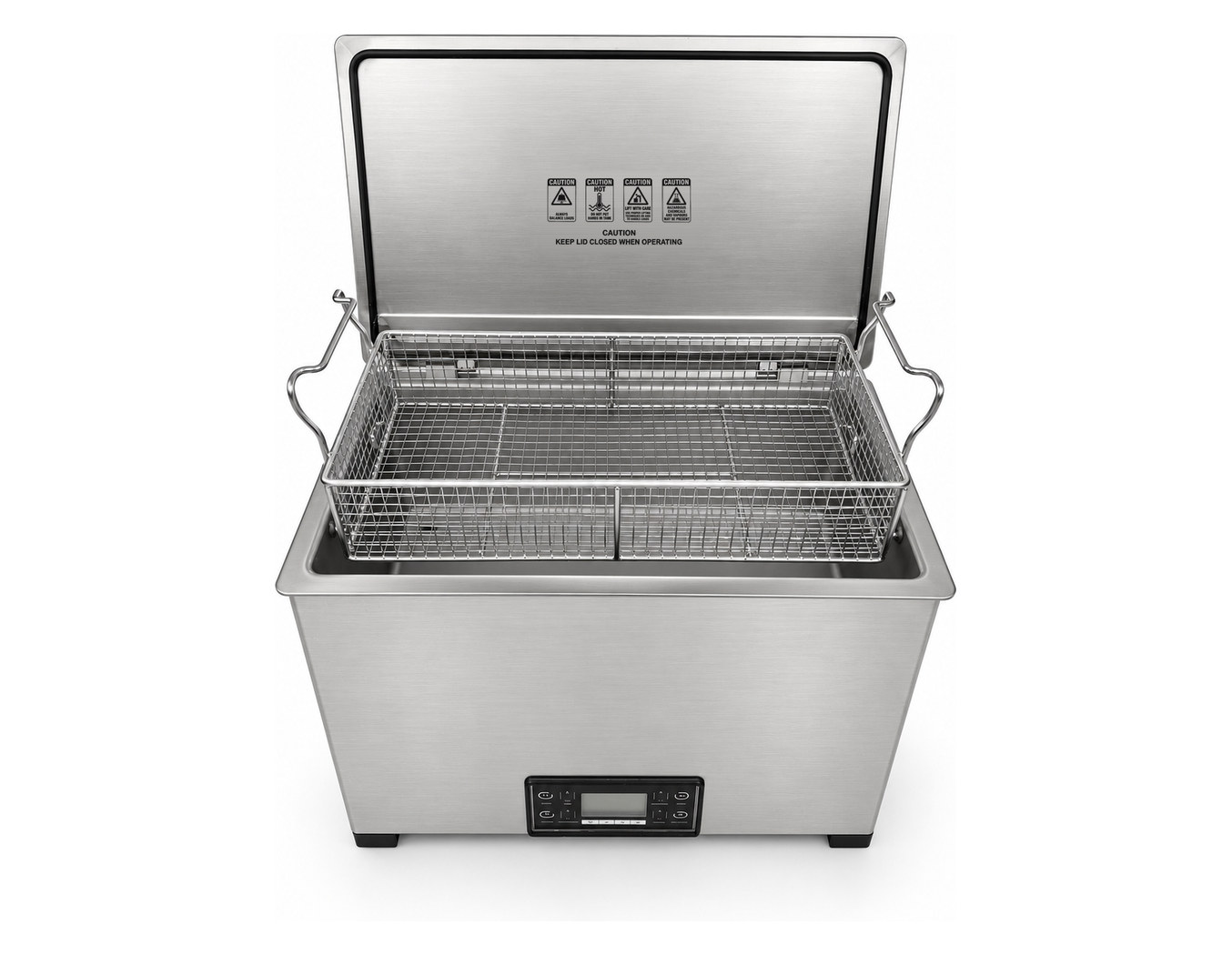
An ultrasonic parts cleaner is a heated tank of water-based chemistry driven by ultrasonic transducers. Cavitation carries the cleaning energy wherever the liquid goes, so blind holes, threads and galleries are cleaned along with the outer faces, with nothing mechanical touching the part. For workshops and plants, Misonics builds the MSX range: the 15 L MSX 15 at $3,970 ex GST, the dual-frequency 30 L MSX 30 at $5,980, and floor-standing 50 and 70 L machines from $13,770.

Talk to an engineerCall 1300 647 664
The comparison

Ultrasonic vs a solvent parts washer

A solvent parts washer works on fresh oil and grease: like dissolves like, and it works well. It stalls on anything that has changed chemically since it arrived. Baked carbon, varnish and scale come out of the bath where they went in, and soil settles back onto the part as it drains. Then there is the disposal paperwork, and the flammability rules that apply near any heat source.

An ultrasonic parts cleaner runs a heated, water-based chemistry matched to the soil. Cavitation carries its energy in the liquid, so it reaches blind holes, cross-drillings and thread roots at full strength. One cycle takes off particles and films together, at a time and temperature you can write on a process card and repeat.

Solvent soak

Wets everything, moves nothing. Lifts fresh oil; baked carbon, varnish and scale stay where they were.

Spray cabinet

Line of sight. The jet stops where the part turns a corner, so blind holes are cleaned by hope.

Ultrasonic

Wherever the liquid goes, the energy goes with it. Nothing mechanical touches the surface.

The limits are real. The part has to fit the basket: 320 mm on the MSX 15, 490 mm on the MSX 30, 500 mm on the MSX 50 and 600 mm on the MSX 70. On crude work, such as mud off a loader, a pressure washer is quicker.

Six cleaning methods compared →
The machines

Four parts cleaners, bench to floor

Two benchtop machines for the bench that works every day, and two floor-standing machines for heads, housings and batch trays. All four heat to 80 °C.
ModelTankBasket · working depthFrequencyUltrasonic powerHeatingSupplyPrice ex GST
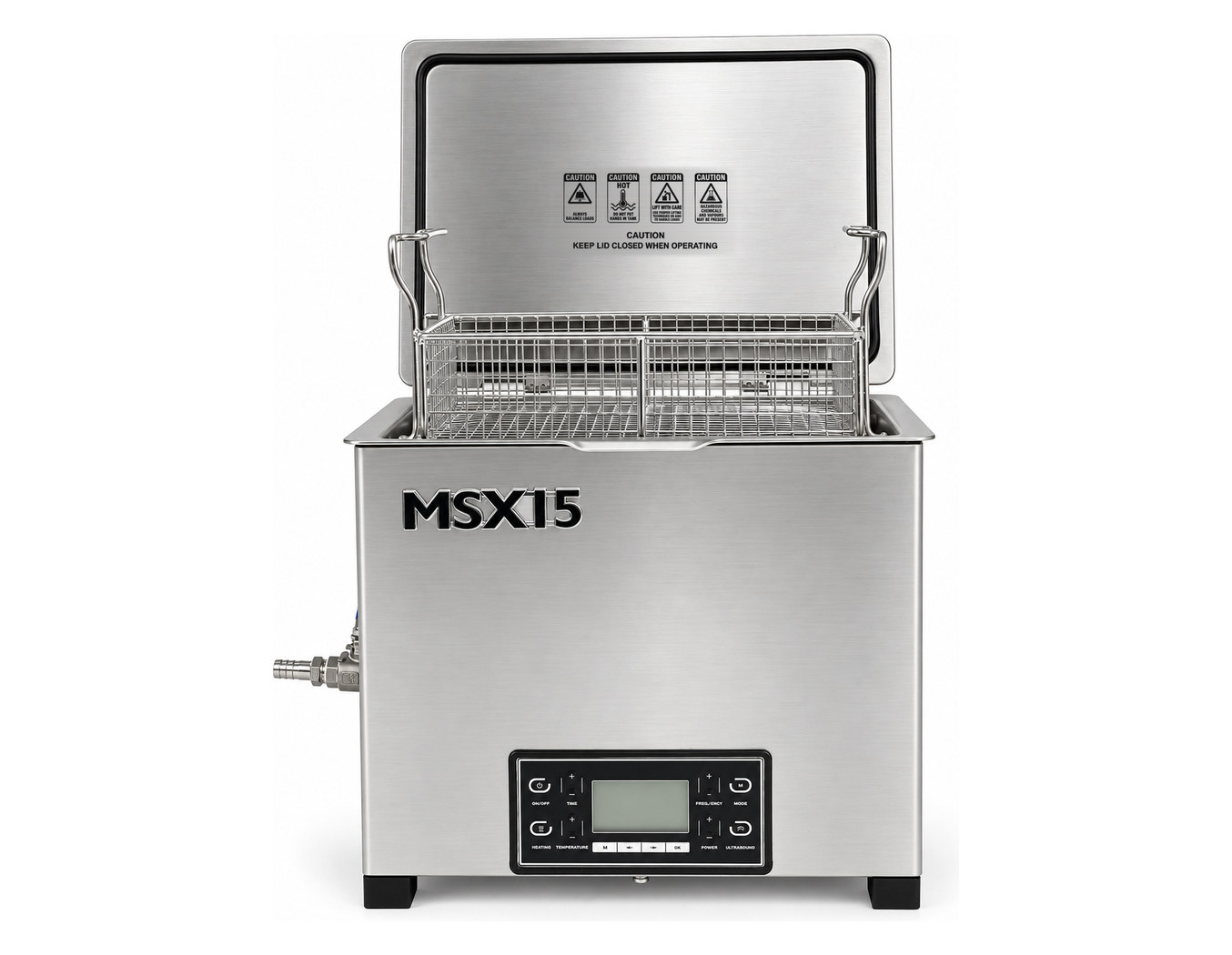
MSX 1515 L320 × 225 mm · 130 mm40 kHz300 W0.6 kW pad, to 80 °C240 V, 10 A socket$3,970
MSX 3030 L490 × 235 mm · 140 mm25 / 45 kHz dual650 W1 kW pad, to 80 °C240 V, 10 A socket$5,980
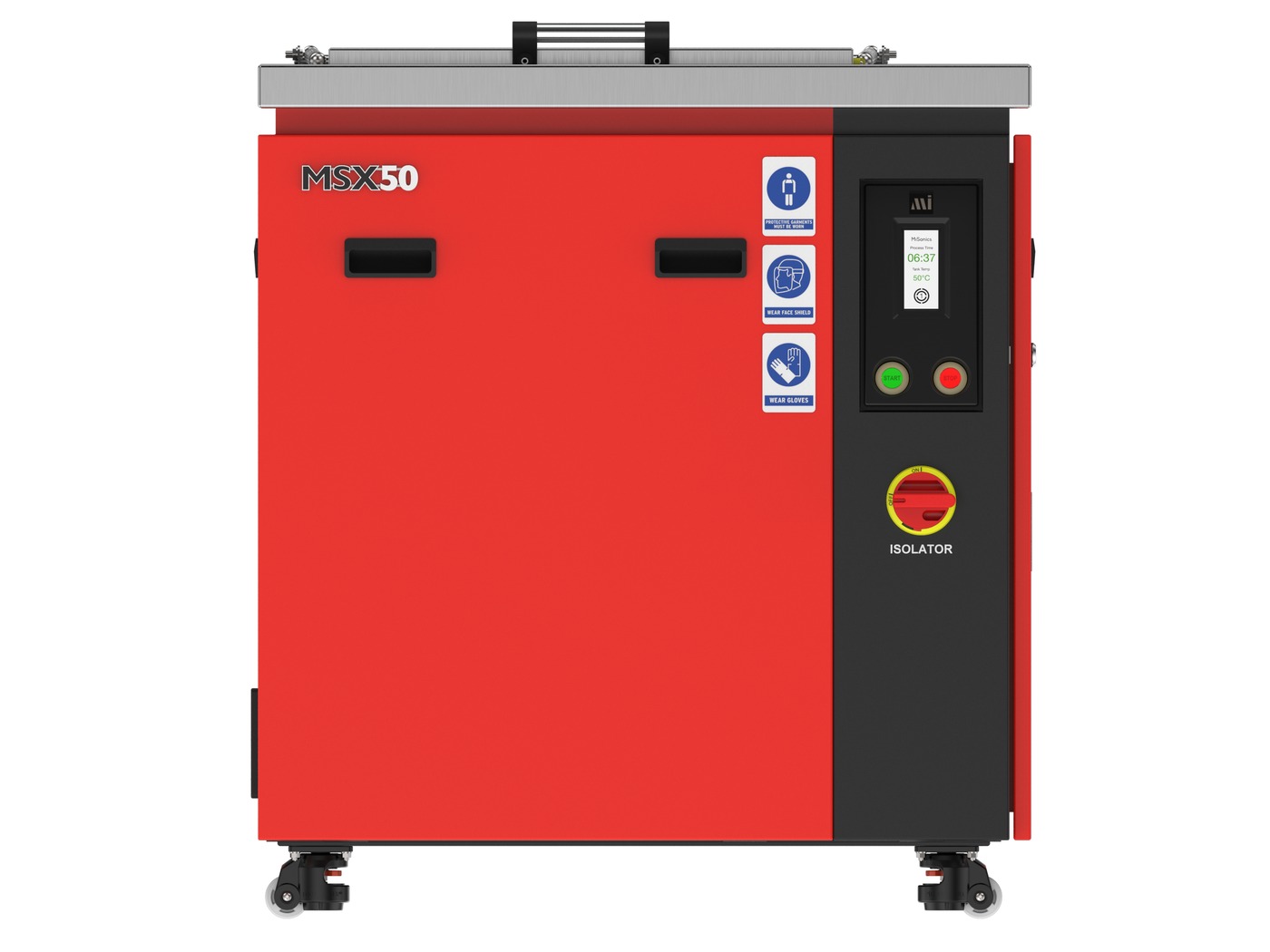
MSX 5050 L500 × 300 mm · 300 mm25 kHz1,500 W2.4 kW cartridge, to 80 °C240 V, 15 A socketFrom $13,770
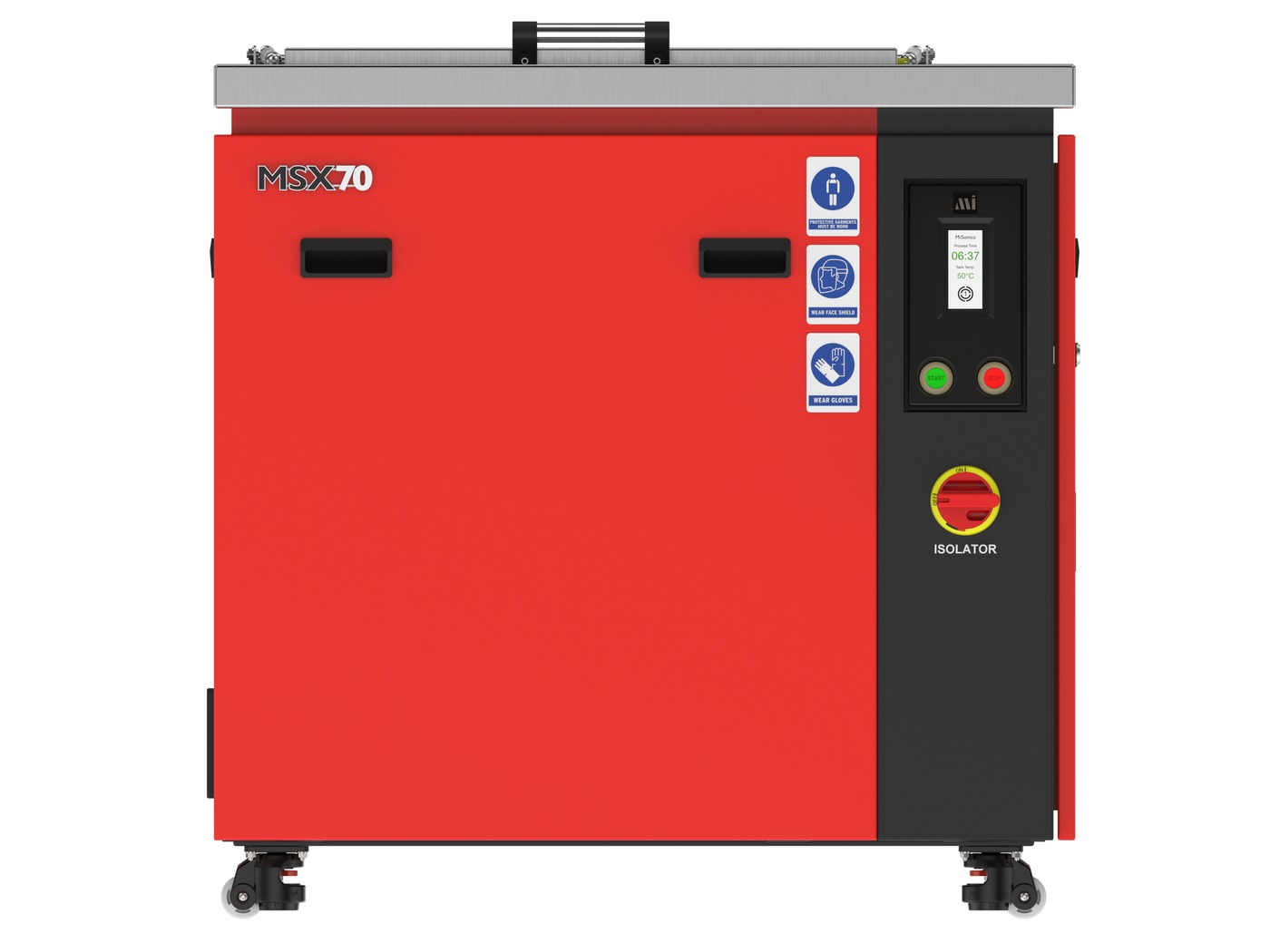
MSX 7070 L600 × 400 mm · 300 mm25 kHz1,500 W2.4 kW cartridge, to 80 °C240 V, 15 A socketFrom $15,900

Prices ex GST. Specifications and pricing are confirmed in writing at quotation. Parts longer than 600 mm go to the MSX 140 to 240 or the EvoSonic range: see ultrasonic cleaner sizes.

What it cleans

Parts that come through a workshop or plant

Injectors, carburettors, tooling and daily trays on the bench. Cylinder heads, carburettor banks and pump housings in the MSX 50; intake manifolds and gearbox casings in the MSX 70. See the guides for workshops and trade, automotive and firearms.

Documented work, with the parts, the chemistry, the temperature and the cycle recorded:

All case studies →
Chemistry

The chemistry does half the work

Cavitation does the work; the chemistry decides what it works on. The parts cleaners run the aqueous alkaline range. Acid descaling chemistry stays in dedicated acid tanks.

Find my chemical
Questions

Before you buy

Can an ultrasonic cleaner replace a solvent parts washer?
For parts that fit the basket, yes, and it cleans the internals a spray or soak washer never touches. The limit is basket size: 320 mm on the MSX 15, 490 mm on the MSX 30, 500 mm on the MSX 50 and 600 mm on the MSX 70. Bigger parts belong with the MSX 140 to 240 and EvoSonic machines.
What chemistry goes in an ultrasonic parts cleaner?
Water-based alkaline chemistry matched to the soil. FX Degreaser is the daily bath for oils, grease and workshop soils at 5% in water. MetalTek 100 takes grease, rust, scale, carbon and paint off steel and cast iron, and is for ferrous parts only. AquaVantage 815 GD covers precision and approvals work. Acid descaling chemistry stays in dedicated acid tanks. The chemical selector gives a shortlist from four questions.
What power supply does a workshop parts cleaner need?
The MSX 15 and MSX 30 run from a standard 240 V 10 A socket on the supplied 3 m lead. The MSX 50 and MSX 70 are 240 V single phase and need a 15 A socket. The larger MSX 140 and MSX 240 are 415 V three-phase.
What temperature should the bath run at?
All four machines heat from ambient to 80 °C, and the chemistry sets the window. FX Degreaser works from warm; the documented engine block process runs at 70–80 °C and the piston ring-groove process at 70 °C. The cleaning temperature guide covers chemistry against substrate.
Which size parts cleaner do I need?
The smallest one your largest part fits in, fully under the liquid, with clearance. Compare basket length and working depth, not litres: the 30 L MSX 30 has 140 mm of working depth, the 50 L MSX 50 has 300 mm. The ultrasonic cleaner sizes guide lists every model from 3 L to 46,000 L.
Next step

Tell us what you are cleaning

Send the part, the soil and how many you clean a day. An engineer will come back with the machine, the chemistry and the cycle.

Talk to an engineerSee the whole range