
How to prove an industrial ultrasonic cleaner before you buy
You need two things: a machine that was tested before it shipped, and confidence it will clean your parts. Every Misonics machine comes with its factory test report. Where a part is unproven, a cleaning trial shows the result before you buy.
Jobs that must meet a standard, such as aviation or pharmaceutical, get a laboratory trial with measured results. Below is what we supply at each step, and how it looked on four of our projects.
What we supply at each step
Most jobs need only the first few. The rest are there when a project calls for them.
| Record | What it should show | What Misonics gives you |
|---|---|---|
| 1. Requirements and acceptance criteria | The parts, the soil, the batch size and what clean means for you. | A conversation with technical sales, or our specification checklist for larger projects. Most jobs need nothing more. |
| 2. Cleaning trial report | The result on your parts before you commit, where the part is unproven. | Only when it is needed. A general cleaning trial on your parts shows the result meets your expectation. Where a job must meet a standard, such as aviation or pharmaceutical, the parts go to our laboratory for trial and analysis, using one of two methods: gravimetric analysis, which weighs the residue rinsed off the part, or particle analysis, which counts and sizes the particles on a filter under our Leica DM6 M microscope to ISO 16232. You receive the laboratory report. See a sample report. Trials are quoted, and the fee is credited when you order the system. |
| 3. Machine specification and drawings | Working dimensions, load capacity, materials and thickness, ultrasonic layout, heating, filtration, lifting and controls. | A quoted specification for every machine. Engineered systems come with the general arrangement drawing and electrical schematics. |
| 4. Factory acceptance test (FAT) | The machine passed agreed checks before it left the factory: cleaning performance, temperature control, leaks, interlocks and a sustained run. | Every machine comes with its factory test report from a load and cavitation run. Engineered systems ship with full FAT documentation against their specification. This is the test report to ask for. See the report format. |
| 5. Commissioning and site acceptance | The machine is installed and running on your floor. | We commission the machine on site. If you want the trial result checked again at commissioning, ask for it in the order; it may carry a cost. |
| 6. Customer references and history | Customers with similar work, how long the machine has run, and what it needed in that time. | Case studies set out the part, the soil, the process and the result, by industry. On a confirmed project, once the specification is agreed, we can arrange for you to speak with a customer running similar work. |
| 7. Warranty, service and spare parts | What is covered, what is not, who repairs it and how fast. | 12 months from dispatch on everything we supply. Warranty policy. Support from Melbourne across Australia, New Zealand, Papua New Guinea and Indonesia. |
| 8. Safety and electrical records | Electrical inspection and testing, interlocks, and lifting safeguards checked. | Insulation resistance, earth continuity and RCD (residual current device) trip are tested as part of the FAT, with safety interlocks checked under load. |
What these records look like on our jobs
Four projects, described without customer names. Each shows a different part of the record: the trial, the sign-off, and the years of service after.
| Test item | Acceptance criterion | How it is checked |
|---|---|---|
| Drain slope | At least 1° towards the drain point | Calibrated digital level |
| Seals and gaskets | EPDM or PTFE throughout | Inspection and supplier records |
| Emergency stop | All motion stops, alarm shown, manual reset needed | Pressed during a running cycle |
| Filter blockage | Alarm and cycle pause at the set pressure | Simulated blockage |
Multi-stage parts washer, qualified for medicines manufacturing
A wash, hot-water rinse, reverse-osmosis rinse and dry line for encapsulation parts. It was signed off through a formal installation and operational qualification under the Australian Code of Good Manufacturing Practice for medicinal products (PIC/S) and AS 4024.1 machinery safety.
- Every item on the commissioning checklist has an acceptance criterion and a check method. Four of them are shown above.
- Materials, dimensions, drainage, interlocks, alarms and recipe control were each checked and initialled.
Trial on the real parts before the machine was specified
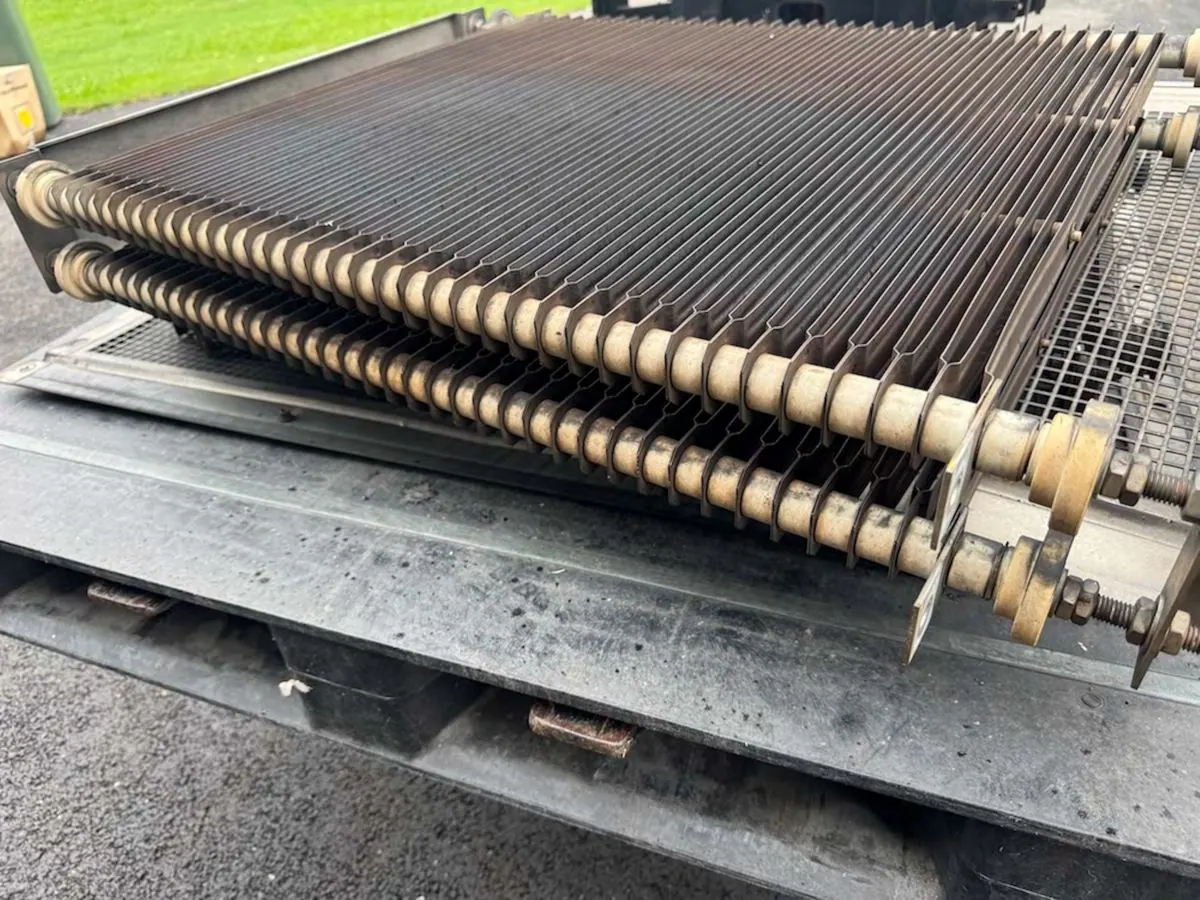
Rail vehicle grid assemblies were trialled in March 2025 and photographed before and after. The trial set the machine: a large heavy-industrial ultrasonic tank, with its drawings, operating manual and operator safety training.
- The integrated work area around it, with bunding, a rinse bay and access platforms, is in design now.
Still running, still supported
A floor-standing industrial tank cleaning rock-drill components. In 2026 alone we supplied replacement heater elements, carried out a maintenance service, and sent a pump and seal kit.
- Parts are sourced and shipped to site in Western Australia.
- This is what operating history looks like: the machine keeps working and the supplier keeps answering.
From one tank to a complete cleaning area
A heavy-industrial ultrasonic tank, then filtration, a hydraulic flushing unit, a radiator pipe polisher with its operating manual, and a regular supply of cleaning chemistry.
- Maintenance routines and schedules are set for the machines on site.
- Each machine was added as the work grew, on the strength of the last one.
What a trial report looks like
Real reports, with customer names left out. Most jobs need a process proof: a general cleaning trial judged by inspection. Where a standard applies, a laboratory analysis gives measured particle counts.
Brass lock components: oil, swarf and dirt
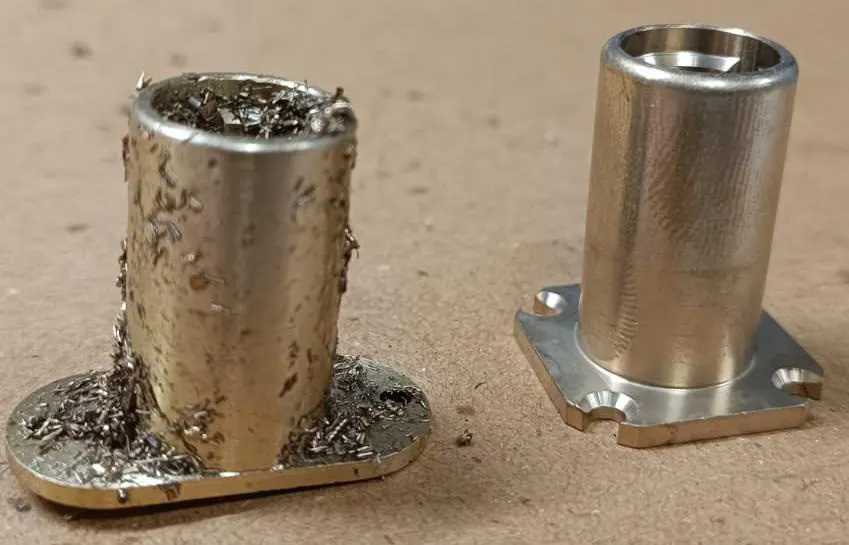
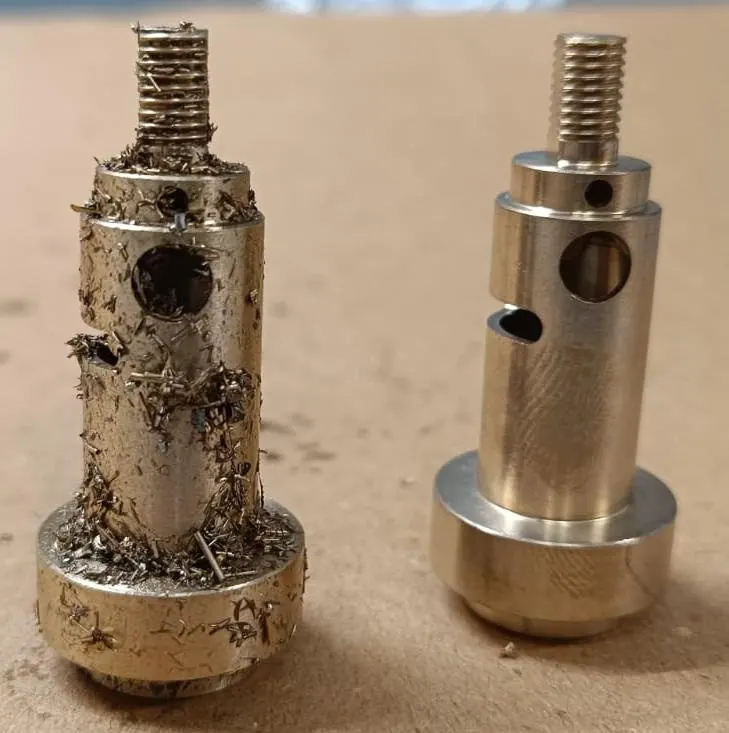
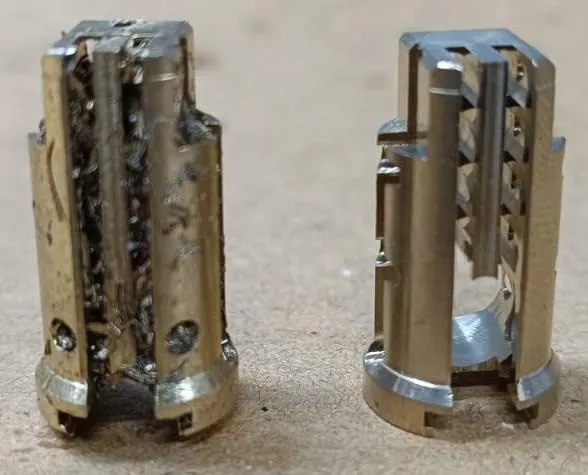
A lock manufacturer sent machined brass parts covered in cutting oil and swarf. The trial ran a three-stage water-based process with rotation and hot-air drying.
| Stage | Medium | Temp | Time | Filter |
|---|---|---|---|---|
| 1. Wash | Water-based cleaner, 4%, ultrasonic and flood wash | 60 °C | 9 min | 50 µm bag |
| 2. Rinse | Demineralised water, ultrasonic and flood wash | 60 °C | 2 min | 25 µm bag |
| 3. Final rinse | Demineralised water with 2.5% additive | 60 °C | 1 min | 10 µm bag |
| 4. Dry | Hot air | 110 °C | 5 min | — |
Ultrasonic power: 3.0 kW. Total cycle: 20 minutes (17 minutes of stage time plus handling between stages). Result: Visually clean All swarf and oil removed, bright finish on every part.
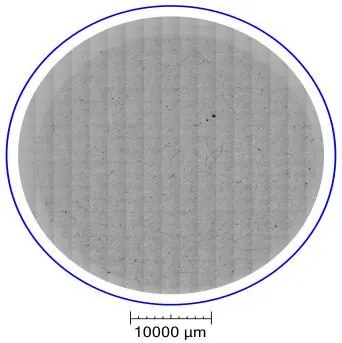
Automotive clutch pulley: particle count after cleaning
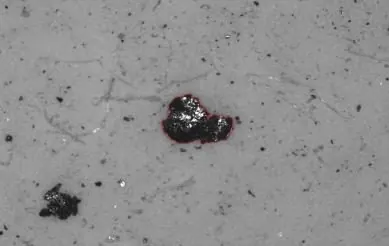
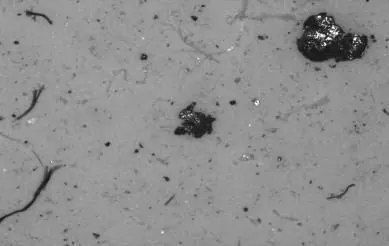
The cleaned part is rinsed onto a filter membrane. Our laboratory scans the membrane on a Leica DM6 M microscope with cleanliness analysis software, which finds, sizes and counts every particle and sorts shiny (usually metal) from non-shiny particles.
| Particle size (µm) | Class | Count | Shiny |
|---|---|---|---|
| 1,000 and over | K to N | 0 | 0 |
| 600 to 1,000 | J | 3 | 0 |
| 400 to 600 | I | 10 | 2 |
| 200 to 400 | H | 46 | 5 |
| 150 to 200 | G | 41 | 11 |
| 100 to 150 | F | 117 | 45 |
| 50 to 100 | E | 855 | 306 |
Cleanliness code: N(E10/F7/G6/H6/I4/J2/K00). Largest particles: 717 µm non-shiny, 580 µm shiny. Result: Sample pass
The pass was judged against the customer's own acceptance limit, which was not entered in the report's requested-code field. The page shows the measured result in full so it can be checked against any limit.
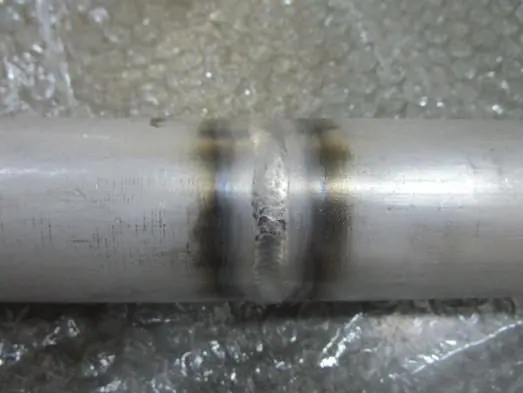
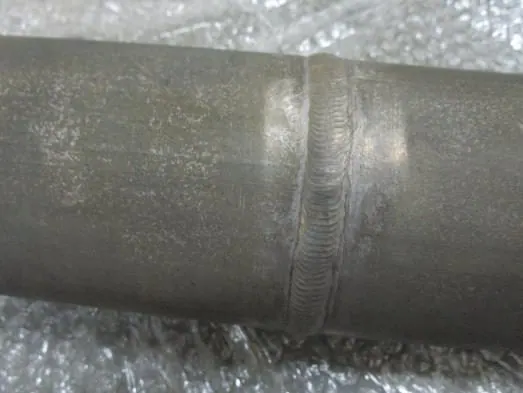
Welded pipe: weld marks, carbon and rust
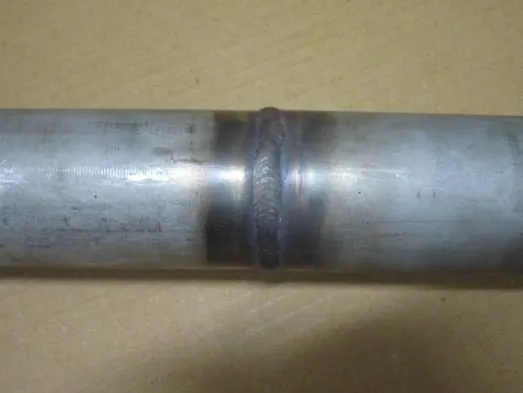
Stainless steel, mild steel and cupronickel pipe with weld discolouration and carbon. Cleaned with Brulin AquaVantage 815 GD (40+ OEM approvals, including Boeing, Airbus and Pratt & Whitney), then passivated with AquaVantage Passivation, in a six-stage water-based system with 1.5 kW of ultrasonics.
Results: stainless Ferroxyl test OK cupronickel Visually OK mild steel Tape test OK
Paint removal: stainless valves and sieves
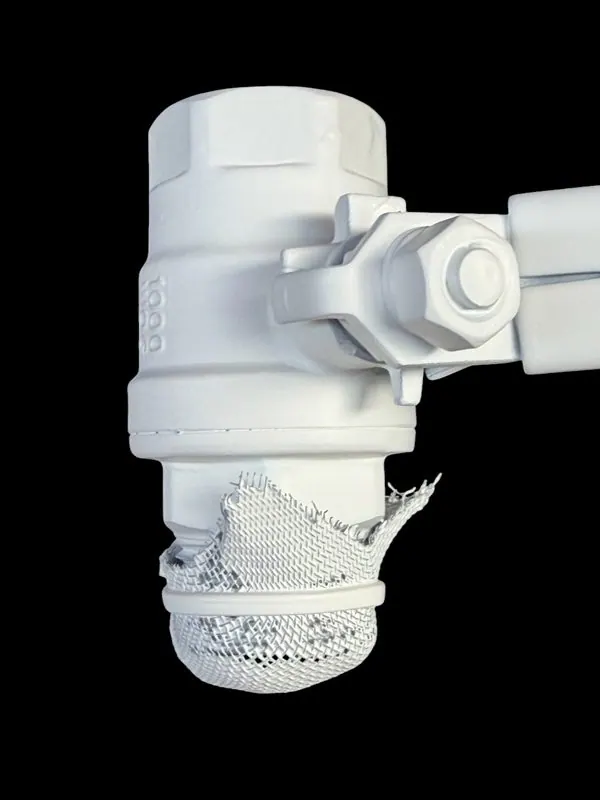
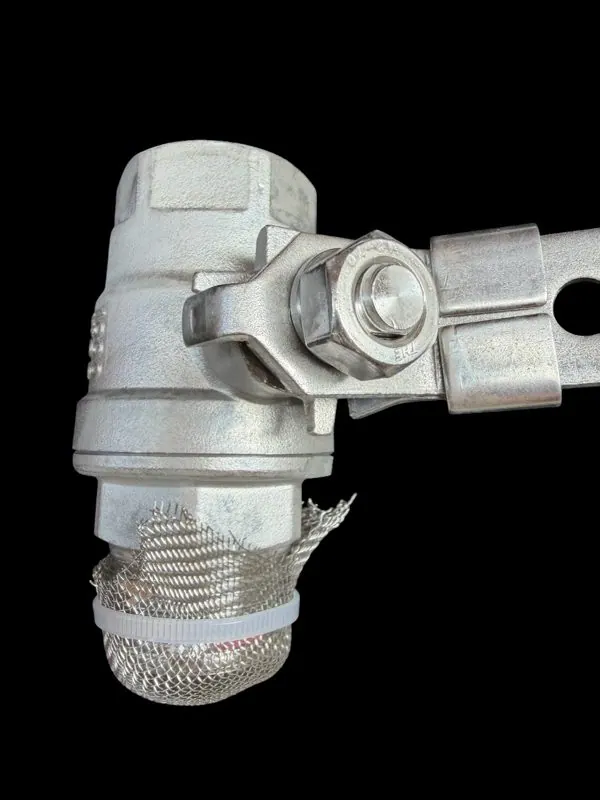
A paint manufacturer needed water-based interior paint removed from stainless ball valves with gauze sieves. Two batches, cured 14 hours and 45 minutes, in Brulin AquaVantage 815QR-NF (Pratt & Whitney PMC 1339 approved, ARP 1755B compliant) at 45 °C for 30 minutes.
Result: Pass: full removal on both batches, valve bodies and sieve mesh.
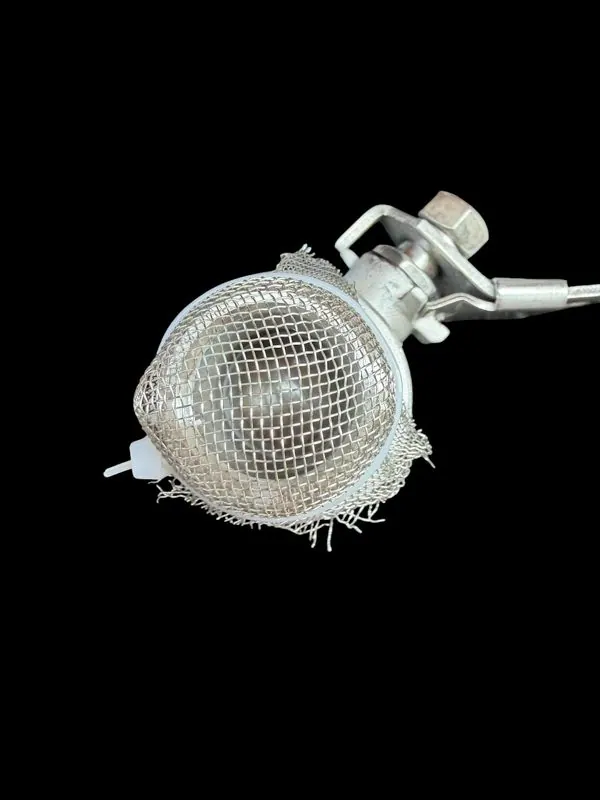
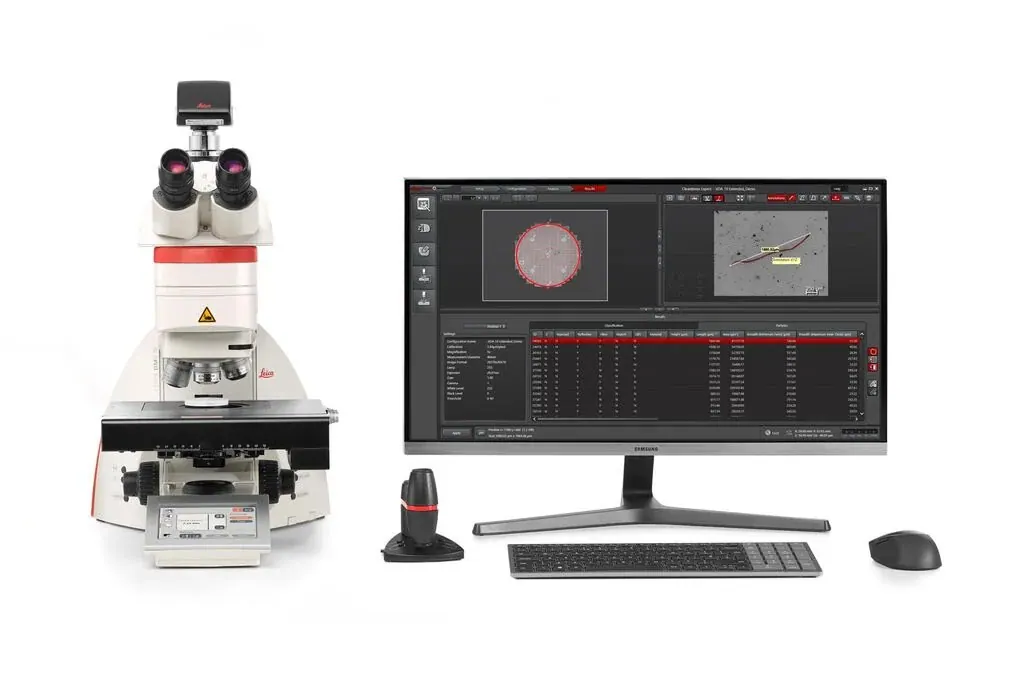
Leica DM6 M with Cleanliness Expert
- Finds, measures and counts every particle on the filter automatically, down to 5 µm.
- Separates metal from non-metal particles, and particles from fibres.
- Measures the length, width and height of each particle.
- Reports to ISO 16232 and VDA 19 for automotive parts, ISO 4406 for fluids, or to your own limits.
- Stored settings, so every batch is tested the same way and results can be compared over time.
Pharmaceutical, GMP and 21 CFR Part 11
- Where the cleaning process has to be validated, UltraWash machines run locked recipes and log every cycle: parameters as run, operator, alarms and time, so the record answers the audit.
- Where electronic records and signatures fall under 21 CFR Part 11, the controls are supplied Part 11 capable, specified with your QA team. Design a validated cleaning sequence.
- We supply the documents qualification needs, IQ/OQ (installation and operational qualification) included, and work to your validation protocol. Pharmaceutical cleaning.
- Chemistry with recorded approvals: AquaVantage 815 GD carries 40+ OEM approvals and is oxygen-service qualified; every Brulin grade we sell is listed against its specifications on its product page.
How to compare suppliers fairly
Send every supplier the same parts list, soil, load and cleanliness test.
Agree how clean is measured before the trial, and hold every supplier to it.
Compare watts per litre, nominal against nominal. Buyer's guide.
Ask what transducers and generators are fitted. Many low-cost machines use mass-produced kits with transducers glued to the tank that cannot be replaced on their own. Ask how the transducers are fixed, what sustained power they are rated for, how one is replaced and what that costs. Look for transducers that can be replaced in the field, generators with modern wave modulation, and a remote connection so the generator can be diagnosed and updated on site. Cheap transducers fail in three ways: the piezo ceramic cracks and drifts off frequency, the clamp bolt loses tension, or the glue line to the tank lets go. Why we use rod resonators in large tanks.
Tank grade and thickness, heater size, weir and filtration. Where cheaper machines save money.
Who installs it, trains your operators and signs it off on your floor.
Where spare parts are held and who diagnoses a fault.
Questions buyers ask
Do I need a cleaning trial before buying?
Usually not. Most applications match one we have already documented. Where a part is unproven, a general cleaning trial shows the result. Where a job must meet a standard, such as aviation or pharmaceutical, the parts go to our laboratory for gravimetric analysis (residue weight) or microscope particle analysis to ISO 16232, and a laboratory report. Trials are quoted, and the fee is credited when you order the system.
What do I get at commissioning?
We install and commission the machine, and the factory test report comes with it (full FAT documentation for engineered systems). If you want a trial result checked again on site, ask for it in the order; it may carry a cost.
Can a Misonics machine meet pharmaceutical and 21 CFR Part 11 requirements?
Yes, where it applies. UltraWash machines run locked recipes and log every cycle, the controls are supplied Part 11 capable where electronic records and signatures are required, and we provide IQ/OQ documentation to your validation protocol. The requirement is specified with your QA team at quotation.
Can I witness the factory test?
Yes. Engineered systems are proven against their specification with full FAT documentation, witnessed if you wish to attend.
How long is the warranty?
12 months from dispatch, on everything we supply. The warranty policy sets out what is covered and how to claim.
Related pages
Buyer's guide
How to choose an industrial ultrasonic cleaner.
Specification checklist
What to write down before you ask for quotes.
Quality and compliance
Pre-despatch testing and the FAT report.
Case studies
Parts, soils, processes and results.
Clean is a number
How cleanliness is measured.
How to prove a part is clean
Tests from water break to particle counts.
Why some cost less
The questions to ask before you buy on price.
Prove it on your parts
Send the parts list, the soil and a photo. Technical sales will tell you whether it is already proven or needs a trial, and what the trial will measure.