Industrial ultrasonic tanks for workshop, mine and plant parts.
Engine parts, brake and traction gear, heat exchangers and filters. Each tank is sized to your part, your soil and how many you clean a day.
 Bench · 15 & 30 LFrom $4,367 inc GSTSee the bench tanks →
 Floor-standing · MSX 50 to 240Quoted to siteSee the floor tanks →
 Large or custom · 180 to 46,000 LQuoted to siteSee the large tanks →
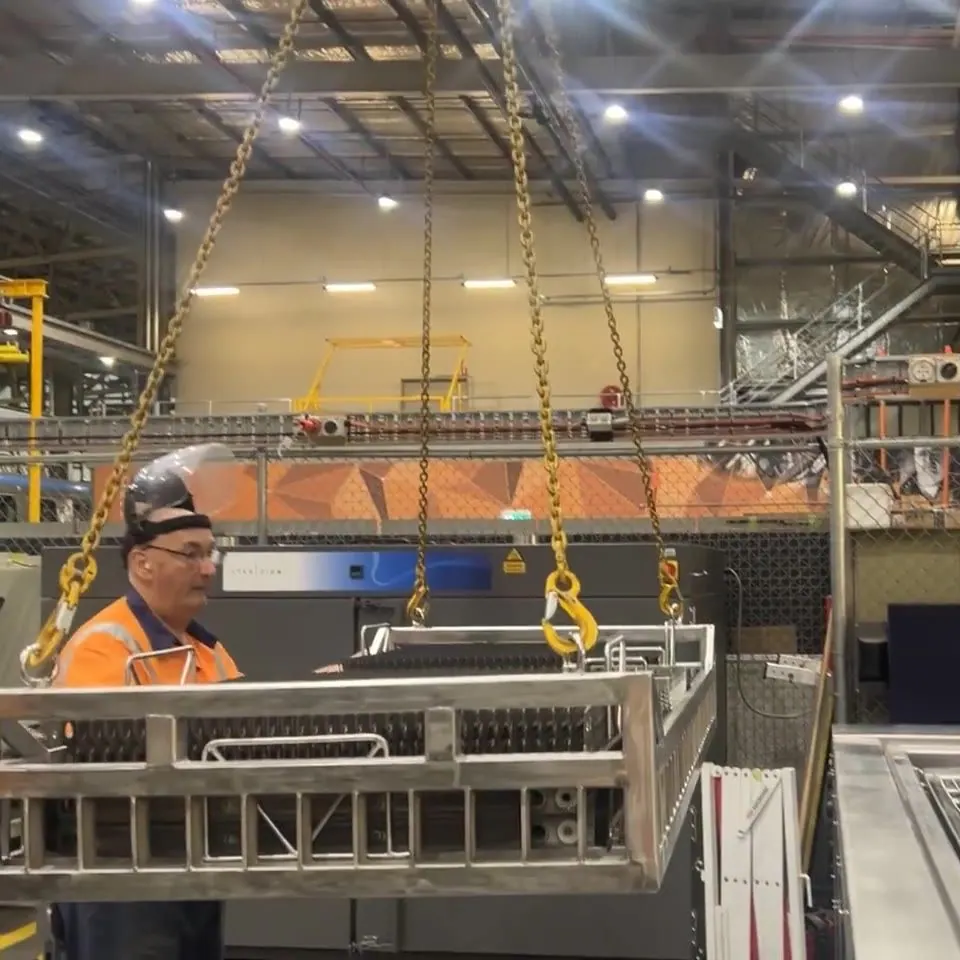
On a real job: an EVS 1500 cleans traction and brake parts at a Melbourne rail depot, one operator, every shift. Watch it run →
What an industrial ultrasonic tank costs
Where each range starts. All figures include GST.
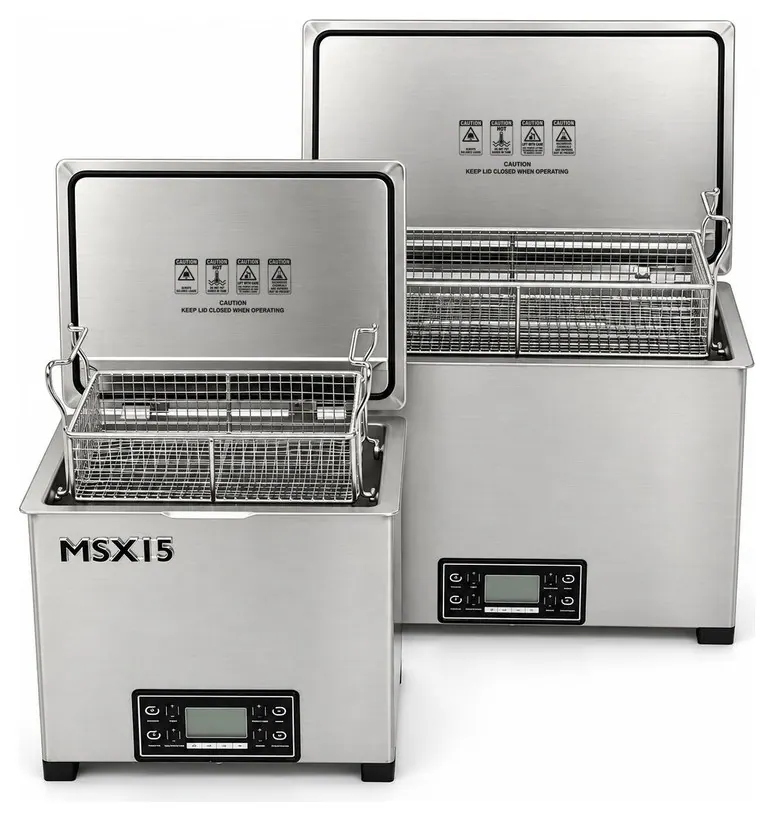
Light-industrial bench
SS316L tank, 40 kHz, load sensing, ball-valve drain. The dual-frequency MSX 30 is $6,578 inc GST. Suits trade, service and maintenance work that does not need a floor machine.
Both machines, full specs →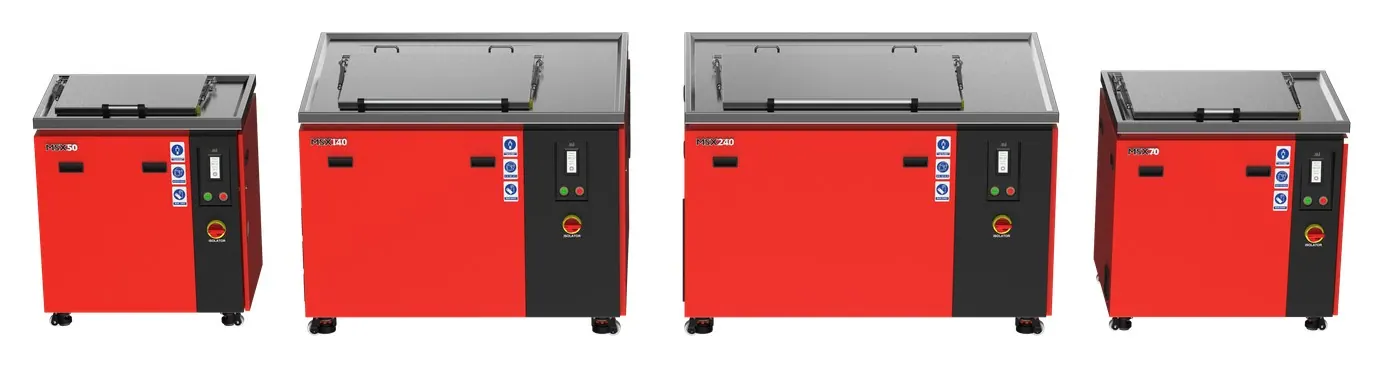
Workshop duty
Five models to 240 litres. 25 kHz, up to 4,500 W, with weir and oil capture on the 140 and 240. Basket capacity for engine components, tooling and production batches. Available for rental on this range, twelve-month minimum term.
Compare the five →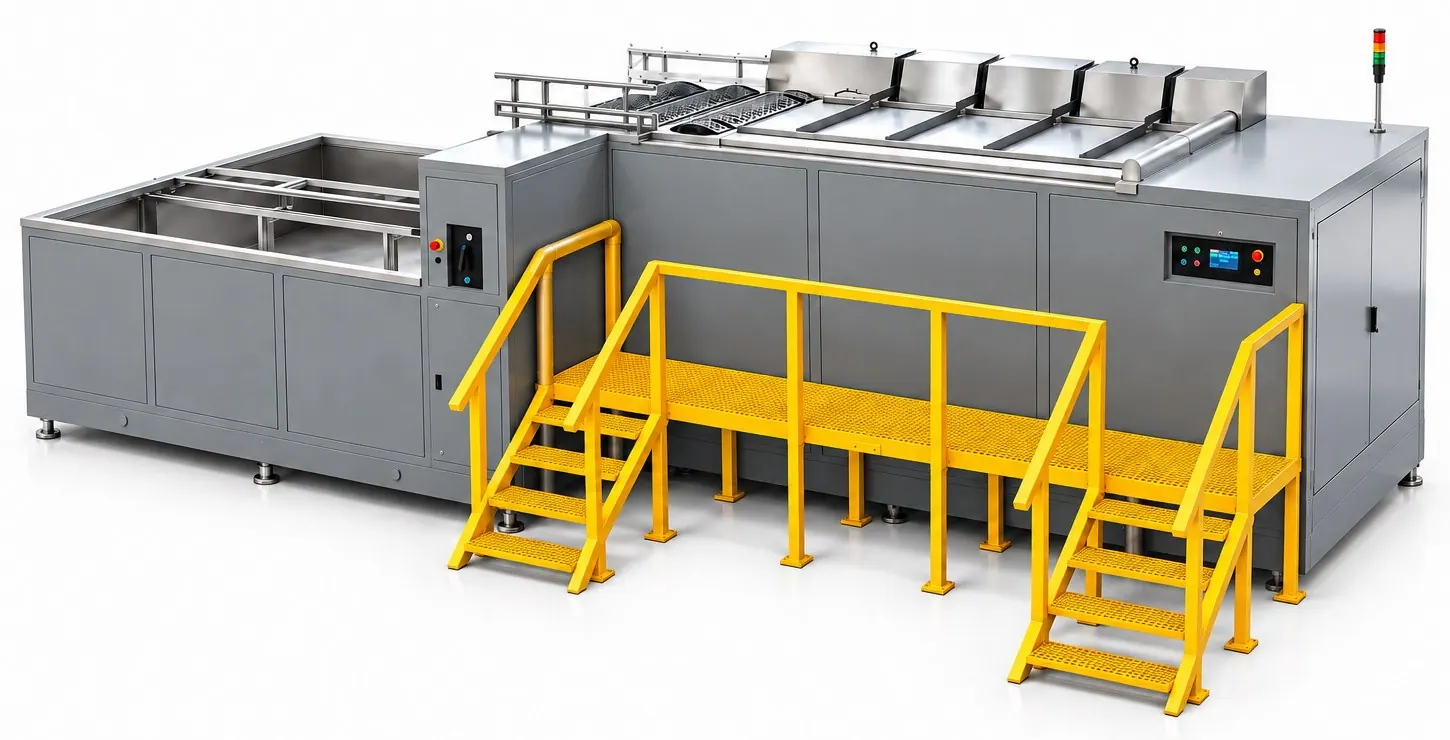
Heavy industrial immersion
Optional elevator platform handles the lift, so no one reaches into a hot bath. Up to 136 kW connected. For engine blocks, heat exchangers, filter elements and fabricated assemblies.
See the EvoSonic range →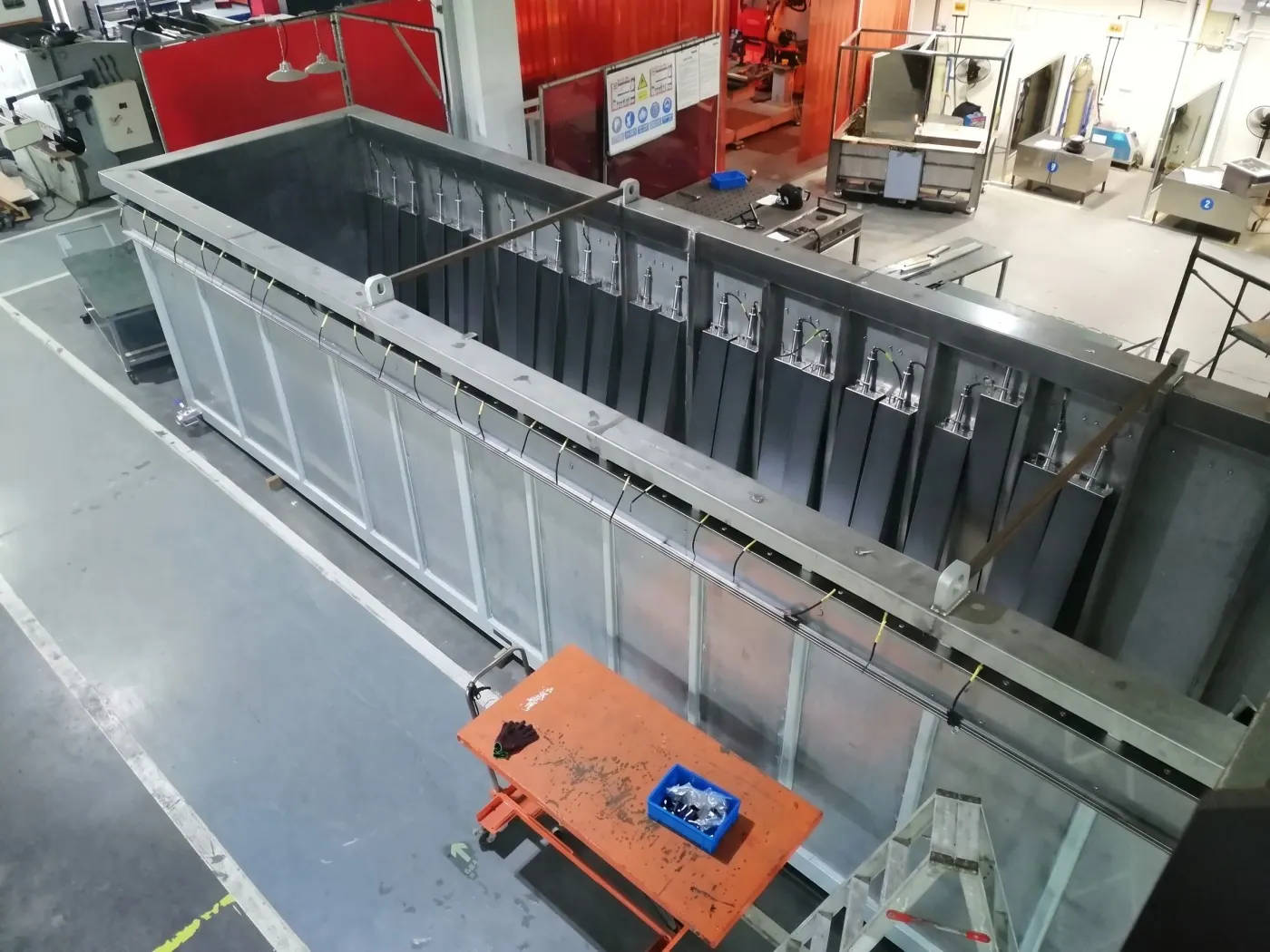
Tube bundle & exchanger tanks
Built around the heat exchanger bundle. Four working lengths to 12 metres. Priced on the bundle envelope, the duty and the site access.
See the four sizes →All prices include GST. Machines above the bench range are quoted to site, since the specification is set by the part and the soil. Specifications and pricing are confirmed in writing at quotation.
What sets the price
Power is one variable of several. The result comes from frequency, chemistry and its dilution ratio, temperature, cycle time, how the sonic energy is distributed through the bath, and platform agitation. The tank is one stage of a process, and the stages are specified together with the machine. How the process is built →
Retrofitting a tank you already own
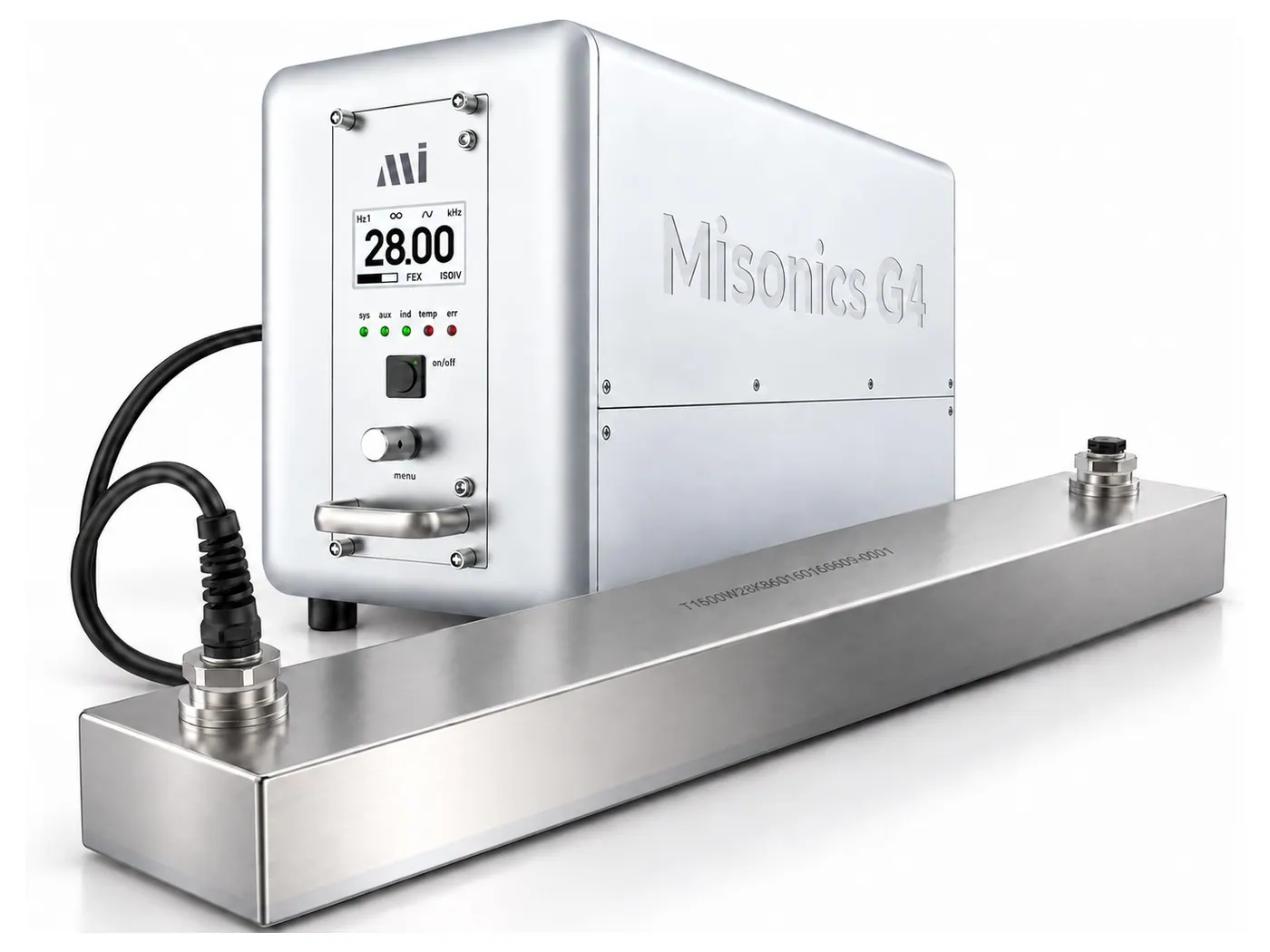
A soak tank, dip tank or parts washer already has the right shape and holds the chemistry. Adding immersibles gives it cavitation. They hang on the wall or sit on the floor of the vessel, with the generator mounted outside. Cycles that ran overnight commonly come back to minutes.
One cycle, no media, no lance
A mesh candle filter element from a power station recovery program. Same element, same frame, before and after.
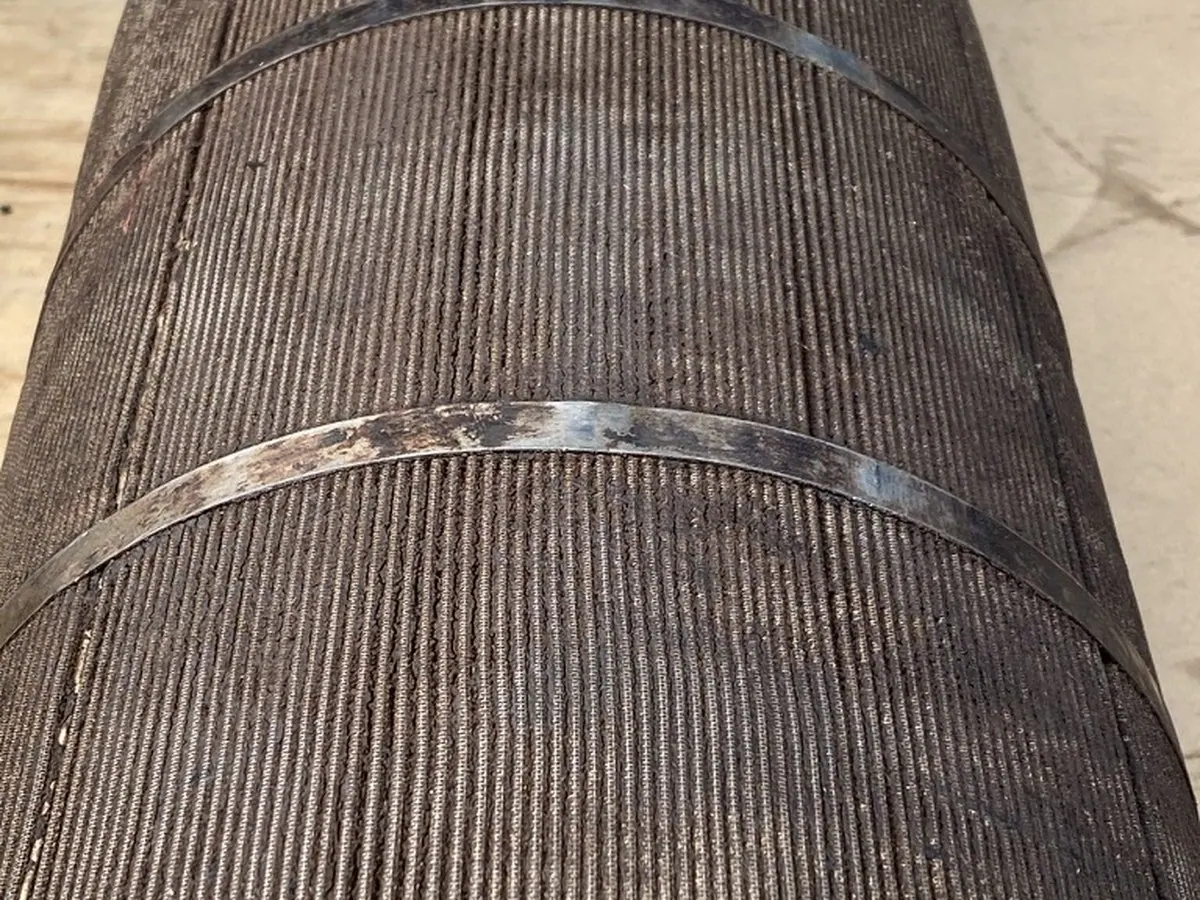
Blinded across the full face. Solids packed into the weave, flow down to a fraction of rated.
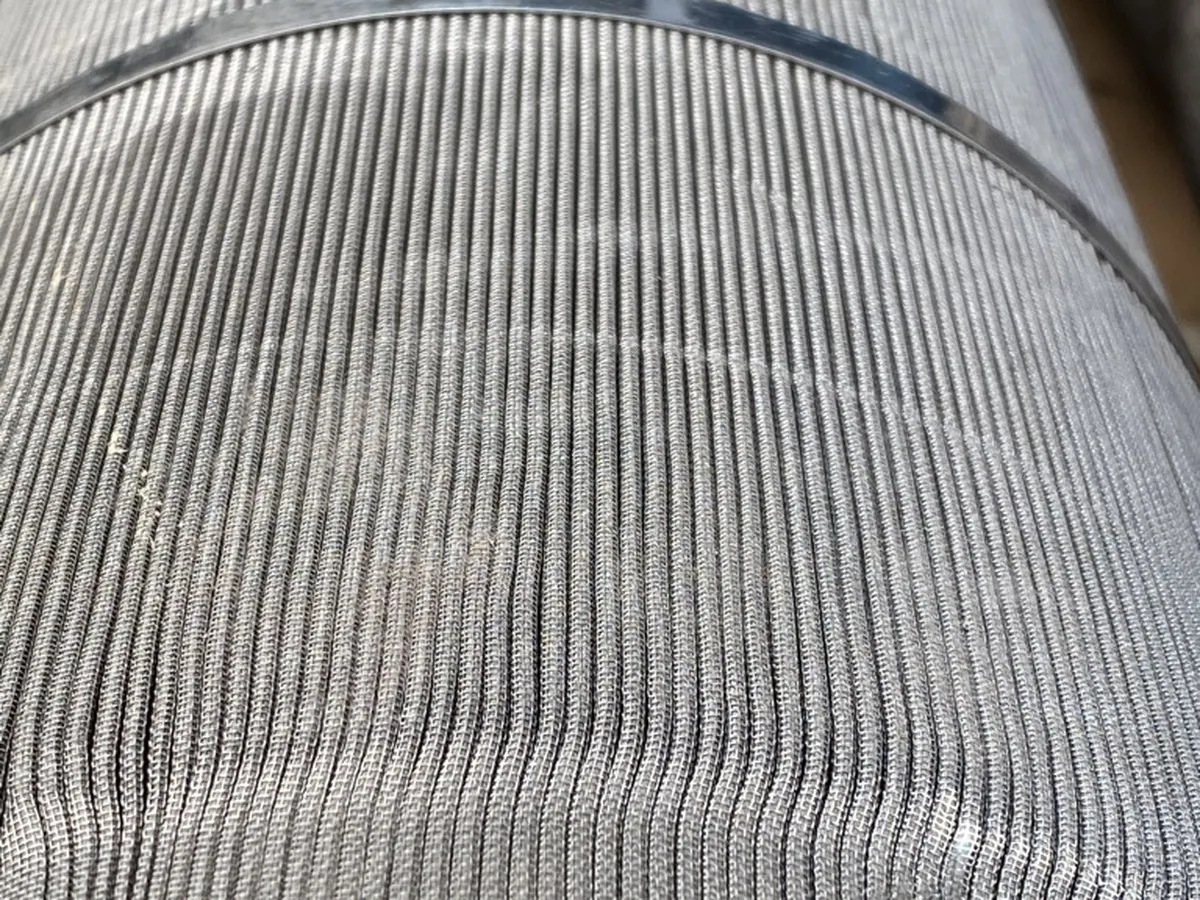
Every aperture open, the wire weave visible, the element flow-tested and returned to service.
Tanks this size, on real jobs
Documented work with the parts, the chemistry, the temperature and the cycle recorded.
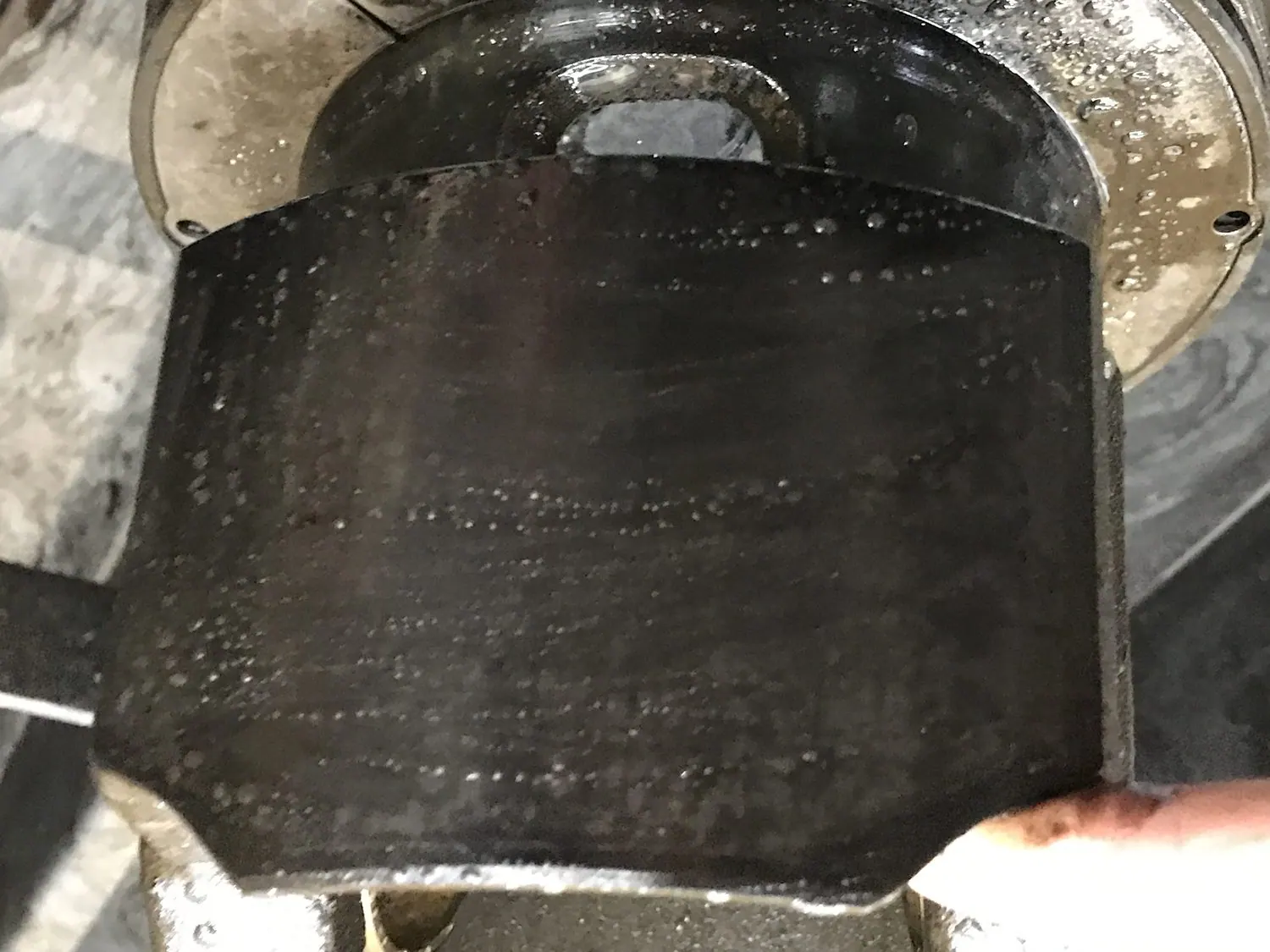
Baked carbon off the skirt, crown and ring grooves.
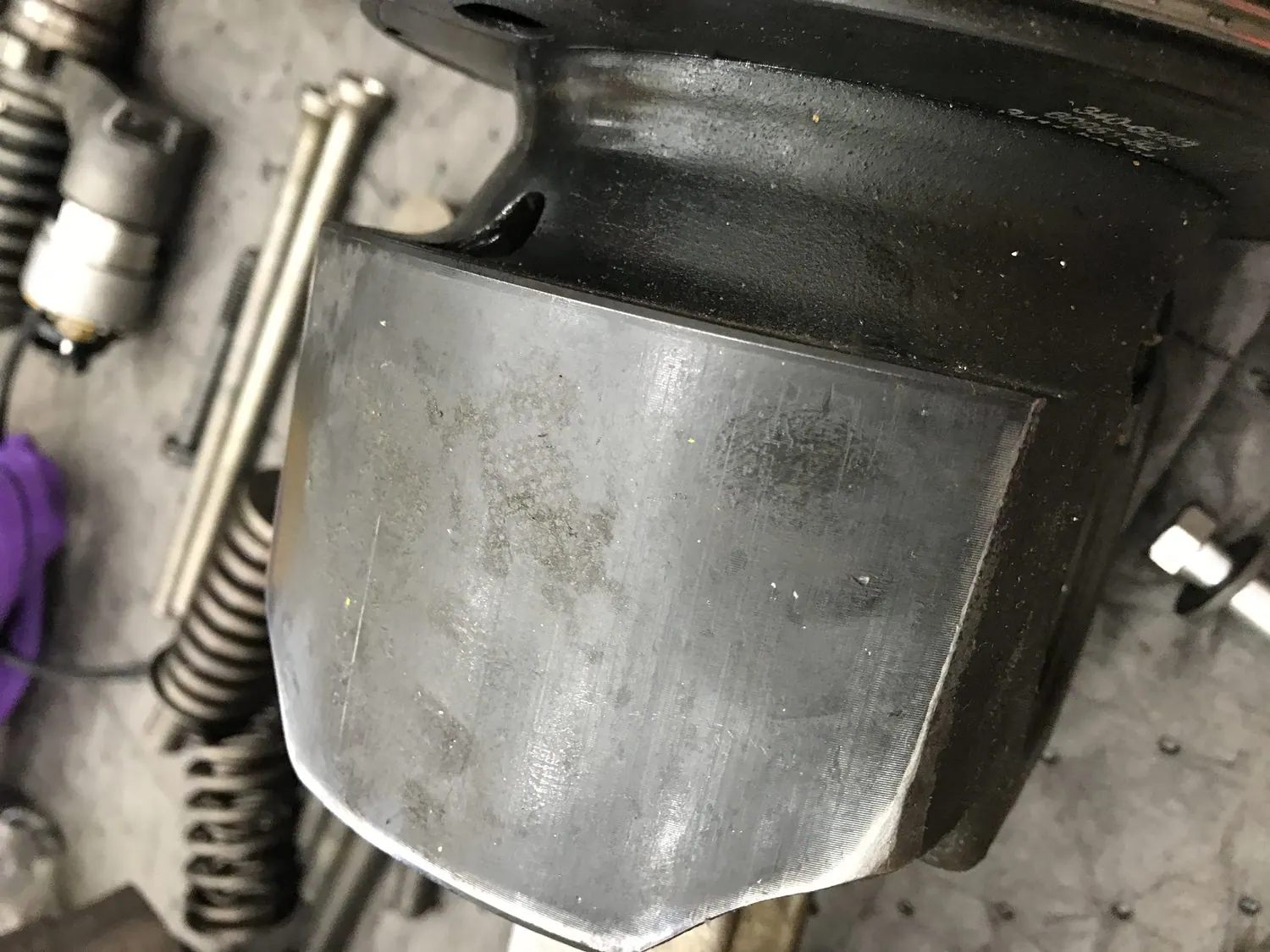
Bare aluminium. No blasting, no scraping, and no change in size.
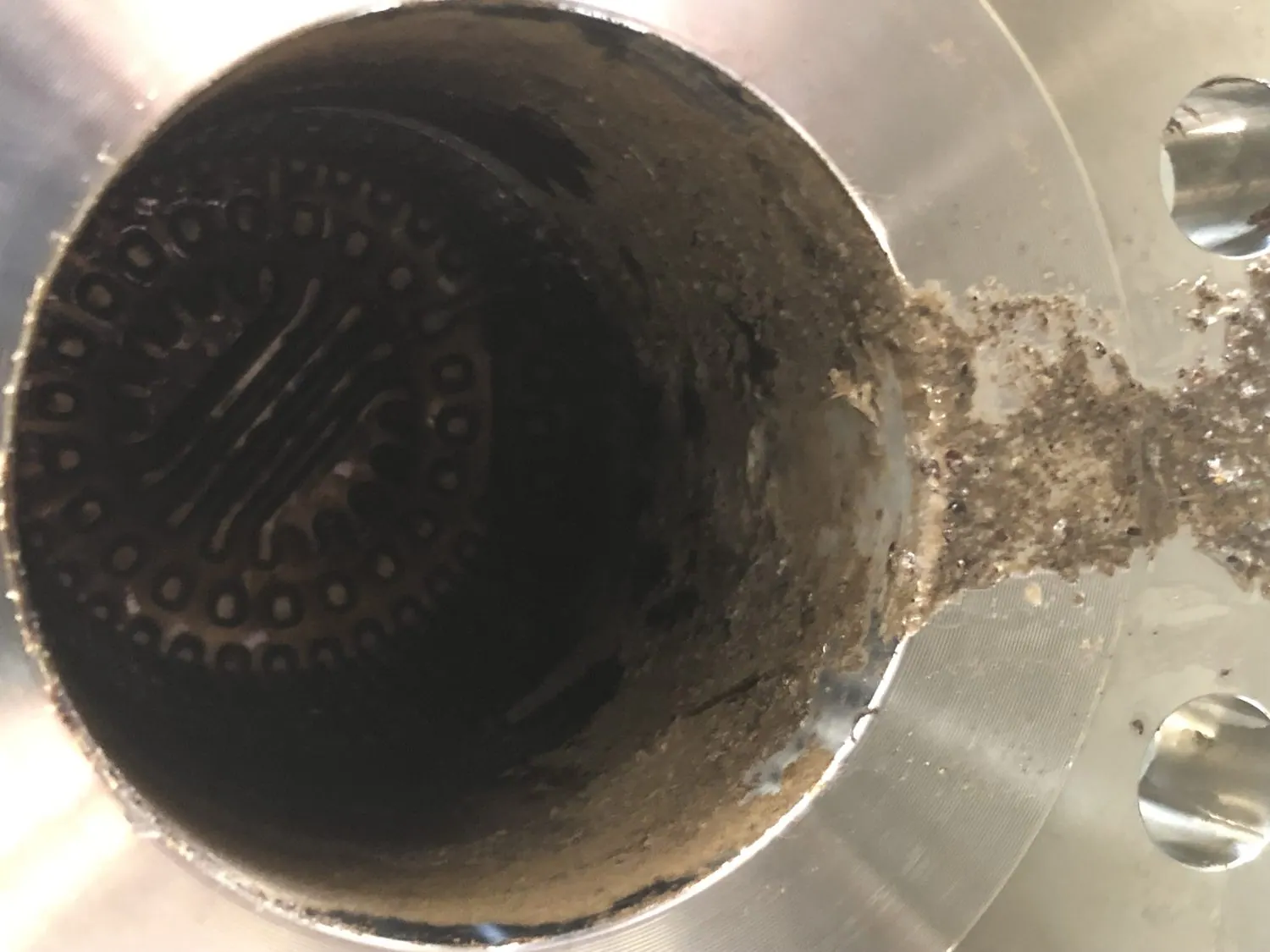
Scale and oil sludge bridging the tubes at the flange face.
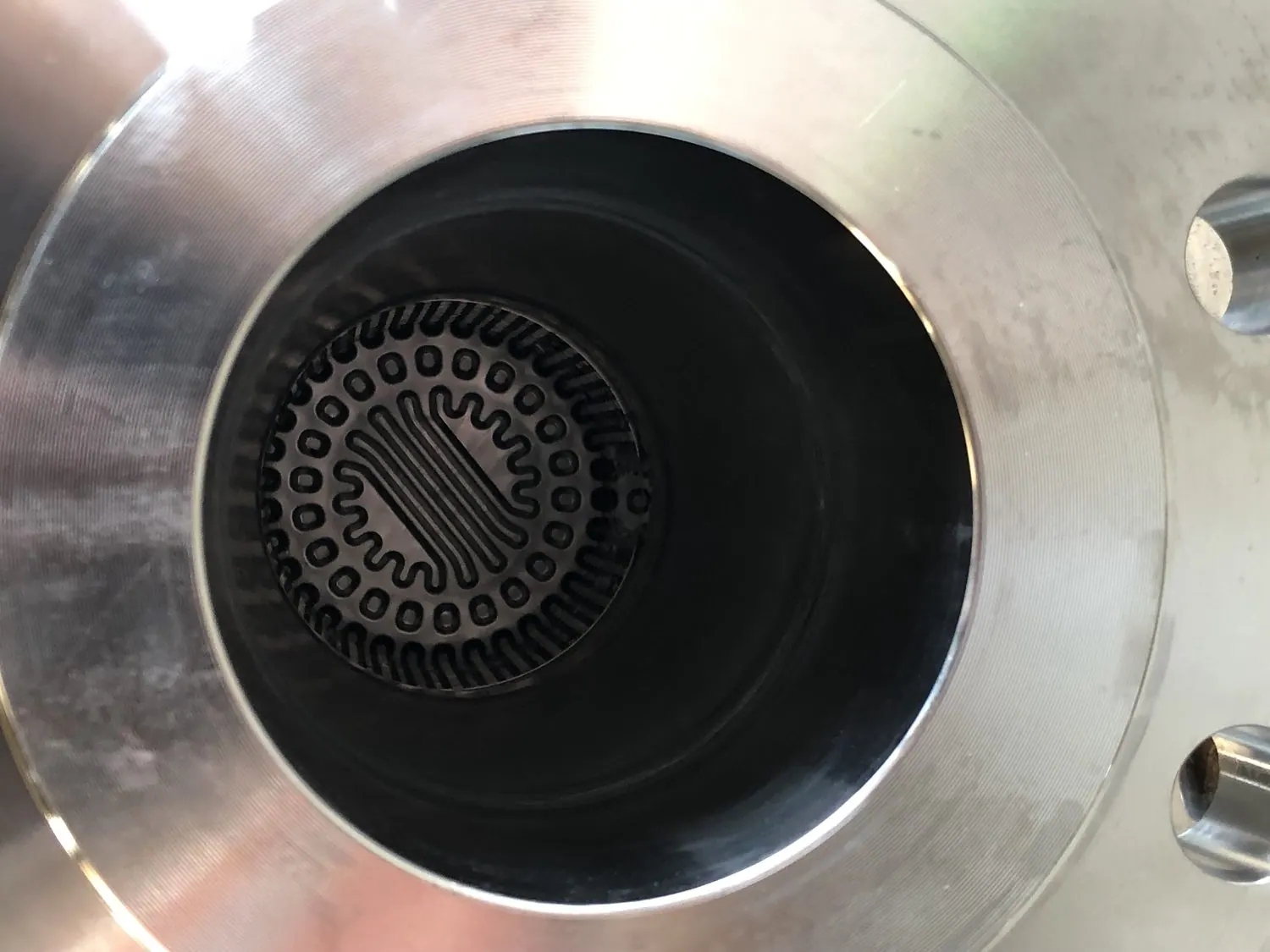
The same bore after immersion, with no rodding and no acid boil.
Buying an industrial ultrasonic tank in Australia
What does an industrial ultrasonic tank cost?
Tanks start at $4,367 inc GST for the MSX 15 light-industrial bench, and $6,578 for the dual-frequency MSX 30. The MSX 50 to MSX 240 floor-standing range is quoted to site, as are heavy industrial immersion and tube bundle tanks. Connected ultrasonic power, heating, filtration and automation affect the figure more than volume does.
Who manufactures industrial ultrasonic tanks in Australia?
The MSX 50 to MSX 240 are designed and assembled in Australia. The heavy industrial and large-format machines (EvoSonic, UltraTecno, UltraMax HX and the sealed-chamber lines) are built by our overseas manufacturing partners and specified, commissioned and serviced by Misonics in Australia. Every machine gets a four-hour load and cavitation test before it ships. Support covers Australia, New Zealand, PNG and Indonesia.
Can I buy an industrial ultrasonic tank outright?
Yes. Machines are sold outright. Benchtop models are listed; the floor-standing, EvoSonic and UltraMax ranges are quoted to site. Rental is available on the MSX 50 to MSX 240 floor range on a twelve-month minimum term.
What size tank do I need?
The smallest one your part fits in, with clearance. Oversizing costs on the machine and then again every day on chemistry and power. Send us the part envelope, the soil and the throughput and we will size it from those.
Is there an ultrasonic tank kit for a vessel I already have?
Yes. Immersible transducer packs, plate transducers and 360° rod resonators are supplied as a matched set with the generator that drives them, sized to your vessel. The tank has to be sound, deep enough to keep the radiating face under liquid, and made of something the chemistry suits. We do not supply ATEX or hazardous-area rated units.
How long does delivery take?
Standard floor-standing machines are quickest. Large-format and engineered tanks are built to order, with lead time confirmed at quotation.
What is an industrial ultrasonic tank?
A tank of heated cleaning solution with ultrasonic transducers bonded to it. The transducers drive the liquid hard enough to form and collapse microscopic bubbles against the part, which lifts soil out of bores, threads, water jackets and fin packs that a brush, a lance or a pressure washer cannot reach. The part is immersed and nothing touches it.
Which industrial ultrasonic tank suits engine and workshop parts?
An MSX 30 on the bench for injectors and pump parts. An MSX 140 or MSX 240 for heads, blocks and pump bodies, with a weir, oil capture and filtration so the bath keeps working through the week.
Which tank cleans radiators, coolers and heat exchangers?
A tank that takes the whole core, so an EvoSonic or an UltraTecno ACM sized to the pack. Coolers run in CoreKleen HX, then Descale where there is waterside scale. The method is in the cooler and exchanger case study.
Every machine gets a four-hour load and cavitation test before it ships. Support covers Australia, New Zealand, PNG and Indonesia.
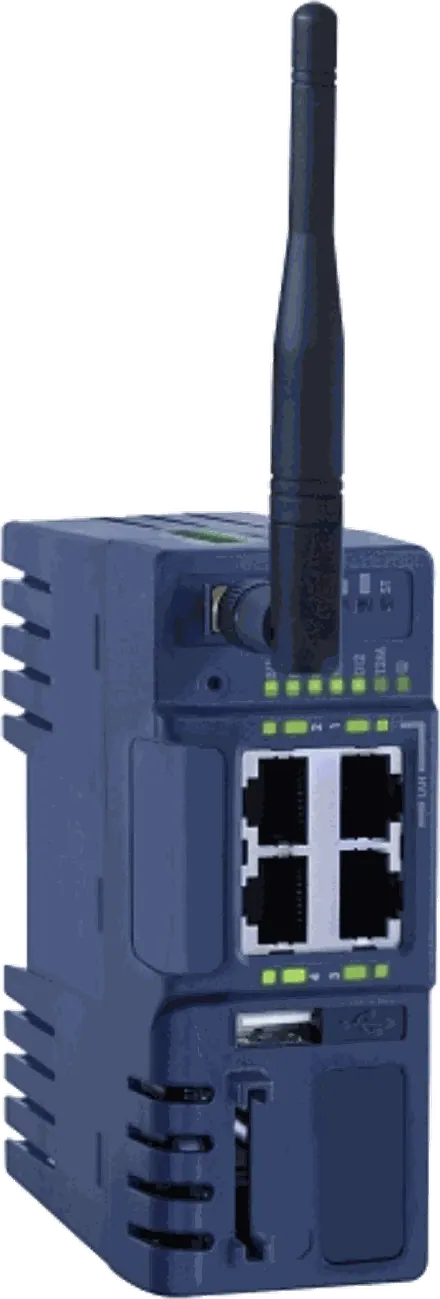
Remote access, included

A connection into the controller
Machines we build ship with Ewon Cosy 131 remote access as standard. It is a secure link to the control system itself, not a screen share on somebody’s laptop.

Faults found on a running machine
Alarms, sensor states, cycle data and the program are all readable while the machine works. Most faults are identified without anyone attending site.

What it is worth
Distance is the real cost of a service call. A technician to a remote site is two days of travel before a panel is opened. Remote access takes that out of the common faults.
The connection is yours to choose. The gateway runs on your own network, or on its own mobile service: off your network altogether, with nothing for your IT to open up. Either way the terms are yours: what it may reach, and when it is live.
See also: How an industrial ultrasonic tank works a cut-away of every part of the machine, and why the big tanks get rod resonators rather than base-plate transducers.