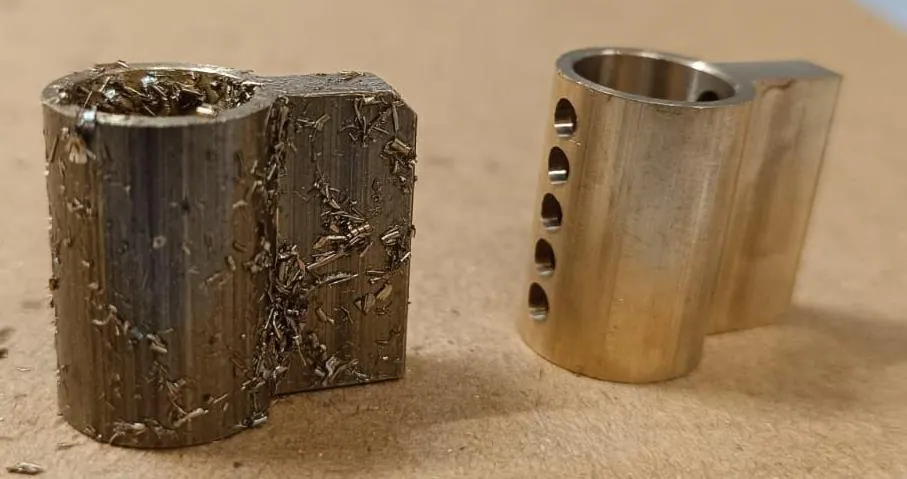
Wash the parts hot in an alkaline solution matched to the metal and to the machine, with the bath filtered while it runs. The solution dissolves the cutting oil and the dried coolant, the swarf lets go, and the filter takes it out of the tank. Rinse the same way, then dry inside the holes and threads. On machined brass lock bodies that was AquaVantage 1990 GD at 4.0% and 60 °C, two demineralised water rinses at 60 °C and hot air at 110 °C: 20 minutes from basket in to dry parts out.
Why swarf stays on the part
Machining leaves fine chips and needles through every drilling, thread and blind hole. On their own they would fall out. They stay because cutting oil and dried coolant hold them against the metal.
An air gun, a rinse or a longer soak in plain water does not shift them, because the water never gets under the oil. Dissolve the oil film first. Flow, rotation and ultrasonics then carry the chips out of the hole.
What is on a machined part
| Soil | What it is | What takes it off |
|---|---|---|
| Soluble coolant | Oil emulsified in water. It dries to a sticky film that holds fines | A hot alkaline wash, then a thorough rinse |
| Neat cutting oil | Straight oil, a heavier film than coolant | A hot alkaline wash that separates the oil so it floats off the bath |
| Tapping and lapping paste | Grease or oil carrying an abrasive or a solid lubricant, bonded to the surface | The same wash, with flood or ultrasonics to get under the paste |
| Swarf and fines | Chips, needles and grinding dust of the part metal | Released once the oil is gone, then taken out of the bath by filtration |
How the oil comes off is set out in matching the chemistry to the soil and anionic vs non-ionic surfactants.
Pick the chemistry by the metal and the machine
Choose by the metal first, then by the machine. A solution that strips oil off steel can tarnish brass or attack zinc. A detergent that foams runs in a tank and not in a spray washer.
| Chemistry | For | Runs in | Dose and heat | Keep out |
|---|---|---|---|---|
| AquaVantage 815 GD | Steel, stainless, aluminium, magnesium and titanium | Ultrasonic and immersion tanks. It foams, so not a spray washer | 7–30%, typ. 10% 54–77 °C 3–10 min | Zinc, tin and soft solder are not on its approved list. Copper alloys may discolour slightly |
| AquaVantage 1990 GD | Steel, stainless, aluminium and copper alloys | Spray wash cabinets and inline washers | 3–15%, typ. 5%. 5% minimum on aluminium 49–77 °C 3–10 min | Zinc, tin and soft solder are not on its approved list |
| AquaVantage 1696 GD | Mixed baskets, aluminium, brass and copper | Ultrasonic tanks, spray cabinets and rotary basket washers | 3–15%, typ. 5% 49–66 °C 1–5 min | Zinc and magnesium are not on its approved list |
| FX Degreaser | Steel, cast iron and stainless | Ultrasonic and immersion tanks, spray cabinets | 5–15%, typ. 10% 45–65 °C | Zinc, galvanised, magnesium. Brass and copper tarnish |
Figures are from each product’s data sheet. The full range, with prices, is on ultrasonic cleaning solution. Not sure which one? Use the chemical selector. The dosage calculator works out the concentrate.
The products for machined parts
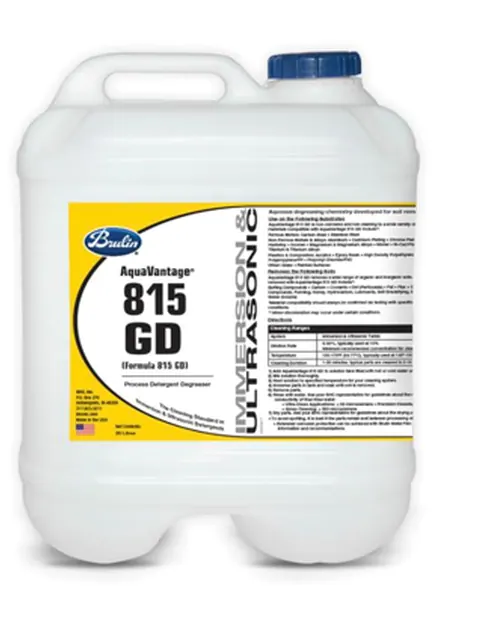 ChemicalAquaVantage 815 GD
Lifts cutting oils, coolant and buffing compound. Separates the oil so it floats off the bath. For ultrasonic and immersion tanks.
Open the AquaVantage 815 GD page →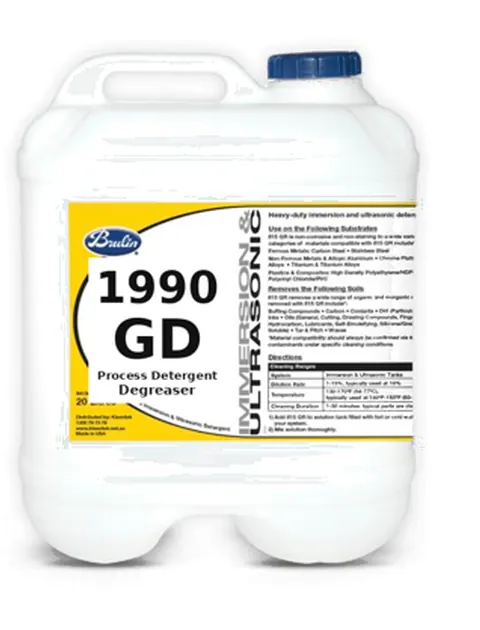 ChemicalAquaVantage 1990 GD
Mildly alkaline degreasing for spray washers. The chemistry in the job below.
Open the AquaVantage 1990 GD page →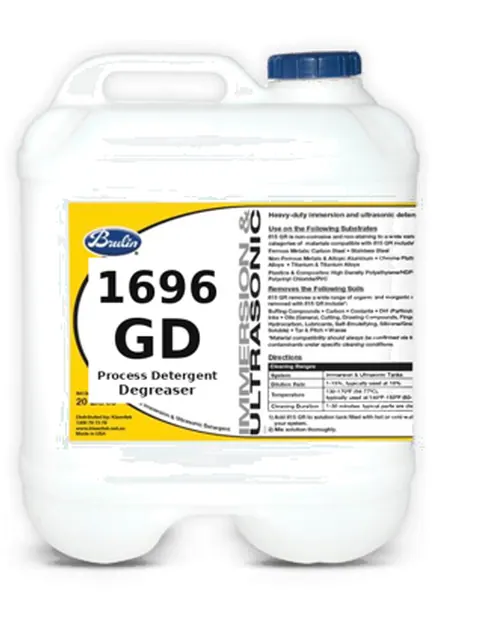 ChemicalAquaVantage 1696 GD
Near-neutral. For mixed baskets, aluminium and brass, in a tank or a washer.
Open the AquaVantage 1696 GD page → ChemicalFX Degreaser
The general workshop degreaser for steel and cast iron: oil, grease and grime.
Open the FX Degreaser page → ChemicalAnti-Rust
The dip that protects bare steel after the wash: 2–5%, one to two minutes, no rinse after. Ferrous only.
Open the Anti-Rust page →The steps
- Sort by metal. The weakest metal in the basket sets the solution, the strength and the temperature.
- Knock off the bulk. Let the parts drain over the machine and shake out the loose chips. Bulk swarf carried into the wash only loads the filter.
- Load so the holes drain. Holes and threads up or sideways, or a rotating basket, so freed swarf falls out and does not resettle. See how to load the basket.
- Wash hot, with the bath filtered. Run the solution at the dose and temperature for your metal. Spray and flood move the bulk. Ultrasonics reach the threads, cross-drillings and blind holes.
- Rinse the same way. The same flow through the same holes, in clean water. Where water marks matter, rinse in demineralised water.
- Dry inside the holes. Hot air dries the outside. A blind hole holds its water against airflow, so rotate the basket, give it longer in a hot-air dryer, or finish under vacuum.
- Protect steel and cast iron. Dip in Anti-Rust at 2–5% for one to two minutes and do not rinse it off. Keep it off aluminium, zinc, brass and copper. See why parts flash-rust after cleaning.
A job with the settings
Brass lock bodies, casings and plugs: trial T-3173
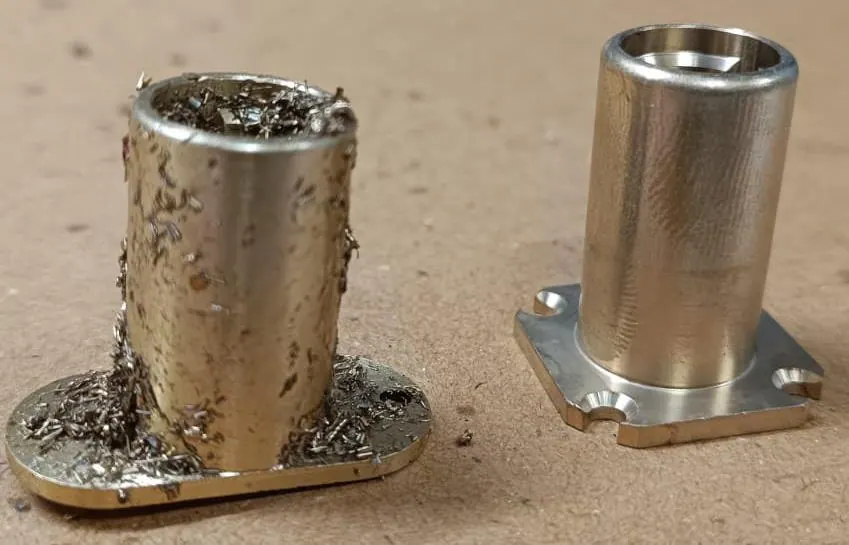
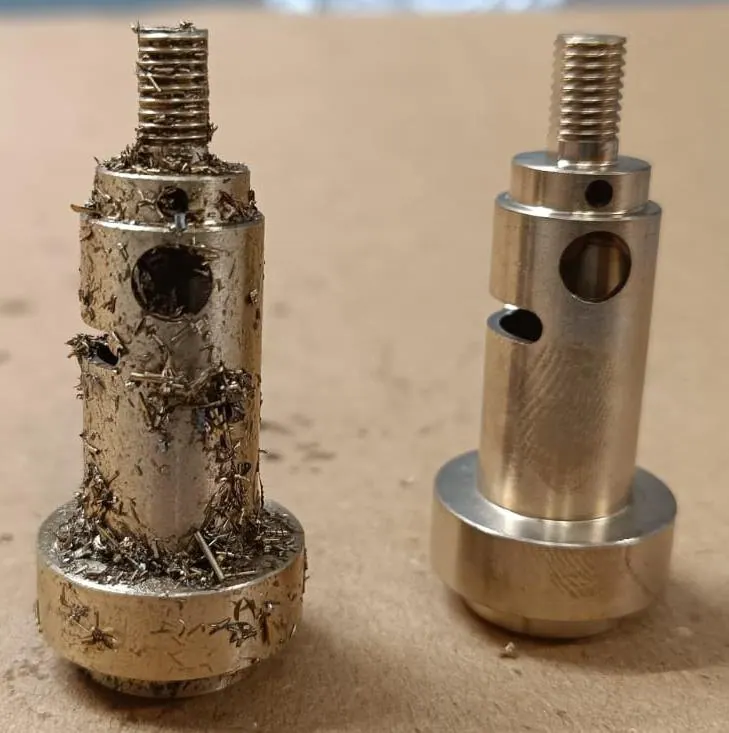
Fine brass swarf, cutting oil and machining paste through the pin chambers, cross-drillings and threads. A chip left in a pin chamber makes the lock bind. The trial ran on 30 June 2025 in an UltraWash, with 3.0 kW of ultrasonic power.
| Stage | What ran | Temperature | Time | Filter |
|---|---|---|---|---|
| Wash | AquaVantage 1990 GD at 4.0%. Flood wash and ultrasonics, basket rotating | 60 °C | 240 + 300 s | 50 µm bag |
| Rinse 1 | Demineralised water. Ultrasonics and flood wash, basket rotating | 60 °C | 60 + 60 s | 25 µm bag |
| Rinse 2 | Demineralised water with an additive at 2.5%. Flood wash, basket rotating | 60 °C | 60 s | 10 µm bag |
| Dry | Hot air | 110 °C | 300 s | None |
Total cycle time was 20 minutes: 17 minutes of stage time plus handling between stages.
The result
| Check | Result |
|---|---|
| Parts visually clean | All of them (100%) |
| Finish | Bright. No staining and no water marks |
| Particle count | Not measured. The trial was judged by eye and no laboratory analysis was done |
| Applies to | Parts and contamination like those received |
The record is the trial report T-3173 (PDF) and the brass lock components case study.
Where the swarf goes
Swarf that comes off the part has to leave the bath, or the next basket picks it up. Filter the wash while it runs, and filter each rinse finer than the one before. On the brass job that was a 50 µm bag on the wash, 25 µm on the first rinse and 10 µm on the second. If the part has a cleanliness limit on the drawing, clean is a number sets out how it is measured.
Which machine
A production cell wants wash, rinse and dry in one enclosed cycle. Baskets of small machined parts can run in a heated ultrasonic tank with a rinse tank and a dryer beside it: see industrial ultrasonic tanks.
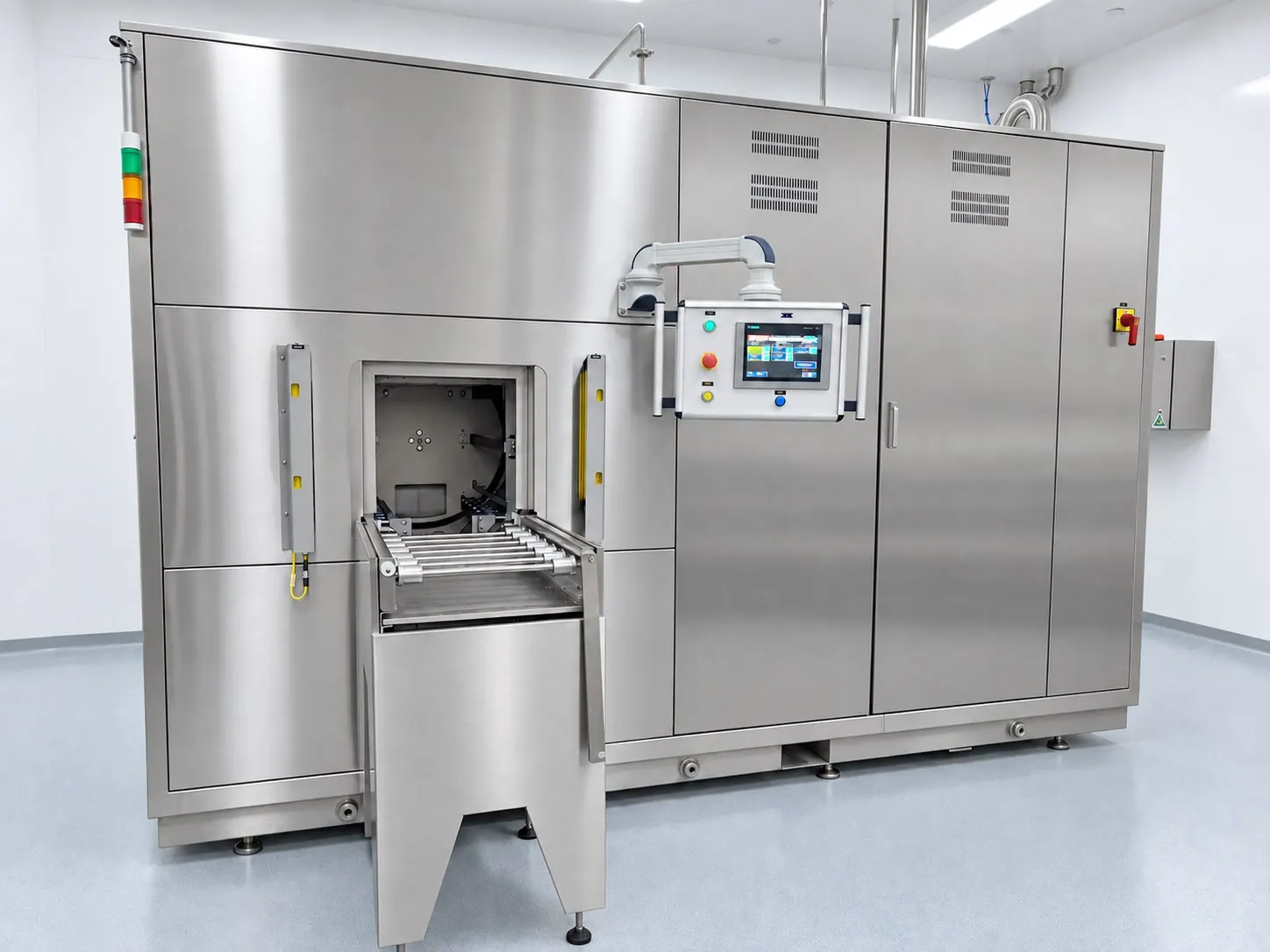 MachineUltraWash
One sealed chamber sprays, flood washes, cleans with rotating ultrasonics at 25 kHz, rinses and dries. The machine in the job above.
Open the UltraWash page →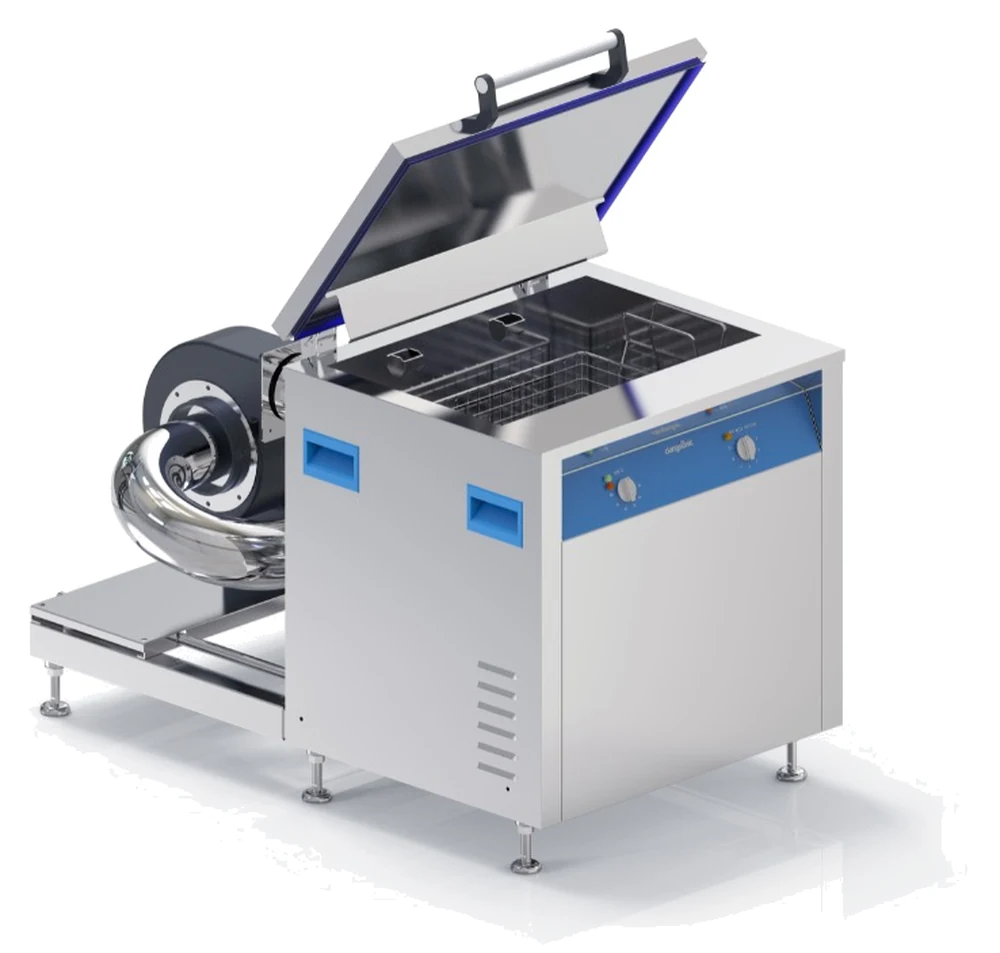 DryerRankine Parts Dryers
Hot air through the basket, for the bores and threads.
Open the Rankine page →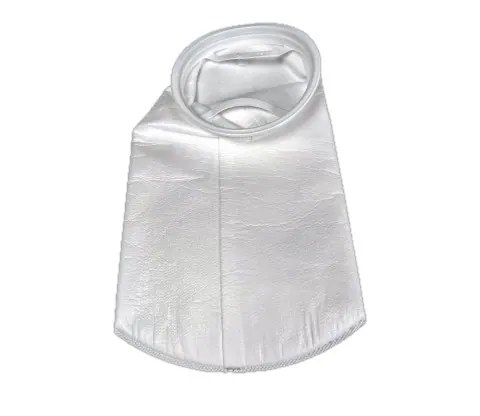 FiltrationLiquid filter bags
The bags that take swarf out of the wash and the rinse.
Open the filter bags page →Questions we are asked
Why is swarf still in the thread after an air blast?
Cutting oil and dried coolant are holding it there. Air moves the loose chips and leaves the ones the oil has stuck down. Dissolve the oil in a hot alkaline wash and the swarf lets go.
What temperature should the wash run at?
Inside the product’s range and under the metal’s limit. AquaVantage 815 GD runs at 54 to 77 °C and AquaVantage 1990 GD at 49 to 77 °C. The brass job on this page ran at 60 °C. The temperature guide gives the limit for each metal.
Can aluminium, brass and steel go in the same basket?
Yes, if the solution is safe on every metal in the basket and the aluminium does not touch the brass, copper or steel. In our range that is AquaVantage 1696 GD at about 5%, or AquaVantage 1990 GD in a spray washer. See cleaning aluminium, brass and steel together.
Which solution goes in an ultrasonic tank and which in a spray washer?
A detergent that foams runs in a tank and not in a spray washer. AquaVantage 815 GD is for ultrasonic and immersion tanks. AquaVantage 1990 GD is a spray-wash detergent. AquaVantage 1696 GD and FX Degreaser run in both. Run 1696 GD above 49 °C in a spray washer, because it foams below that.
What filter takes the swarf out of the bath?
A bag filter on the wash tank, running while the machine runs, and a finer one on each rinse. The brass job used a 50 micron bag on the wash, 25 micron on the first rinse and 10 micron on the second.
Why do steel parts rust after washing?
The wash takes off the oil that was protecting them. Bare steel, warm and wet, can start to rust within the hour. Dip in Anti-Rust at 2 to 5% for one to two minutes and do not rinse it off.
How do I dry a blind hole?
Hot air alone can leave water at the bottom of the hole. Rotate the basket in the hot air, give it longer, or finish under vacuum. The brass job dried in hot air at 110 °C for five minutes.
Do I need demineralised water for the rinse?
Where water marks or residue matter, yes. Every dissolved solid in the rinse water stays on the part when it dries. The wash bath can usually be made up with tap water. See water quality.
Related: Brass lock components case study · Cleaning blind holes and internal passages · How to clean hydraulic components · Manufacturing parts cleaning · Filtration in ultrasonic cleaning systems
What are you machining?
Tell us the metal, the cutting fluid and where the part goes next. We say which solution, what temperature and which machine.